How Virgin Australia's new menu widens the gap further

By Sharon Petersen Tue Oct 27, 2026
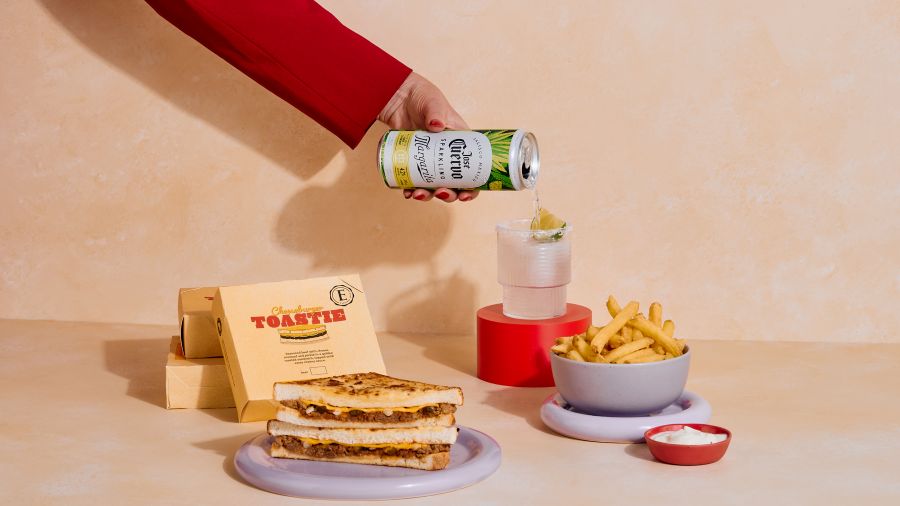
Virgin Australia has added hot chips with aioli to its buy-on-board Economy menu from today, in what the airline believes is a first for an Australian carrier. The chips arrive alongside the return of the TikTok-inspired Cheeseburger Toastie, which has sold more than 50,000 since it launched in May 2026, so travellers can now order what Virgin pitches as a cheeseburger and fries combo at 35,000 feet. For this author, adding the Jose Cuervo Sparkling Margarita alongside caps it off.
It sounds like a light-hearted menu update, yet it points to something bigger about how we choose airlines. The meal used to sit quietly between the seat and the entertainment in most reviews, while today the airlines doing it well treat food as one of the reasons to book.
What's on Virgin Australia's new menu
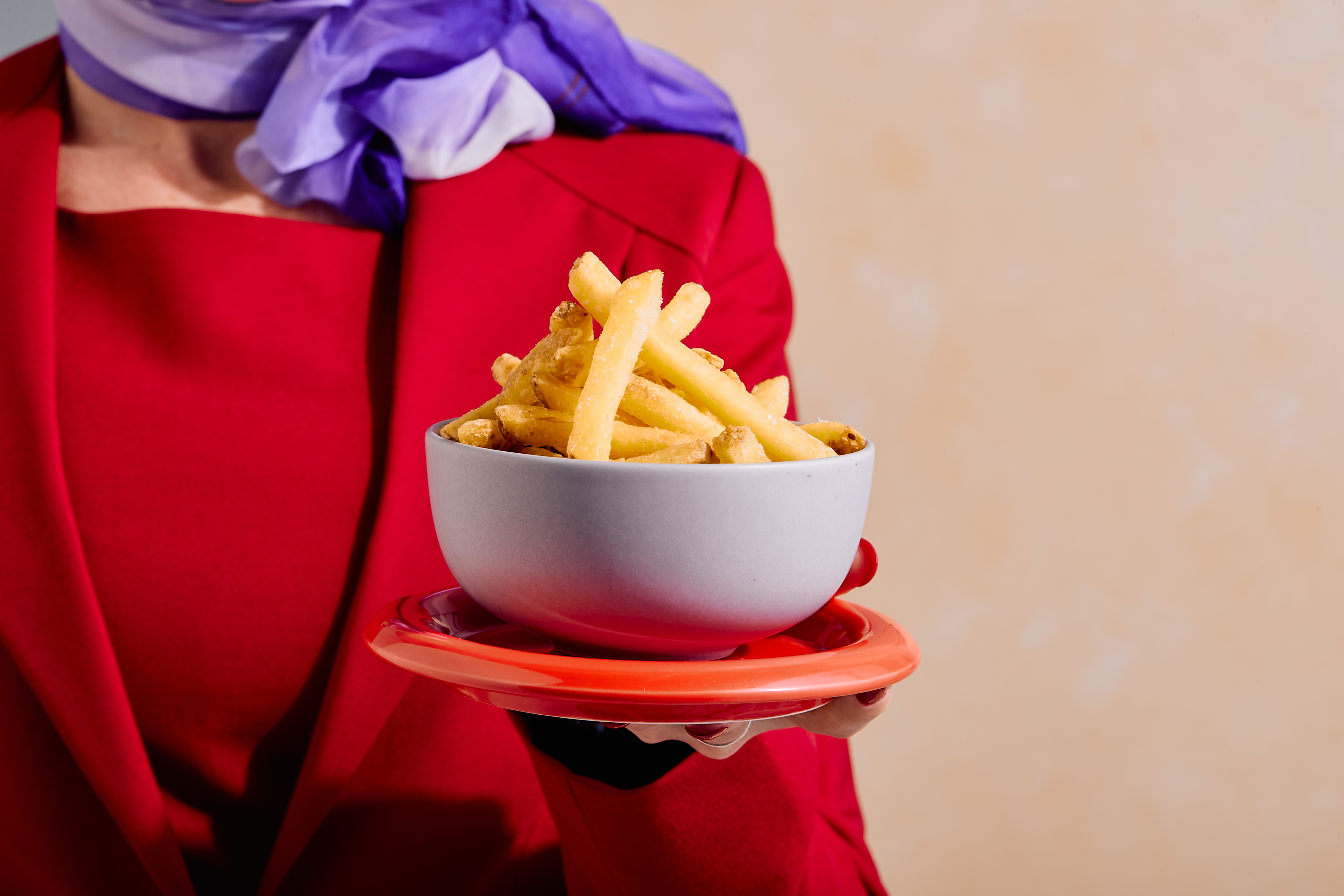
Serving hot chips in the air took Virgin Australia months of testing. The airline uses skin-on potatoes to cut food waste during production, then packs the chips in packaging designed to let air flow through as they heat in the onboard ovens, so they reach the seat hot and crispy with aioli, salt and pepper on the side.
The chips and the Cheeseburger Toastie are sold on eligible flights longer than 1.5 hours, subject to availability. Virgin has also added its own take on the viral Chicken Caesar wrap, matcha lattes, chai lattes, BOSS Iced Latte Coffee and a Jose Cuervo Sparkling Margarita, while complimentary tea, coffee and water stay in place for Economy guests.
Chief Customer Officer Andrew Cleary said the airline is always looking for ways to bring the food people love on the ground into the air. Velocity Frequent Flyer members can keep paying for onboard food and drink with Points, which Virgin says makes Velocity the only Australian airline loyalty programme to offer inflight Points redemptions on food and beverage.
Business Class gets a refreshed menu from 11 November 2026, shaped by guest feedback and taste testing and included in the fare. Highlights include an egg and cheese breakfast quesadilla with sour cream and salsa, seared beef with roasted vegetables, potato and rosemary jus, and stir-fried beef in black bean sauce with rice and Asian greens.
Why the meal is part of the experience
Food is one of the few parts of a flight that every traveller engages with, whether they sit up front or in the last row. A good menu gives people something to look forward to, something to share with the person beside them and something to talk about after they land.
Airlines know this, which is why menus now follow social media trends, team up with famous local restaurants and change with the seasons. When a carrier gets the meal right, it can lift the whole trip, even on a short sector where the seat and the entertainment barely register. Hong Kong based HK Express is a world-leading example of how a low-cost carrier can absolutely nail this.
Included or buy-on-board? A lesson from regional Australia
Flying Virgin Australia, Qantas and Jetstar in Australia gives you three quite different experiences, and the meal is a big part of that difference. This author reviewed Qantaslink and Virgin Australia Regional on a 2 hour route a couple of years ago, and the trip challenged my view on whether an included meal beats a buy-on-board menu in a way I didn't expect.
I boarded the Qantas flight assuming the all-inclusive approach would win comfortably, because a hot snack that comes with the fare feels like the obvious better deal. On the way back I was travelling with people who hadn't enjoyed what was served on the way up, and once they had the Virgin Australia buy-on-board menu in front of them they could pick something they actually wanted to eat.
For them, a cheaper fare paired with a menu they could choose from was a better proposition especially on a short flight. Buy-on-board isn't usually something I warm to, but that trip showed me the benefits on a short flight, especially when the menu is good enough that people want to order from it.
HK Express: when the menu is the story
Go a step further and you reach airlines like HK Express, where the buy-on-board menu is as much a part of the journey as the destination. Our editors named HK Express the World's Best Low-Cost Airline in 2025 and 2026, and its food is a big reason it stands out.
The airline refreshes its inflight menu every six months and builds it around Hong Kong restaurant partnerships. From 1 July 2026 it added an exclusive White Curry Lemongrass Pork Chop Rice from local institution Satay King, which also gained an HK Express themed restaurant in Kowloon Bay.
Earlier menus brought a soup-filled pan-fried pork bun from Ging Sun Ho, Hong Kong style French toast and a street food combo of curry fish balls and fish siu mai with lemon tea. HK Express said in 2024 that it had sold more than 250,000 curry fish balls in a year, which tells you how much travellers buy into the idea.
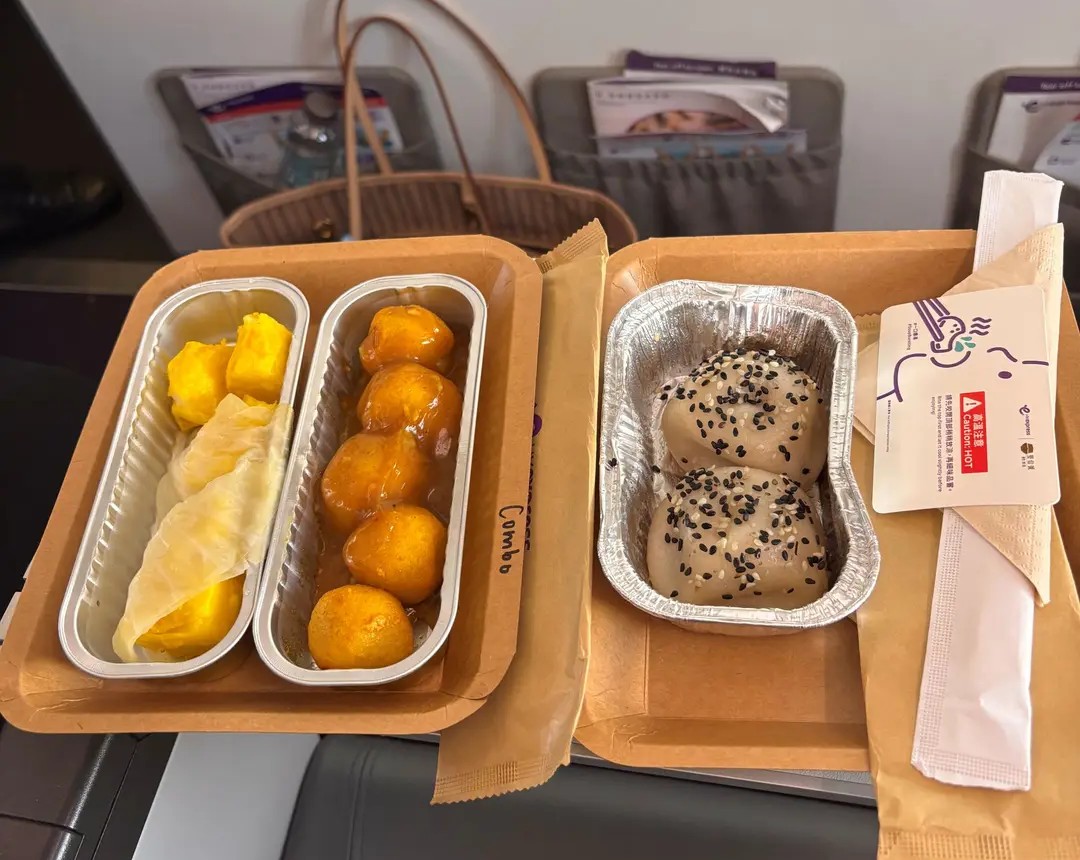
Travellers can pre-order meals at up to 28 percent off when they book, and the airline's Cabin Connect platform lets them order from their own devices without waiting for the trolley. HK Express doesn't allow outside food to be eaten onboard, so the menu has to earn its place, and it does.
Suggested Read: Is HK Express the best low-cost airline for food and shopping?
Jetstar: a strong low-cost product let down by its menu
Jetstar offers a really good low-cost product in Australia. Its A320neo and A321neo LR aircraft carry wider seats, larger overhead bins and in-seat USB charging, while Jetstar Entertainment+ lets travellers stream movies and TV shows to their own devices, and the airline's safety record is excellent.
The inflight menu is where it falls short. [Josh to add: one or two specifics from your own Jetstar flights, such as the range, quality or value of what was on offer.] When the rest of the product is this strong, a menu that feels like an afterthought stands out more than it would on a weaker airline, and Virgin's latest move only widens that gap.
Three airlines, three experiences
Qantas includes the meal in the fare, Virgin Australia lets you choose what you eat and pay less up front, and Jetstar gets most of the low-cost formula right apart from the food. Each approach suits a different traveller, which is why the meal deserves a place in any comparison alongside the seat, the entertainment and the safety record.
Virgin's hot chips won't decide anyone's next booking on their own, or will they? Either way, they show an Australian airline treating its buy-on-board menu as part of the product. If it keeps building on that in the way HK Express has, the menu could become one of the reasons travellers choose Virgin over its rivals.
Have questions or want to share your thoughts?