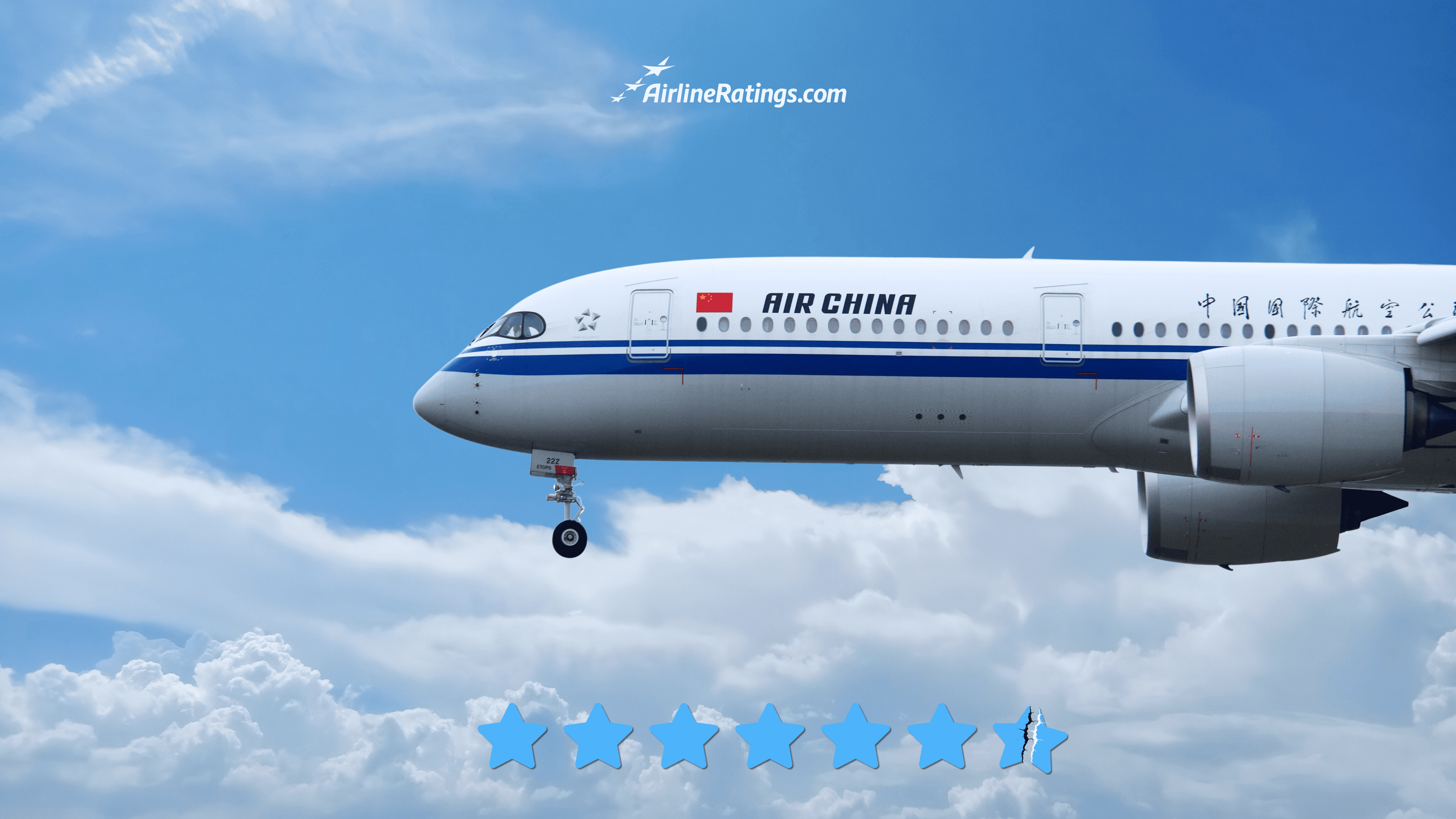
Air China’s safety rating reduced to Six Stars

By Airline Ratings Wed Oct 21, 2026
The Air China safety rating on AirlineRatings.com was recently reduced from Seven-Stars to Six-Stars as a result of a member of the auditing team observing cabin crew performance falling significantly short of current industry standards in two core drivers of cabin safety, power bank management and turbulence management.
This is an uncharacteristic response to observations made on a single flight, but the performance was such that after discussion with the Auditing Team, the decision was felt to be warranted.
The flight in question was flight CA848 from London Gatwick to Shanghai Pudong on 19 October 2026, operated by an Airbus A350-900, the crew allowed a passenger to charge a device from a power bank and did not attempt to seat passengers who were moving around the cabin during noticeable and sustained turbulence. Regulators and airlines have tightened power bank rules over the past 18 months following a series of cabin fires, and turbulence remains the leading cause of in-flight injuries to passengers and crew.
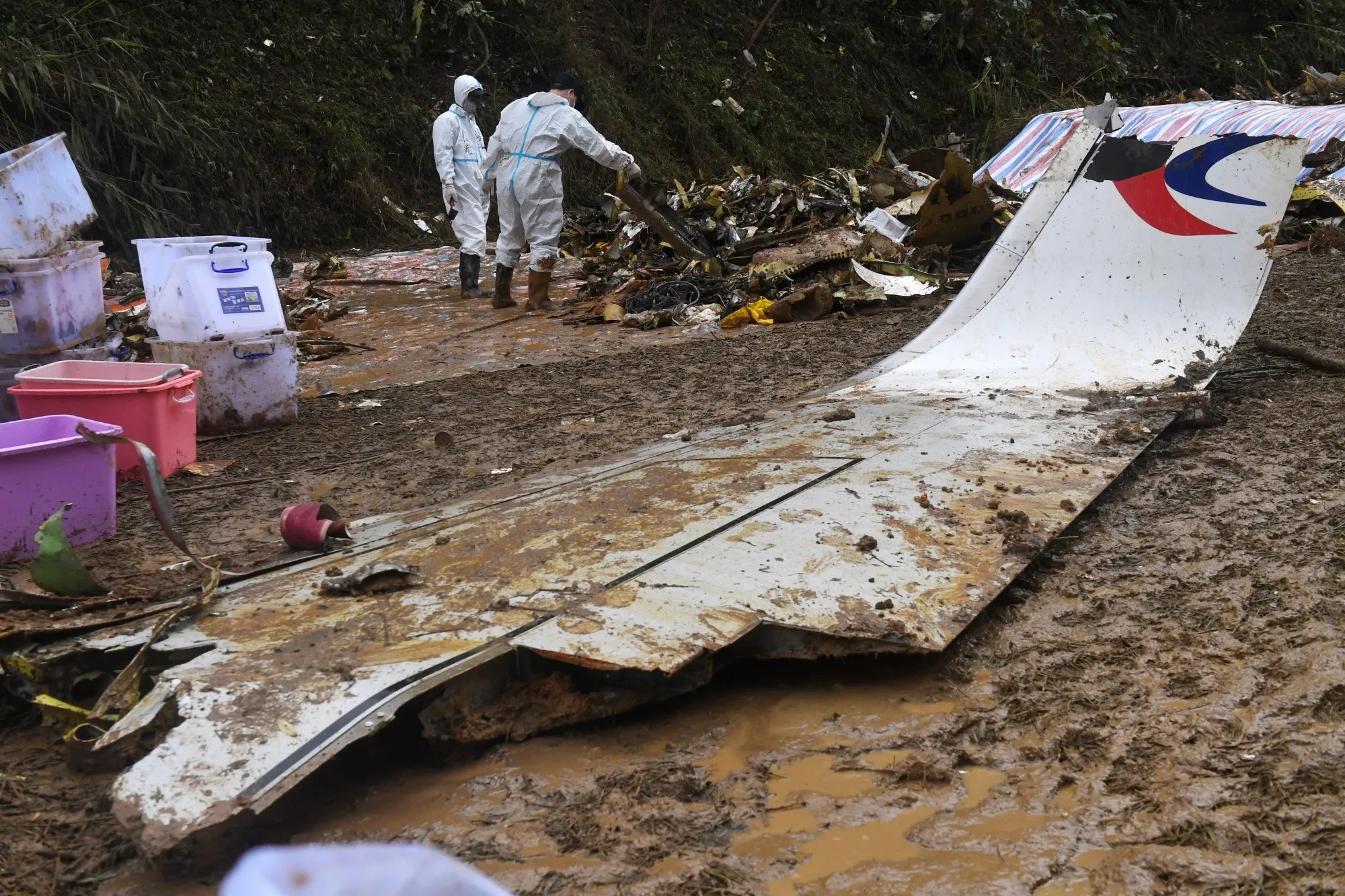
Air China has not had a fatal accident since Flight 129 crashed on approach to Busan in April 2002. Our concern is that the onboard procedures we observed on CA848 did not meet Air China's own published policy or the standards set out by global regulatory bodies ICAO and IATA.
A year and a day after Air China's own cabin fire
On 18 October 2025, Air China flight CA139 from Hangzhou to Incheon diverted to Shanghai Pudong after a passenger's lithium battery ignited in an overhead locker. The crew put out the fire and nobody was hurt, but the aircraft was taken out of service and passengers reached Seoul more than five hours late.
What the international rules say
The global rules changed on 27 March 2026, when the ICAO Council approved new power bank restrictions and sent them to all 193 ICAO member states, including China, as an addendum to the Technical Instructions for the Safe Transport of Dangerous Goods by Air. Under the addendum, power banks must travel in carry-on baggage, must not be recharged on board, and are limited to two per person, while a new recommendation says passengers should not use them to charge devices during the flight.
IATA's passenger guidance, revised for the 2026 regulations, limits passengers to two power banks of 100Wh or less, bans recharging them from the aircraft's power supply and advises against storing them in overhead lockers. The guidance also states that airlines may impose stricter conditions, and the 68th edition of IATA's Dangerous Goods Regulations will incorporate the ICAO changes from 1 January 2027.
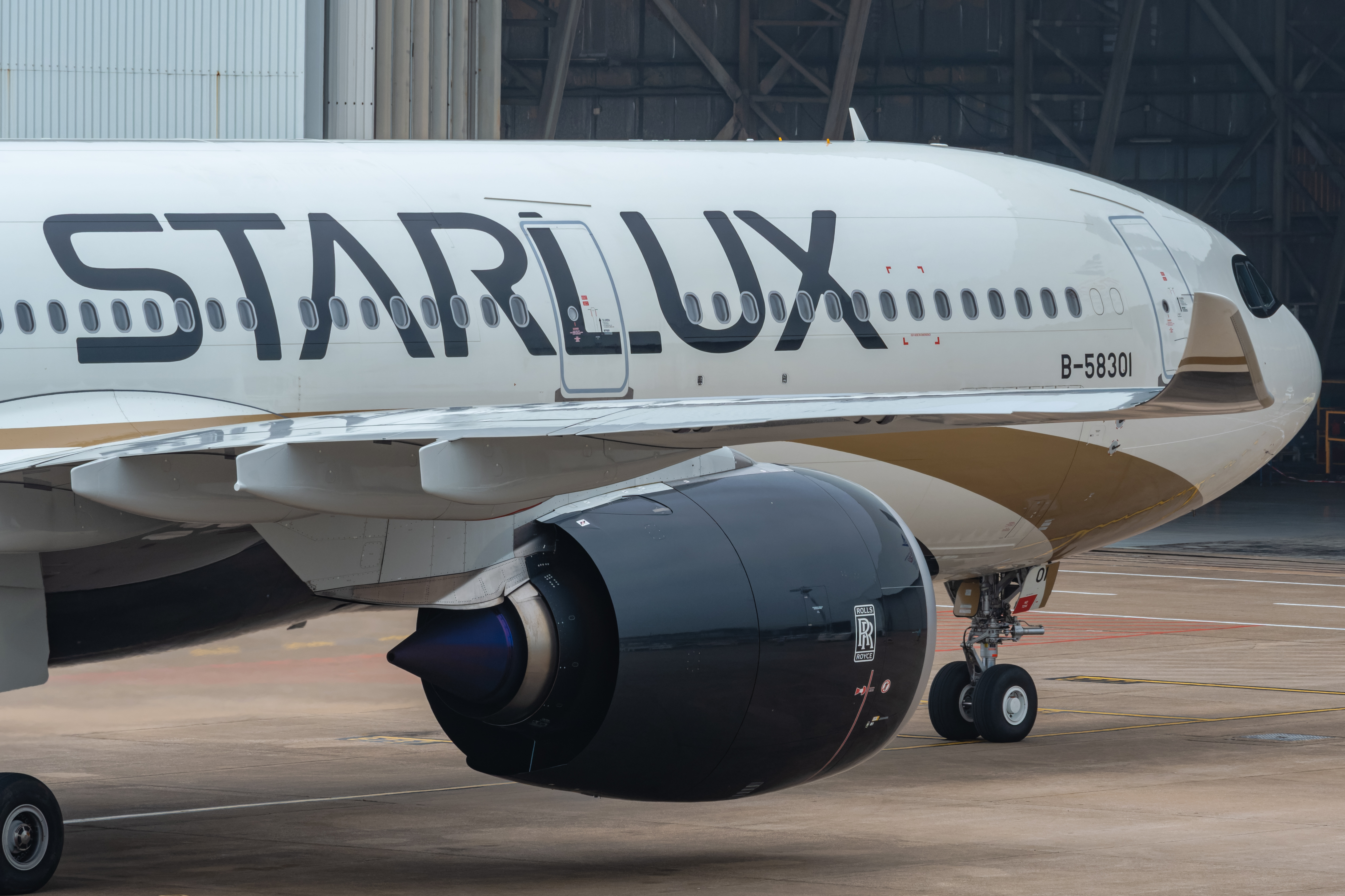
Many airlines have adopted stricter policies than this minimum. EVA Air has banned the use and charging of power banks on board since March 2025, STARLUX has banned them since its 2018 launch and Singapore Airlines, Scoot, and the Lufthansa Group all prohibit in-flight use. Our team has taken 70 flights this year across a wide range of airlines, and on each of those flights a ban on using power banks in flight was in place.
Air China's policy is also stricter than the ICAO minimum. In March 2025, the airline told Chinese media that power bank use is prohibited for the entire flight, and China's aviation regulator has barred passengers from using power banks to charge electronic devices in flight since 2014.
On CA848, a passenger told the crew their seat power port wasn't working, and the crew allowed them to continue charging their device from a power bank. That decision was inconsistent with Air China's stated policy and with ICAO's recommendation. Under Air China's policy, we would have expected the crew to ask the passenger to stop using the power bank and stow it, and to offer a seat with working power if one was available.
A turbulence announcement, but no follow-up
The noticeable and sustained turbulence occurred mostly over Russia, and the crew made an announcement in Chinese and English asking passengers to return to their seats and fasten their seatbelts. Our team member observed passengers walking the aisles, queuing for the toilets and standing in the galley while the turbulence continued.
The crew did not ask any of these passengers to return to their seats, no crew member walked the cabin to check that seatbelts were fastened, and the passengers standing in the galley remained there.
No single international standard sets out when cabin crew must check the cabin during turbulence. Instead, IATA's Cabin Operations Safety Best Practices Guide, which draws on ICAO's Annex 6, sets the industry benchmark, and each airline's approved operating manuals set the detailed procedures. National guidance is consistent on the core actions. The US FAA advises crew to monitor queues forming around the toilets, to remind passengers on night flights to keep their seatbelts visible and to carry out cabin checks after severe turbulence, while Kazakhstan's aviation authority, drawing on ICAO guidance, instructs crew to order passengers in the aisles back to their seats before taking their own.
Investigations show why announcements alone may not be enough. In a 2015 case investigated by Canada's Transport Safety Board, crew made several announcements in English, French and Mandarin before an encounter, yet many passengers remained unbelted and 21 were injured. Australia's regulator, CASA, identifies turbulence as the leading cause of in-flight injuries to crew and passengers, and data from 1981 to 1997 showed that 91% of seriously injured passengers worldwide did not have their seatbelts fastened. The Singapore Airlines SQ321 incident in May 2024 left one passenger dead and dozens injured.
What happens next
We welcome the opportunity to share our findings with Air China and will contact the airline directly to discuss them. For Air China to regain its seventh star, the airline will need to provide evidence that it has addressed both areas, including confirmation that its cabin crew procedures enforce the airline's ban on power bank use throughout the flight, and that crew is trained to return standing passengers to their seats and carry out cabin checks when the seatbelt sign is illuminated for turbulence. We will review Air China's rating once we have received and assessed that evidence.
Have questions or want to share your thoughts?
Sources:
ICAO: New power bank restrictions will safeguard international aviation,
IATA: Guidance Document for Operators – Power Banks 2026,
IATA: Passengers Travelling with Lithium Batteries – Guidance Document 2026,
Air China: Dangerous Goods and Baggage – Carriage of Lithium Batteries and Power Banks