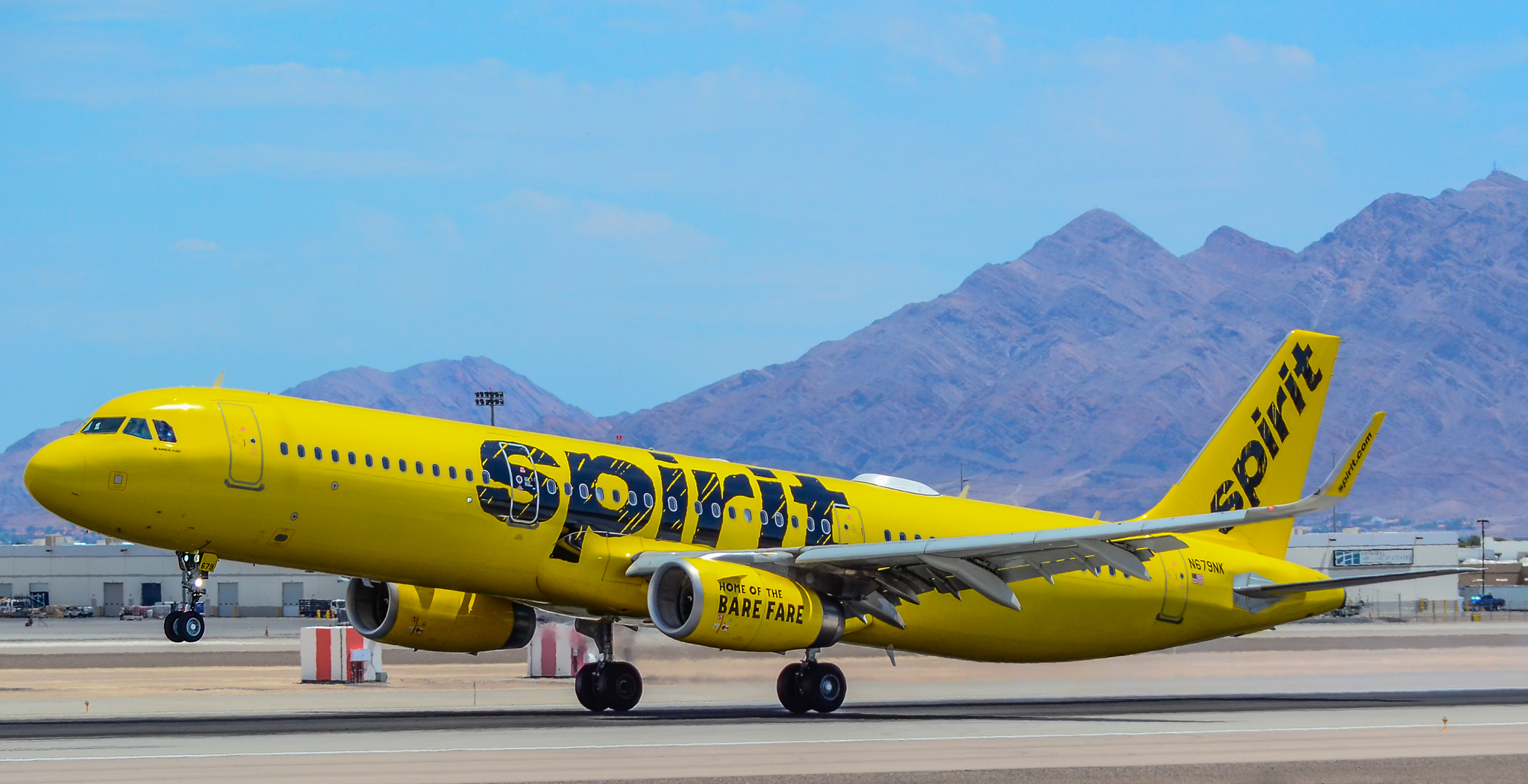
BREAKING NEWS: Spirit Airlines collapses and grounds all flights

By Josh Wood Sat May 2, 2026
Spirit Airlines has ceased flying after 34 years of low-cost operations. The collapse follows the failure of a $500 million federal bailout backed by the Trump administration. It marks the first major US carrier to shut down in almost 25 years, with debts of over $8 billion.
The airline has cancelled all flights effective from 3am ET on Saturday, May 2, leaving 17,000 employees out of work. Millions of ticketed passengers will now need to rebook with competing carriers. In a statement on its website, Spirit Airlines said: “We are proud of the impact of our ultra-low-cost model on the industry over the last 34 years.”
What led Spirit Airlines to collapse
Since the COVID-19 pandemic, Spirit Airlines has struggled to regain profitability amid rising costs. The current war in Iran has pushed fuel prices up to $4.88 per gallon, roughly double the pre-war price of $2.50.
Pratt and Whitney engine problems hit Spirit Airlines hard. The GTF powder-metal recall grounded dozens of A320neos for inspection. The operational blow meant the airline had to reduce its capacity, in turn reducing revenues.
The carrier filed for Chapter 11 in November 2024 and August 2025, and a 2024 block on the JetBlue merger removed Spirit Airlines’ most viable and valuable lifeline in its history.
The US domestic market is very competitive, and the airline only held 3.4% of the domestic US market, but was dominant in Fort Lauderdale with a 27% market share.
What happens now
At the time of its collapse, Spirit Airlines operated over 130 Airbus aircraft, including A320s, A320neos, A321s and A321neos. Lessors will now reclaim, reconfigure, repaint and lease these aircraft to other carriers.
Rival airlines will now scramble for Spirit’s slots at the busiest US airports. Its most valuable slots sit at LaGuardia and Reagan Washington National.
Ticketed passengers must rebook with rival carriers, and refunds are protected under US Department of Transportation rules, but recovering money from a bankrupt airline takes time. Credit card chargebacks offer the fastest refund route.
Every US traveller will feel the consequences. Removing Spirit’s 2% market share will increase already rising fares, just as the summer season begins.
A warning signal for the world’s low-cost carriers
Spirit invented the ultra-low-cost model by unbundling tickets to offer the lowest fares in the US. Wizz Air, Ryanair, AirAsia, IndiGo, Frontier, Allegiant, Cebu Pacific, JetSmart and Volaris all followed the template.
The ultra-low-cost model depends on cheap fuel, lean operations and aggressive growth: the Iran war has removed the cheap fuel. Spirit may not be the only airline to collapse under the pressure of mounting costs.
Have questions or want to share your thoughts?