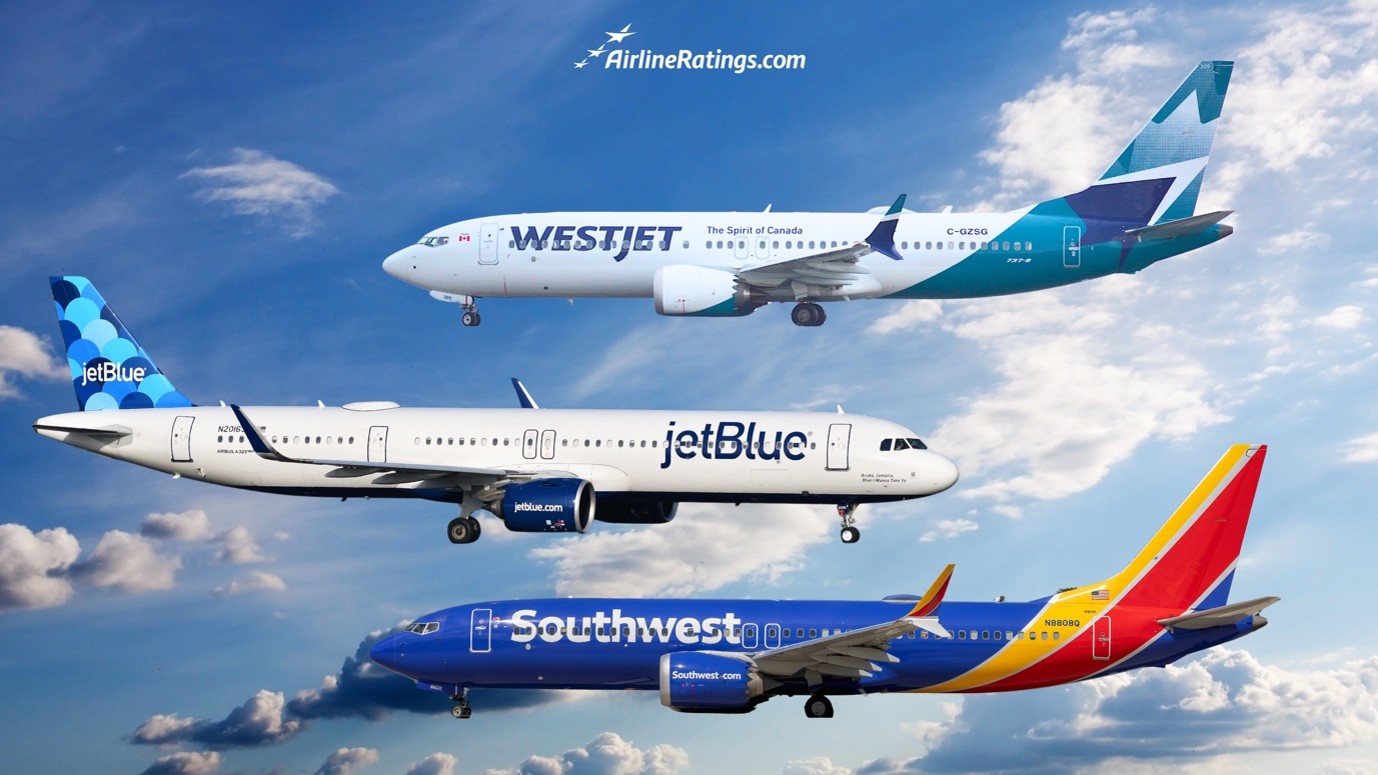
Southwest, JetBlue, and WestJet: who gives the best experience, safety and value?

By Josh Wood Fri Jun 26, 2026
All three started out as low-cost disruptors in their own right. Southwest Airlines led the way with the no-frills domestic model that budget carriers around the world have since copied, while JetBlue and WestJet quickly followed with similar ideas built around single aircraft types, point-to-point networks, and low fares.
Fast forward to today, and each airline looks noticeably different from the original “low-cost carrier” blueprint. Geography, competition and changing passenger expectations have all pulled them in different directions, and together they tell a broader story about how low-cost travel in North America has evolved. Here’s how they now compare.
How Southwest Airlines is rewriting the rulebook it invented
Southwest Airlines built the template that just about every low-cost carrier in the world has since copied. Operating a single Boeing 737 fleet simplified everything from maintenance and training to scheduling, while its point-to-point network sidestepped the complexity of the hub-and-spoke systems used by legacy airlines like American Airlines and Delta Air Lines. With aircraft utilisation often topping nine hours a day, Southwest kept unit costs low and offered one-way fares of around $170.
For fifty years that model was virtually untouchable in the US domestic market. Today, though, Southwest is starting to unwind parts of its own formula to stay competitive and hold onto its position as the leading budget airline in the United States.
Some of the biggest changes are already here. The airline has introduced assigned seating, drawing the curtain on its long-standing open boarding system. It is also rolling out differentiated seating, including premium and preferred seats, and has added red-eye flights on transcontinental and Hawaiian routes.
READ: Southwest, the Airline that doesn't have meals or a buy on board menu
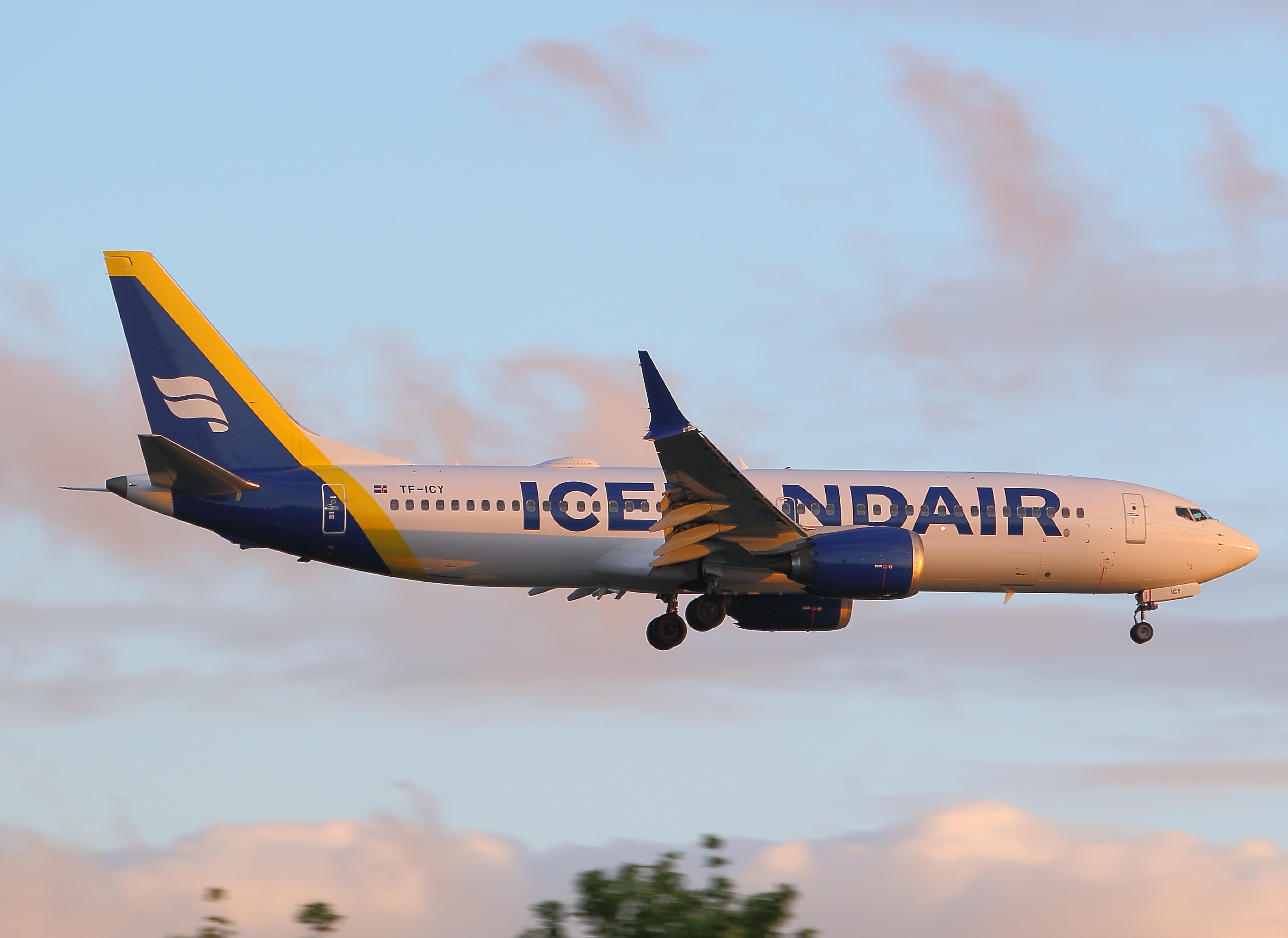
Looking further ahead, Southwest is moving toward fare segmentation, variable loyalty earnings and deeper airline partnerships through interline agreements. It already works with major international carriers including EVA Air, China Airlines, Philippine Airlines, Singapore Airlines Turkish Airlines, ANA, Icelandair and Condor.
One of the most defining parts of flying Southwest has always been its complimentary onboard offering. Free snacks and non-alcoholic drinks have been part of the airline's identity since it first took to the skies on 18 June 1971. The classic peanuts, later replaced by pretzels and snack mix, were never an add-on. They were built into the original no-frills, low-fare concept from day one. Even when the larger US carriers pulled complimentary service back to their premium cabins, Southwest held the line. The one shift came in the post-COVID era, when service was trimmed to flights of 251 miles or more rather than across the entire network.
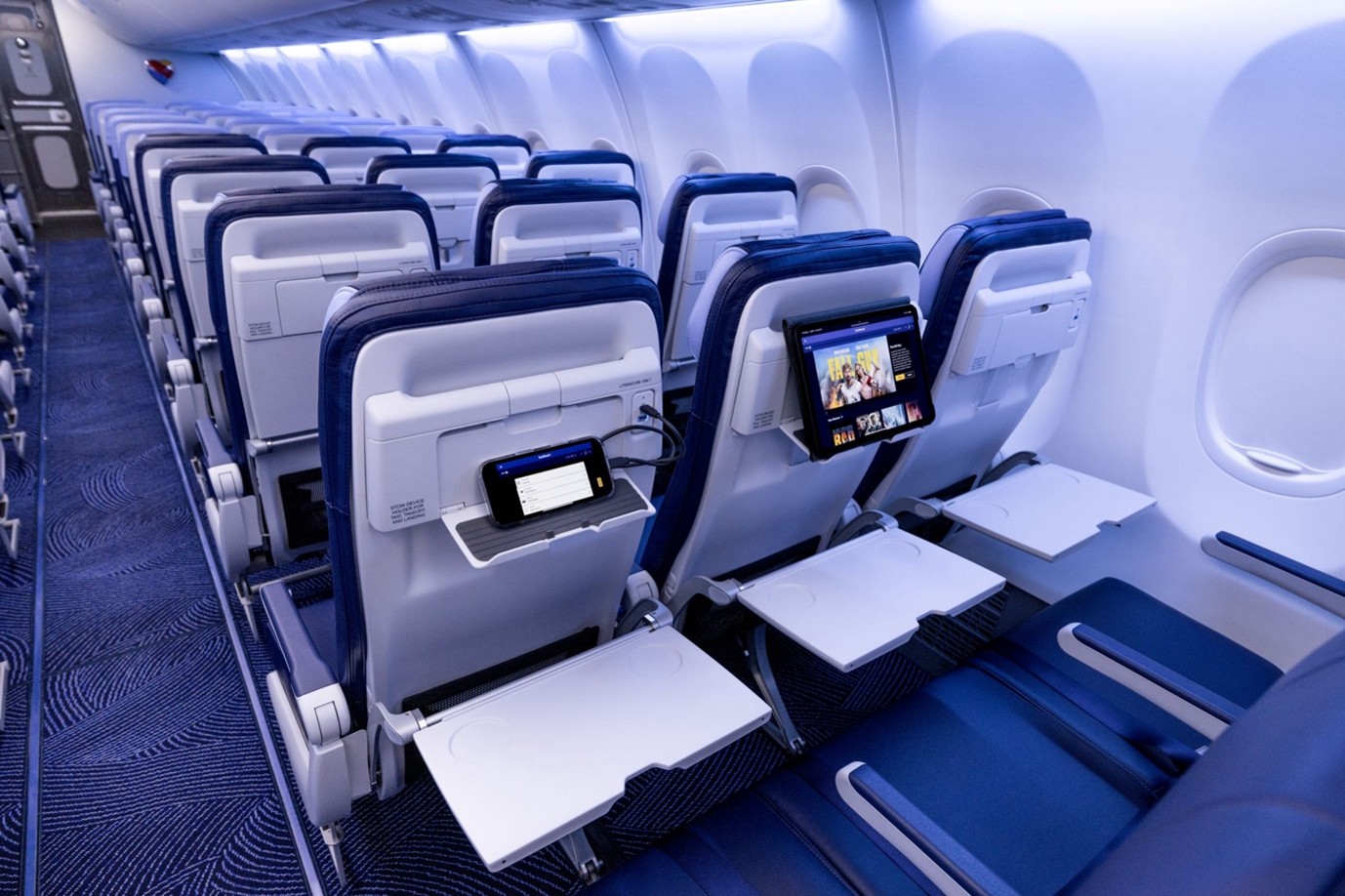
Inflight entertainment has followed a similar arc. Southwest has never fitted seatback screens, choosing instead to stream to passengers' own devices, and it built the system up piece by piece. The WiFi rollout was announced on 21 August 2009, with installation starting in early 2010. Live TV entered testing in the summer of 2012, and video on demand arrived in January 2013. iHeartRadio joined as a free onboard music option on 18 May 2018, followed by free messaging through iMessage and WhatsApp in October 2018.
The real turning point came on 1 November 2018, when Southwest switched from a paid movie product to a fully free inflight entertainment system on its WiFi-equipped aircraft. Before that, passengers paid $5 to watch a film. The result today is a completely free entertainment ecosystem across supported aircraft, delivered entirely through the screens travellers already carry.
What to expect onboard Southwest
Boeing 737 aircraft on all flights
Seat pitch of 31 to 32 inch and extra legroom seating offering 36 inches
Assigned seating with options to upgrade to preferred or extra legroom seats
Complimentary snacks and non-alcoholic beverages on flights over 251 miles
Free inflight entertainment streamed to your device
Chargeable inflight Wi-Fi
In many ways Southwest is shifting toward a hybrid model, something JetBlue has been refining for years. The airline that once defined no-frills low-cost travel in North America is now, in some respects, following the path of the carriers that came after it.
JetBlue is the premium hybrid airline
JetBlue did not try to be the cheapest airline. From its inception, it competed on experience rather than price alone, a strategic choice shaped almost entirely by geography. Based at New York JFK, one of the most competitive aviation markets in the world, JetBlue faced Delta Air Lines and American Airlines from day one. Matching them on price while undercutting them on product was never a viable option.
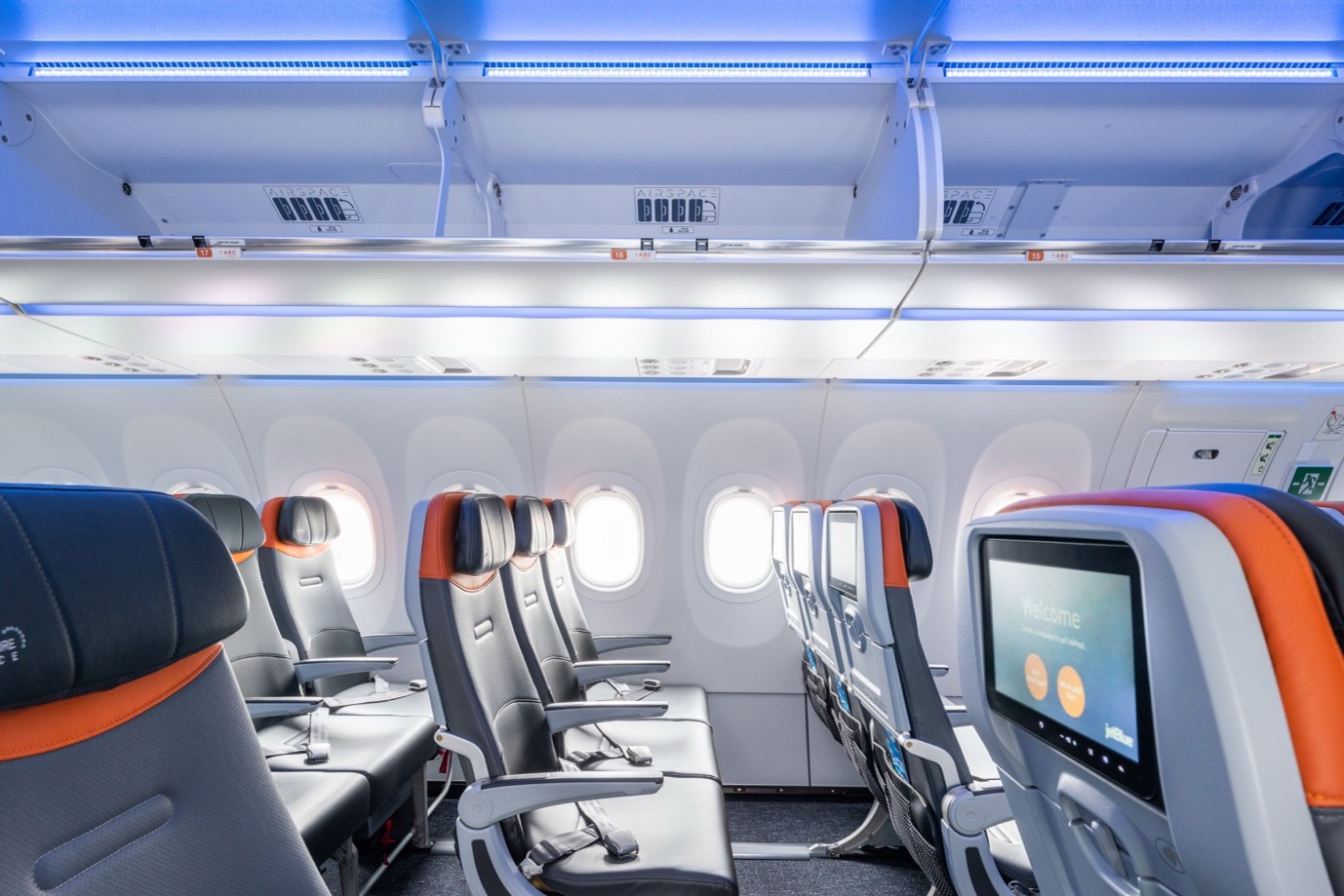
Instead, JetBlue built an economy cabin which other low-cost airlines envied. The seat pitch of up to 34 inch set a standard that most North American carriers still cannot achieve. Seatback entertainment screens, free Wi-Fi, and complimentary snacks have positioned the airline closer to a full-service carrier. In fact, this year AirlineRatings.com moved JetBlue into its full-service airline list. The added extras reflected in average one-way fares of around $383, almost double Southwest’s.
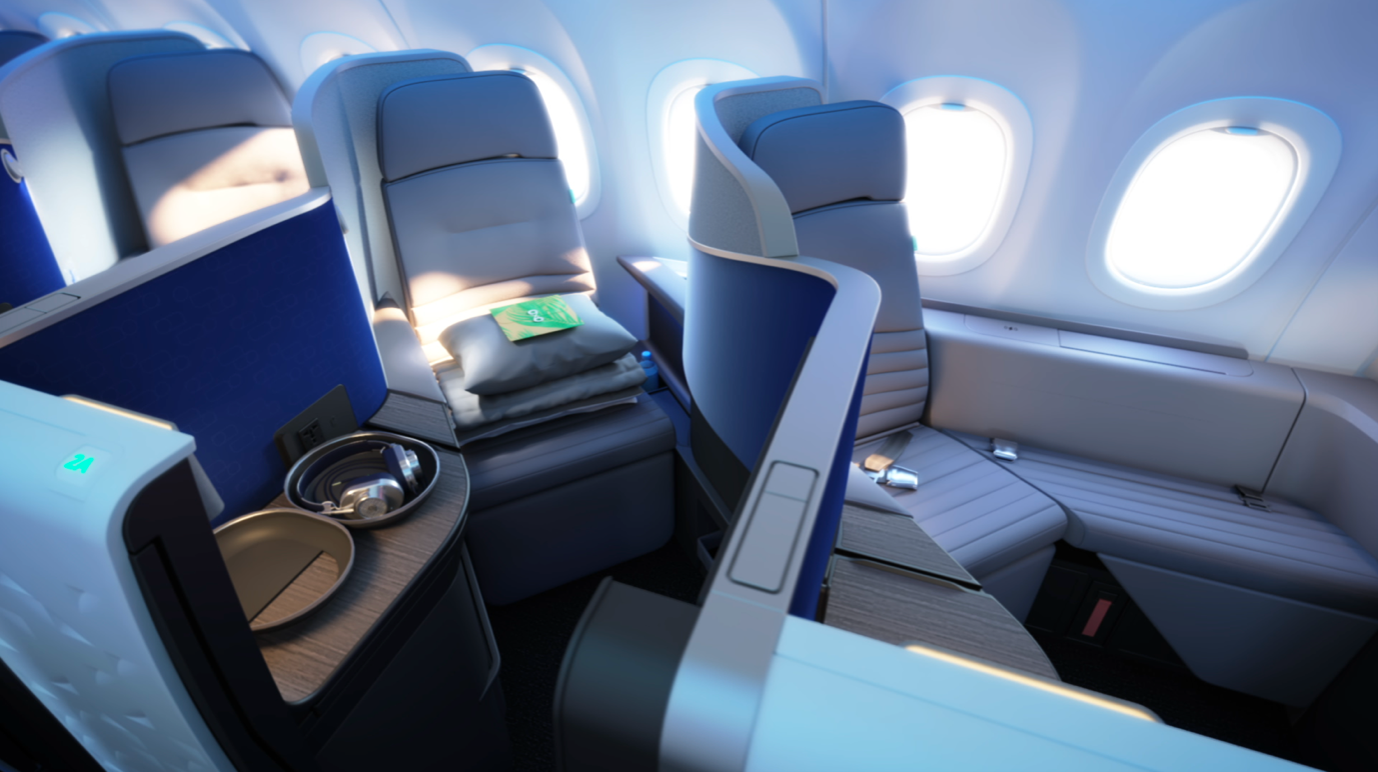
The introduction of Mint business class on Airbus A321 aircraft took the strategy further. Lie-flat suites on transcontinental routes were a benchmark few legacy carriers matched at the same price point. The seat’s success encouraged JetBlue to enter the transatlantic market in 2021 to London Heathrow, placing it in direct competition with British Airways and Virgin Atlantic, a route few low-cost carriers have ever attempted.
What to expect onboard JetBlue
Airbus A320 family and A220 aircraft for domestic flights, and A321LR for transatlantic
Economy seat pitch of up to 34 inches
Seatback entertainment screen on all aircraft
Free Wi-Fi with every ticket
Complimentary snacks and non-alcoholic beverages
Fully lie-flat 80 inch bed in Mint Business class available on select routes
WestJet was forced into a different evolution
WestJet was originally founded as a Canadian version of Southwest Airlines, with a single fleet type, point-to-point domestic routes, and fares lower than Air Canada. The intention was to do what Southwest has done in the United States, but Canada’s geography made that impossible.
The domestic market that aided Southwest’s success of high frequency, short-haul flying between densely populated cities does not exist on the same scale in Canada. WestJet could not survive as a pure domestic carrier due to vast distances between population centres. The airline had to build hubs, add connections, and introduce widebody aircraft to make the economics work.
The Boeing 787-9 Dreamliner was the defining moment that transformed WestJet into a hybrid airline. The airline used the aircraft to launch long-haul services to Europe, introducing premium economy cabins and lie-flat business seats. The airline embraced interline partnerships Southwest historically refused, connecting its network with Delta Air Lines, Air France-KLM, Qantas, and Emirates to feed passengers from global networks through Canadian hubs.
What to expect onboard WestJet
Boeing 737 fleet on domestic and short-haul flights
Boeing 787-9 Dreamliner on transatlantic and long-haul flights
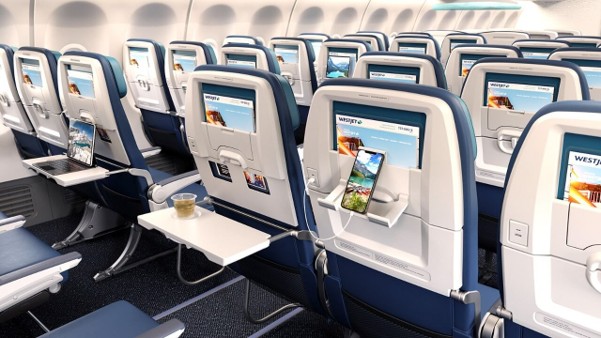
Economy seat pitch from 28-31 inches on short-haul flights, and 31 inches on long-haul flights
Premium economy on 787 routes with 38 inches of pitch
Business class on 787 routes with lie-flat beds extending to 79 inches
Buy-on-board food and drink on short-haul and complimentary meal services on long-haul flights.
READ: The WestJet of Europe: Why Air Europa stacks up.
Each airline holds an impeccable safety record
AirlineRatings.com ranks Southwest Airlines, JetBlue and WestJet as Seven Star safety rated airlines. All three airlines feature in the 25 World’s Safest Low-Cost airlines, released in January 2026.
None of these airlines have had a fatal crash in the last decade. They all uphold international safety standards through IATA registration, have no operational safety concerns, and are regarded as among the safest airlines in North America.
Southwest, Westjet or Jetblue, which airline should you choose?
Choose Southwest Airlines for the cheapest, highest frequency services across the USA. Southwest is not the airline to choose for flights to Canada since the airline does not fly there.
Choose JetBlue for an unmatched business class experience across the Atlantic or transcontinental US. Passengers will not find better legroom elsewhere but must be willing to pay a premium.
Choose WestJet for the best routes within Canada and onwards to the US. The airline’s hub, Calgary, offers direct flights to Europe and Asia for passengers not willing to connect through the US.
Have questions or want to share your thoughts?