Delta or JAL: Which airline is the best to LA?
By Josh Wood Fri Aug 7, 2026
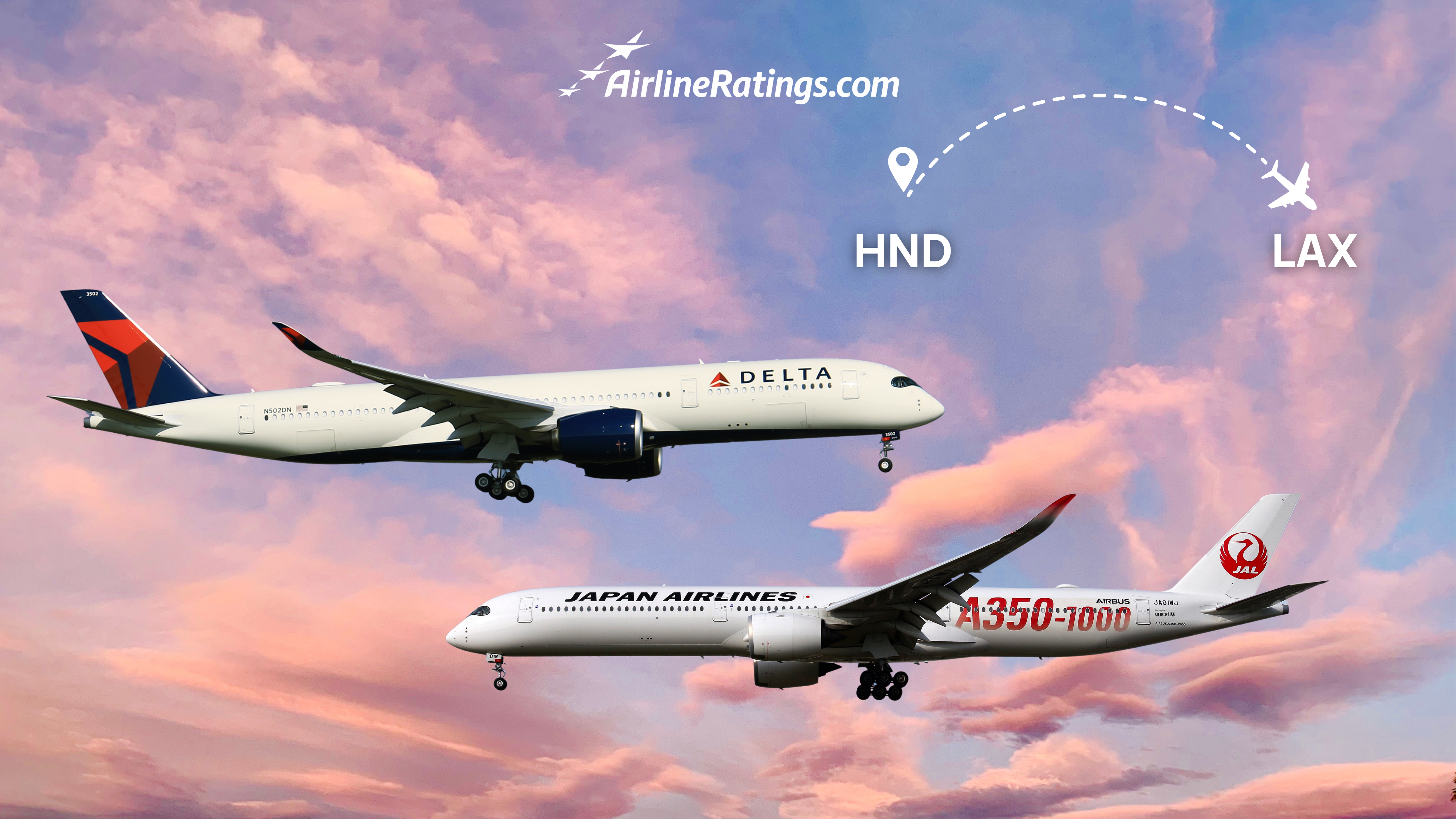
Two airlines fly the same family of aircraft between Tokyo Haneda and Los Angeles, but only one sells First Class. Japan Airlines (JAL) and Delta Air Lines both operate the route daily on the Airbus A350, departing within an hour of each other. So which carrier gives passengers the better seat, the better meal, and the better night's sleep all for a good price? We compared them cabin by cabin.
Flight times and frequencies
Each airline operates a daily service between the two cities all year round. JAL utilises its new A350-1000 in a four-class layout, and Delta Air Lines its A350-900 aircraft in a three-class configuration.
Japan Airlines JL16 leaves Tokyo at 17:25 and touches down in Los Angeles at 11:45. Delta's DL8 departs at 16:35 and lands at 10:53. Read on to find out how each aircraft compares on one of the most competitive routes across the Pacific, which carriers 1.1 million passengers yearly.
Japan Airlines’ flagship four-class A350-1000
Economy and Premium Economy
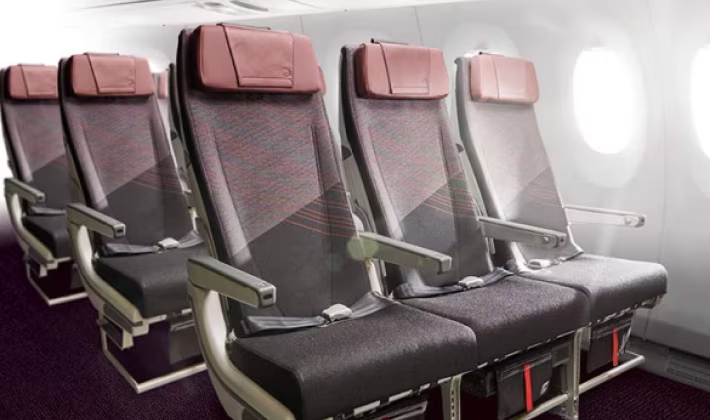
At the back of the plane, JAL’s economy seats offer up to 34 inches of pitch and 18 inches of width, with every seat having a 13-inch 4K screen coupled with Bluetooth headphone connectivity. Very few other Asian airlines offer this much room in economy. Each seat has USB-A and USB-C ports, and every economy passenger gets an hour of free Wi-Fi.
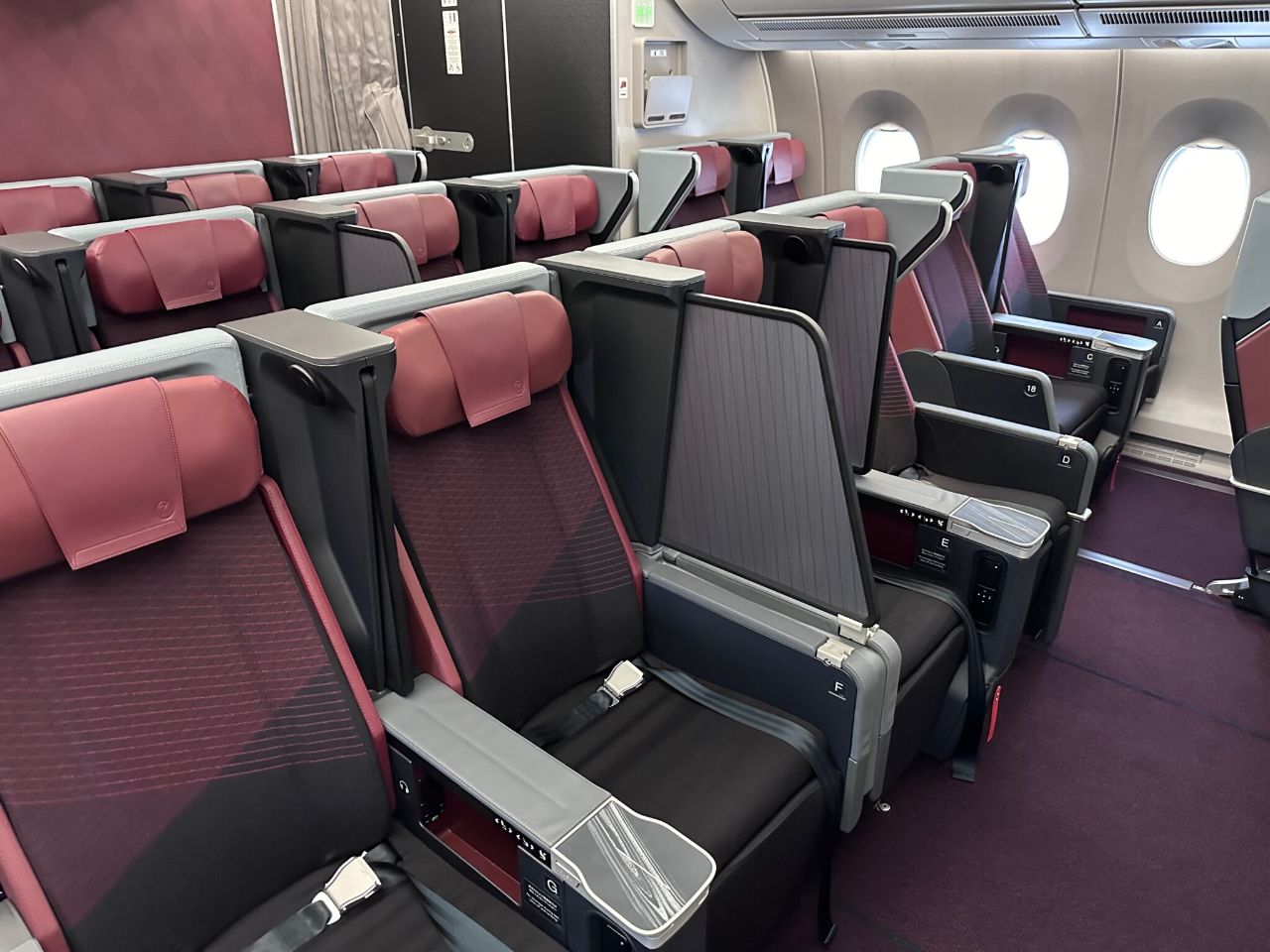
The airline’s premium economy is a clear step up and delivers more than a few extra inches of space. Each seat is 19 inches wide and has a seat pitch of 42 inches, a figure that few other airlines manage to achieve. A motorised system controls the 7-inch recline and 90-degree legrests, and each seat has a large partition to elevate privacy. The 4K screen is 16 inches and includes Bluetooth and USB power outlets.
Business Class
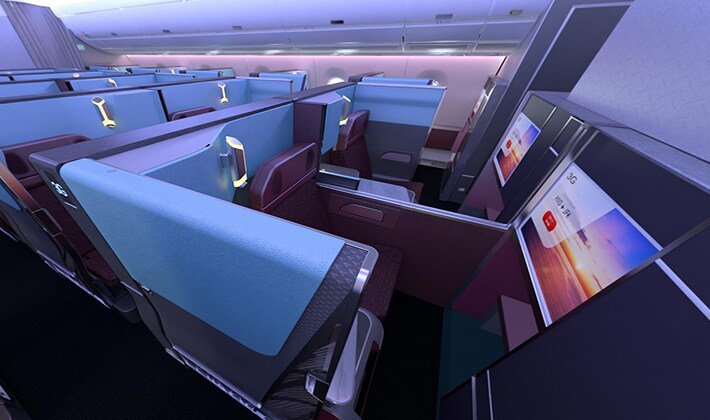
JAL's new business class seat is the airline's first-ever enclosed business suite with a privacy door, arranged in a 1-2-1 layout, all with direct aisle access. Each suite has a fully lie-flat bed at 78 inches long and 22 inches wide, an easy-access storage area for a max-sized carry-on bag and a personal wardrobe. A 24-inch 4K screen sits ahead of headrest-mounted speakers, and the bed uses weight-distributing cushions.
Catering enables passengers to dine on demand, with up to 13 à la carte options alongside chef-designed set menus. North American flights carry Kitchen HIDA wagyu beef curry, JAL's exclusive Soranoiro yuzu ramen and Jean-Paul Hévin chocolates.
HERALBONY amenity kits and slippers appear on every route, with cardigans available to borrow and the health care items include bamboo foot massagers. Wi-Fi is free and unlimited for all business class passengers, regardless of fare type.
Japan Airlines pioneering First Class
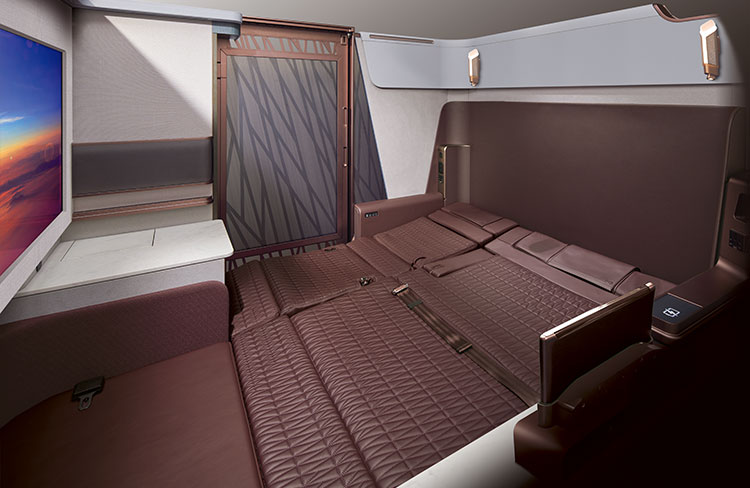
JAL sells something Delta cannot match on this route, or on any route. Six First Class suites sit at the front of the A350-1000 in a 1-1-1 layout with a bed measuring 79 inches, each with a closing door, a 43-inch 4K screen, a universal power outlet and USB-A and C ports.
JAL’s catering elevates the seat to a real experience not to be missed. The August menu runs with nine washoku (traditional Japanese) courses from chefs Ishikawa Hideki and Koizumi Koji, with a Western option designed by Kishida Shuzo of Quintessence. Amenity kits come from HERALBONY and the ground experience includes dedicated check-in, security, and a First Class lounge.
What Delta Air Lines brings to the route
Delta Air Lines operates two layouts of the A350-900, each with differing numbers of seats. The seat dimensions and features remain identical on each cabin layout.
Economy and Premium Economy
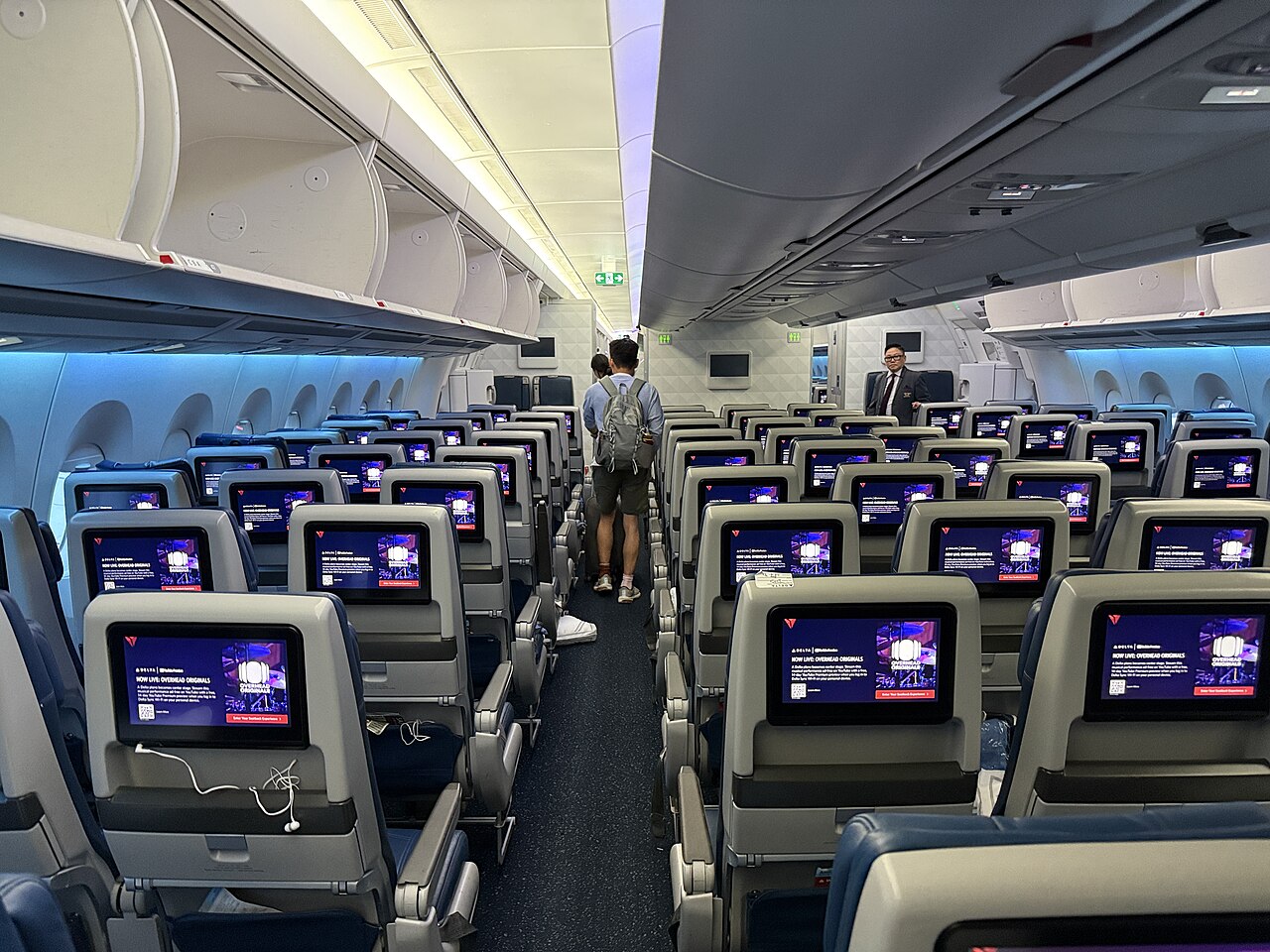
Delta Air Lines offers two types of economy, with the standard seat having 31 inches of pitch and Delta Comfort (extra legroom) 34 inches. The seats have the same 18-inch width, 9-inch touchscreen, and USB-A charging ports. There is no Bluetooth connectivity, a feature increasingly being installed across global airlines. Delta Comfort seats have 7 inches of recline, against the standard 4 inches. Each seat has access to a share universal power outlet and a USB-A port.
In premium economy, Delta offers 38 inches of pitch and just half an inch more width than economy at 18.5 inches. Recline does not differ from the Delta Comfort seats at 7 inches, but neither does Japan Airlines’ offering. A 13.3-inch screen is available alongside universal power outlets and USB-A ports.
Delta One business class
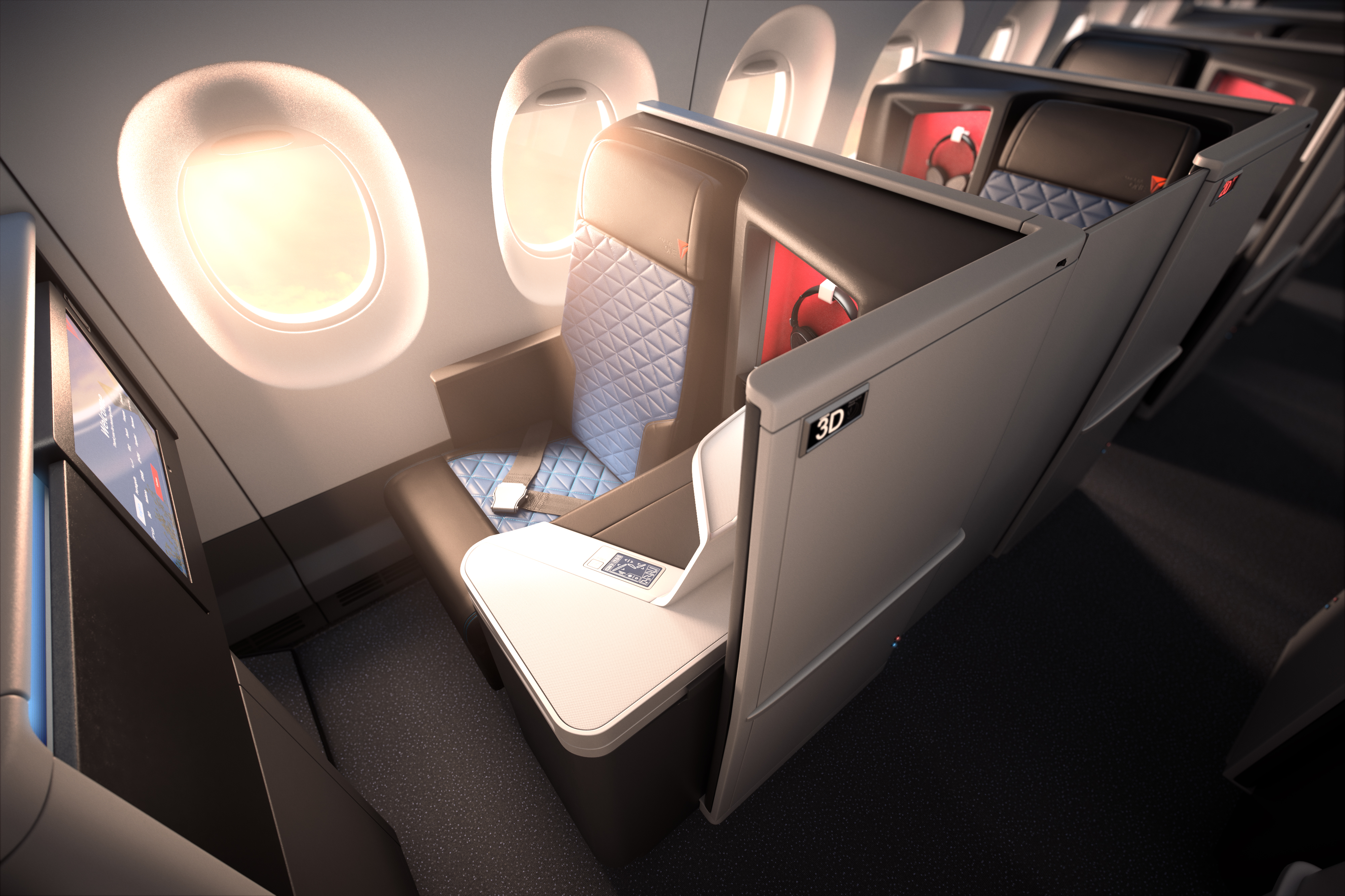
Delta Air Lines markets Delta One as its most premium travel experience, but can it rival Japan Airlines' brand-new seat? The A350-900 carries 32 Thompson Vantage XL suites in a staggered 1-2-1 layout, each 20.5 inches wide and converting into a fully lie-flat bed of 76 inches, two inches shorter than Japan Airlines. Every suite has a closing privacy door, direct aisle access, an 18-inch touchscreen, a universal power outlet, wireless charging and USB ports.
Bedding comes from Missoni and includes an oversized duvet, a large sleeping pillow and a lumbar pillow that doubles as a mattress pad, with slippers at every seat. The Missoni amenity kit has Grown Alchemist skincare, a bamboo toothbrush and toothpaste, an eye mask, earplugs, socks, and a pen. Catering is chef-curated and the wines come from Delta's sommelier, Andrea Robinson.
Delta One passenger's get dedicated check-in and security at Delta hubs, priority boarding and access to the Delta One Lounge, which operates at just four airports: JFK, Boston, Seattle, and Los Angeles. However, Basic Business fares lose lounge access for travel on or after 19 January 2027, joining United, Air France, KLM and Finnair in selling stripped-back business fares.
Pricing
The team at AirlineRatings.com researched a return ticket departing Tokyo on 1 September for a week. Each fare is the base fare, without added extras or ticket flexibility, and both cover the A350 services described above.
Tokyo to Los Angeles | Economy | Premium Economy | Business | First |
Japan Airlines | $802 | $1,153 | $3,025 | $9,926 |
Delta Air Lines | $1,322 | $2,342 | $4,768 | Not offered |
Delta costs more in every cabin out of Tokyo, and the gap widens as you move forward in the cabin. Economy is 65% higher, business 58% higher, and premium economy costs more than twice what JAL charges.
The most surprising cost is between cabins rather than between airlines as JAL's premium economy costs $169 less than Delta's economy fare, so a passenger can pay Japan Airlines less than Delta's cheapest ticket and receive 42 inches of pitch instead of 31.
The upgrade ladder tells the same story. Moving from economy to premium economy costs $351 on JAL and $1,020 on Delta, for the same route in the same week.
Los Angeles to Tokyo | Economy | Premium Economy | Business | First |
Japan Airlines | $1,153 | $2,447 | $5,092 | $20,426 |
Delta Air Lines | $1,165 | $2,245 | $6,367 | Not offered |
For flights starting in Los Angeles, economy separates the two airlines by just $12, and Delta undercuts JAL in premium economy by $202. Only business class has a large difference, as JAL passengers can save $1,275 and can arguably receive a better service and a better seat.
Naturally, each carrier prices most aggressively in its home market. JAL economy runs 44% higher from Los Angeles than from Tokyo, while Delta drops 12% in the opposite direction. Where a passenger buys matters almost as much as which airline they choose.
For us, the clear winner based on value alone is Japan Airlines across all cabins. But its world-leading legroom in economy and pioneering first class suites, increases the airline’s lead across the Pacific. Delta Air Lines still offers a solid product, and its Delta One suite is considered one of the best in North America. However, the price difference is not worth it against Japan Airlines, especially if you book a Business Basic fare which revokes lounge access.
Have questions or want to share your thoughts?