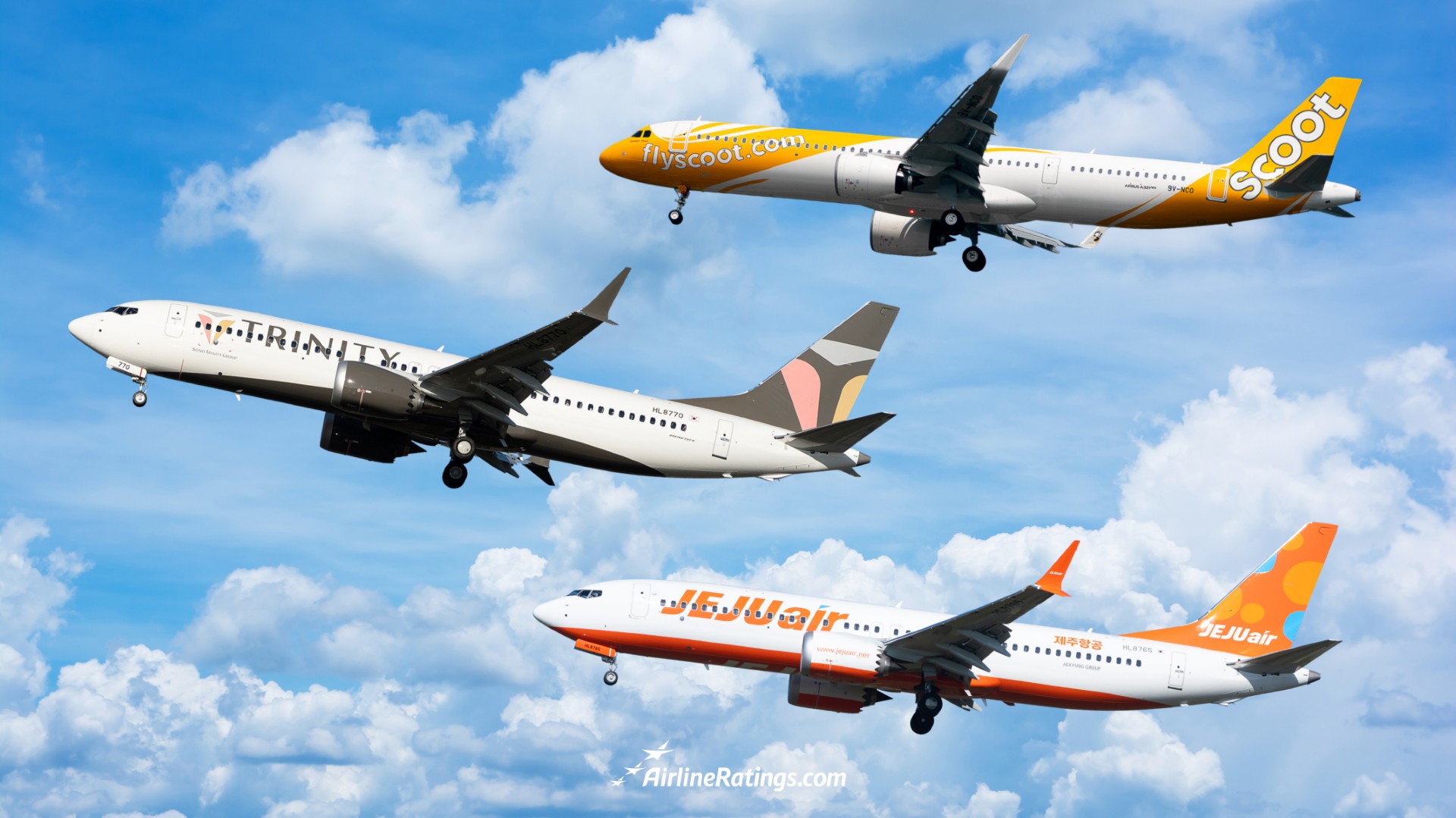
Singapore to Seoul on a budget: Scoot, Trinity Airways and Jeju Air compared

By Nicholas Ling and Sharon Petersen Tue Nov 3, 2026
With spectacular scenery and the global reach of Korean pop culture, widely known as the Hallyu wave, South Korea has become one of Asia’s most sought-after destinations over the past two decades. Before the pandemic, tourists were spending US$25.46 billion a year in the country, close to triple the US$9.25 billion recorded in 2007.
Airline capacity has followed that demand. Seats to and from South Korea climbed to nine million in November 2025, 4.7 per cent above pre-pandemic levels, and Singapore stands out among the country’s key international markets with capacity up 44 per cent since 2019.
Singapore has long served as a transit hub for travellers heading to and from Korea, though Seoul has quietly built a similar role of its own, with its position in North-East Asia giving it strong reach across the Pacific.
The airlines on the route
Six airlines currently fly between Seoul Incheon and Singapore Changi. Korean Air, Asiana Airlines and Singapore Airlines provide the full-service options, while Scoot, Trinity Airways and Jeju Air cover the low-cost end of the market. Once Asiana completes its merger with Korean Air, the number of full-service carriers on the route will fall to two.
All three low-cost carriers launched their Seoul to Singapore flights within the past 15 years, which shows how quickly the choice has grown for travellers who want to keep their airfare down.
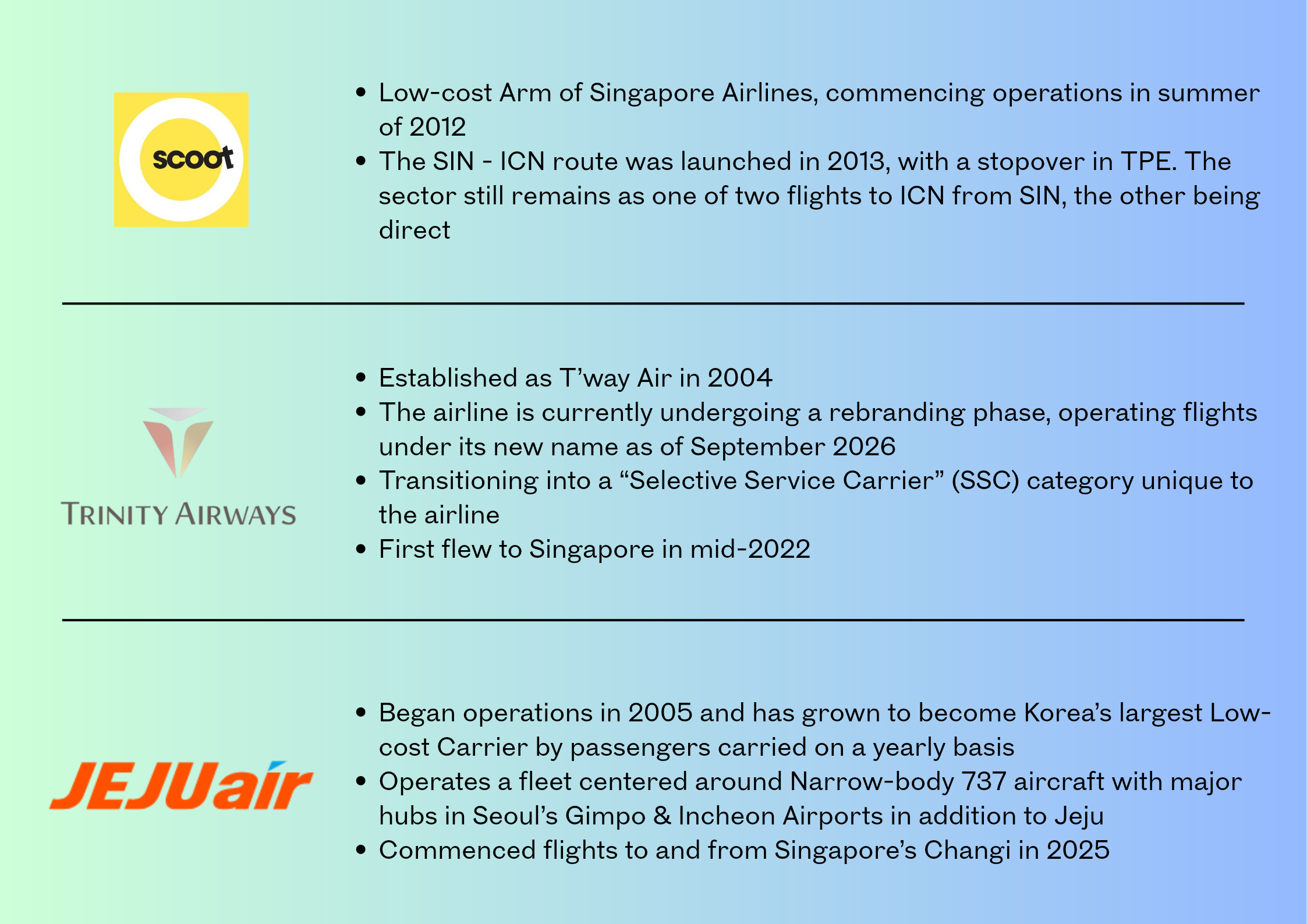
Airline Frequencies
Scoot | TR843/TR842 (Direct flight) | Three times weekly (Mon, Wed, Sat) |
Scoot | TR873/TR872 (via Taipei) | Daily |
Trinity Airways | TW161/TW162 | Daily |
Jeju Air | 7C2623/7C2624 | Daily |
Economy compared
Economy on a low-cost carrier follows a familiar formula of a basic seat, few inclusions and a long menu of paid extras. To compare the three airlines on this route, we looked at the seat itself before weighing up the add-ons and the value each one offers.
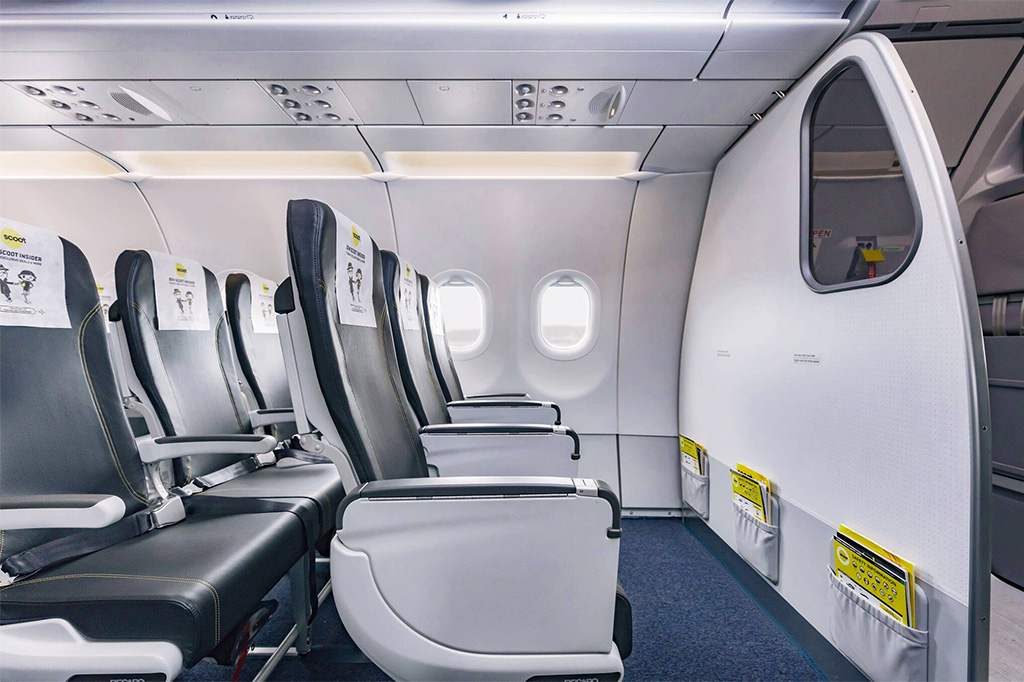
The Scoot seat
Pitch: 30inch | Width: 18inch | Recline: 6inch
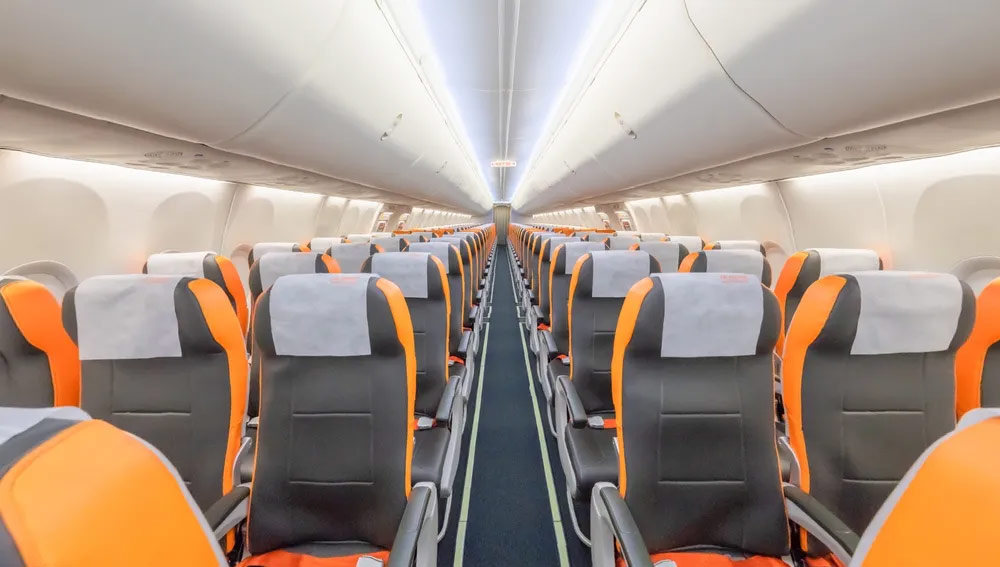
The Jeju Air Seat
Pitch: 29–30inch | Width: 17inch | Recline: 3inch
The Trinity Seat
Pitch: 31inch | Width: 18.1inch | Recline: 118 degrees
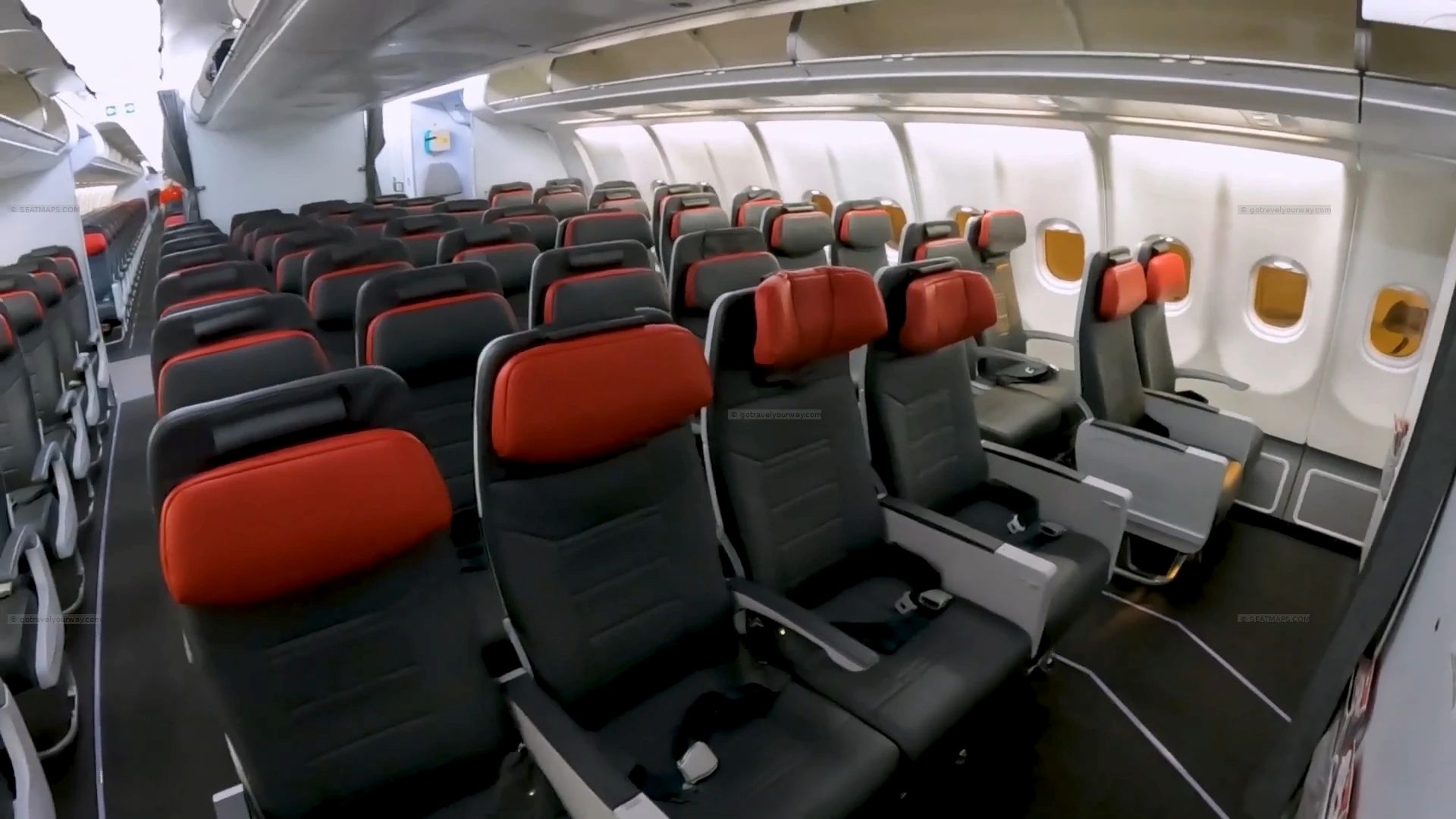
All three airlines offer a similar hard product on this route, with standard economy seats of average pitch and width and no personal seatback screens. Every seat comes with adjustable armrests, although Jeju Air stands alone as the only one of the three without a four-way adjustable headrest.
Food and drink
Food and drink usually come at a price on low-cost carriers, and until recently that applied to all three airlines on this route. Trinity Airways changed that in September 2026 when it revamped its inflight service, and it now serves complimentary meals on medium-haul flights (one meal) and long-haul flights (two meals), which passengers can preview on its website. Under its former T’way branding, the airline ran a buy-on-board service instead.
Scoot has the broader paid menu of the remaining two, with hot meals from S$9 to S$12, snacks from S$3 to S$9, soft drinks from S$6 to S$9 and alcoholic drinks at around S$12.
Jeju Air’s menu changes depending on where the flight departs, although its prices sit close to Scoot’s at roughly S$8 to S$17 depending on portion size. The airline recommends ordering between 24 and 72 hours before departure because onboard stock can run out.
Full menus are available for Scoot, Trinity Airways and Jeju Air.
Entertainment, Wi-Fi and charging
None of the three airlines offers personal seatback screens and Scoot is the only one with inflight Wi-Fi. Packages start at S$6, while ScootPlus passengers receive 200MB free as part of their fare. Trinity Airways has no Wi-Fi yet but plans to introduce it gradually as part of its revamp.
Trinity Airways fits a USB port at every seat, while Scoot offers power only on its 787 Dreamliner fleet and, unusually, charges economy passengers a small fee to use it. Jeju Air does not have and charging or in flight connectivity facilities.
Baggage
Trinity Airways is the only one of the three to include checked baggage in its base fare. Scoot and Jeju Air both require passengers to buy a higher fare type to get a checked allowance, which is 20kg on Scoot and 15kg on Jeju Air.
Cabin baggage allowances are almost identical across the three, with only small differences in the conditions of carriage.
Scoot | Up to 10kg, maximum two pieces |
Trinity Airways | Up to 10kg, one carry-on bag plus one personal item |
Jeju Air | Up to 10kg, one carry-on bag plus one personal item |
Fares
Price is likely to be the deciding factor for most travellers on this route with little separating the low cost carriers themselves. Fares follow the seasons but also move dynamically, and Skyscanner data shows December to January and June as the most expensive periods, while off-peak months can turn up fares at both ends of the scale.
To show the spread, we priced economy return fares in Singapore Dollars across a peak week over Christmas and an off-peak week in late February.
Peak: 21st - 28th of December
Scoot | S$771 – S$1,245 |
Trinity Airways | S$850 – S$1,582 |
Jeju Air | S$807 – S$ 907 |
Off-peak: 15th-22nd of February
Scoot | S$466 – S$930 |
Trinity Airways | S$763 – S$1,624 |
Jeju Air | S$883 – S$984 |
Scoot offered the cheapest fare we found in both periods, dropping as low as S$466 off-peak, while Jeju Air held the tightest price range of the three. Trinity Airways sat at the top end, which reflects the meals and baggage it now bundles into its fares. Seat selection costs extra on all three airlines, although it comes included when passengers buy a higher fare type at booking.
Safety ratings
Scoot and Trinity Airways both hold seven-star safety ratings from AirlineRatings. Jeju Air sits on five stars, largely because of its December 2024 crash at Muan International Airport, which killed 179 of the 181 people on board.
Our safety ratings consider factors including IOSA registration, fatal accidents over the past ten years, government audits and whether an airline appears on the EU Air Safety List. Airlines that also pass our independent onboard cabin safety audit earn Seven Star PLUS status.
Which one should you choose?
The right choice depends on what matters most to you. Jeju Air suits travellers who want steady pricing and easy onward connections to Korea’s regional cities, though it delivers the most basic experience of the three.
Trinity Airways has moved partway out of the low-cost category with its rebrand, and travellers willing to pay a little more get complimentary meals, a checked bag and a USB port at every seat, its probably the most comfortable of the three.
Scoot sits between the two, with the cheapest fares we found and the widest range of extras, although most of those extras come at a cost. KrisFlyer members also earn miles on Scoot flights, which adds to its appeal for travellers based in Singapore.
Whichever direction you’re flying, it pays to rank your own priorities before booking, since the lowest fare on screen can look very different once you add a bag, a meal and a seat.
Have questions or want to share your thoughts?