Which airline is the safest in Indonesia?

By Sharon Petersen Fri Jul 10, 2026
Indonesia is one of the most demanding places on earth to run an airline. The country scatters more than 270 million people across some 17,000 islands, and for many of them a boat simply will not do. Air travel is the connective tissue of the nation, and it is booming: measured by aircraft orders and trade value, Indonesia is the second-fastest-growing aviation market in the world after China.
Indonesia is also a country that has spent years living down a genuinely fearsome safety reputation. Between 2007 and 2018 the European Union banned Indonesian carriers from its airspace, and the United States downgraded the country's safety oversight to Category 2 over the same period. The reasons were not hard to find. Indonesia has suffered some of the deadliest crashes of the modern jet age, from the 1997 Garuda disaster near Medan that killed 234 people, to the loss of Adam Air Flight 574 in 2007, the AirAsia Flight 8501 tragedy off Borneo in 2014, the Lion Air Flight 610 MAX crash in 2018, and the Sriwijaya Air Flight 182 disaster in 2021. Difficult weather, volcanic terrain, breakneck growth and patchy regulation combined to make Indonesian skies a byword for risk.
That picture has changed a great deal, and the country now has two carriers back at the very top of the safety scale, though the improvement is far from uniform and the ratings show it plainly. Unfortunately the reputation that surrounds Indonesian airlines has proved harder to shift than the record itself, so let us take a look at how they rate today.
Garuda Indonesia — 7/7 safety rating
The countries flag carrier now holds a 7/7 safety rating. It is a remarkable place to have arrived given where it started.
Garuda was born in 1949 during the fight for independence and grew into one of Asia's larger network carriers, only to be battered by the 1997 Asian financial crisis and a safety record that still sits in passengers minds today. Its darkest day came in September 1997 when Flight 152, an Airbus A300, flew into hills near Medan in thick haze, killing all 234 on board, it’s still the deadliest accident in Indonesian history. A decade later, in 2007, Flight 200 overran the runway at Yogyakarta and burst into flames, killing 21, with investigators blaming the captain for a rushed, unstabilised approach. Those tragedies triggered a reinvention. From 2009 the airline's Quantum Leap programme rebuilt its fleet, brand and service, and it has now gone well over a decade without a serious accident, earning a seven star product rating along the way.
The modern Garuda flies a fleet built around Boeing 737-800s, Boeing 777-300ERs and Airbus A330s, including newer A330-900neos, serving domestic trunk routes alongside international services to Asia, Australia and the Middle East. The one blemish on an otherwise impressive picture is age. Where Garuda's fleet averaged under seven years during its Quantum Leap heyday, financial distress and a lack of renewals have pushed the average age of its active aircraft to around 13 years, and a significant share of the fleet has been grounded awaiting maintenance while the airline works through a painful restructuring. On the safety scale, though, it now ticks every box. It is IOSA registered, holds a clean record on fatal accidents and pilot-related incidents over the past decade, meets international operating safety standards and carries no EU ban. For a carrier that was banned from European skies little more than a decade ago, a full seven stars is a genuine vindication of its long turnaround.

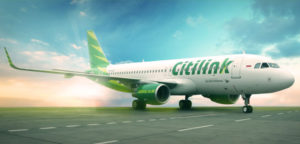
Citilink — 7/7 safety rating
Garuda's low-cost arm has climbed to a full seven stars alongside its parent, giving the national carrier's group a clean sweep at the top of the safety scale.
Citilink began life in 2001 as a Garuda side project and was relaunched as a standalone low-cost brand in 2012, since growing into one of the country's larger budget carriers on domestic routes plus a handful of international services. Its record is clean of fatal accidents, though it has had its share of minor drama, including a couple of runway excursions in its early years.
Citilink flies an all-narrowbody fleet of Airbus A320s, including newer A320neos, together with ATR 72-600 turboprops for thinner routes , giving an average fleet age of around 11 to 12 years. On the safety scale it now ticks every box. It is IOSA registered, holds a clean record on fatal accidents and pilot-related incidents, meets international operating safety standards and carries no EU ban. That combination earns it the full seven stars, matching its flag-carrier parent and marking the Garuda group out as the clear safety leader in Indonesian aviation.

Before we continue… What’s IOSA and why does it matter?
Airlines on the IOSA (IATA Operational Safety Audit) registry consistently outperform non-registered counterparts in safety metrics. In 2025 airlines listed on the IOSA registry recorded an all-accident rate of 0.98 per million flights, significantly lower than the 2.55 rate for non-IOSA carriers. IATA member airlines, all of which sit on the IOSA registry, did better still at 0.72 per million flights against 3.09 for non-member airlines. The wider industry rate reflects the same long-term story, falling from 3.72 accidents per million sectors in 2005 to 1.32 in 2025, a decline IATA attributes in large part to global standards like IOSA. This sustained advantage has prompted calls for more regulators to incorporate IOSA into their safety oversight programmes, underlining its global significance.
Batik Air — 5/7 safety rating
Batik Air launched in 2013 as the group's premium brand, offering a two-class product that sets it apart from its no-frills stablemates. Its record is free of fatal accidents, though it has not been entirely free of headlines. In January 2024 both pilots of a Batik Air Airbus A320 fell asleep for around 28 minutes on a flight to Jakarta, an incident that drew international attention and prompted a fatigue-management review, but which ended without harm to anyone on board. Just months later a Batik Air Boeing 737 descended below the minimum safe altitude on a night approach, after the crew failed to properly weigh the risks of arriving in darkness at an unfamiliar, terrain-ringed airport with an unusually complex ILS approach.
Batik flies a hybrid fleet of roughly 60 aircraft spanning the Airbus A320 family and Boeing 737-800 jets, with an average age of about 11 to 12 years. It is IOSA registered and sits under no EU ban, and it holds a clean fatal-accident record, but the incidents outlined above have cost it points for pilot-related incidents and operating-safety concerns. Its parent group, Batik Air Malaysia, joined IATA in 2025, a signal of the push to lift its operational standing. AirlineRatings will re-evaluate Batik Air's safety rating in January 2027.

AirAsia Indonesia — 5/7 safety rating
The local arm of the pan-Asian AirAsia group also lands on five stars, and like so many of its Indonesian peers its story carries some tragedy.
AirAsia Indonesia is best known, sadly, for the events of December 2014, when Flight 8501, an Airbus A320 bound for Singapore, stalled and crashed into the Java Sea in stormy weather, killing all 162 people on board. Investigators pointed to a rudder-system fault and the crew's mishandling of the resulting upset. That accident has now passed the ten-year threshold used in our safety assessment, which is why the carrier no longer loses points for it and has climbed back to five stars. The airline was not IOSA registered at the time and has since gained the accreditation on several occasions, but the inconsistency of that record costs it two stars for now.
Yet even at five stars, plenty counts firmly in its favour: the sheer volume of flights it operates every day, the fact that they are overwhelmingly short-haul, its very low incident rate and the weight of the wider AirAsia group behind it. Once its IOSA registration is restored, it will return to a seven-star safety rating.

TransNusa — 5/7 safety rating
The country's most unusual carrier also earns five stars, and it flies aircraft you will struggle to find anywhere else outside China.
TransNusa began life back in 2005 as a small regional operator out of Kupang in West Timor, flying chartered turboprops to the remote corners of eastern Indonesia before gaining its own operating certificate in 2011. The pandemic brought it down in 2020, but it returned in October 2022 in a very different guise, relaunched with backing from the China Aircraft Leasing Group and repositioned first as a low-cost carrier and then, from 2024, as a self-styled medium-service airline. Its record is clean of fatal accidents.
What really makes TransNusa stand out is its fleet. Alongside a handful of Airbus A320s, it has become the first airline outside China to operate the Comac C909, the regional jet formerly known as the ARJ21, and by early 2026 it was flying around five of them with more on order. The A320s are older leased aircraft while the Chinese jets are close to new, and the type itself has so far built a clean safety record across the global fleet. TransNusa flies the mix on domestic routes and a growing international map that reaches Kuala Lumpur, Singapore, Perth, Guangzhou and Bangkok. On the safety scale it holds a clean record on fatal accidents and pilot-related incidents, meets international operating standards and carries no EU ban but it lacks IOSA registration costing it two stars for safety
READ: TransNusa Perth to Bali review

Wings Air — 5/7 safety rating
The Lion group's turboprop workhorse rounds out the five-star carriers, and it does the quiet, essential flying that keeps the archipelago stitched together.
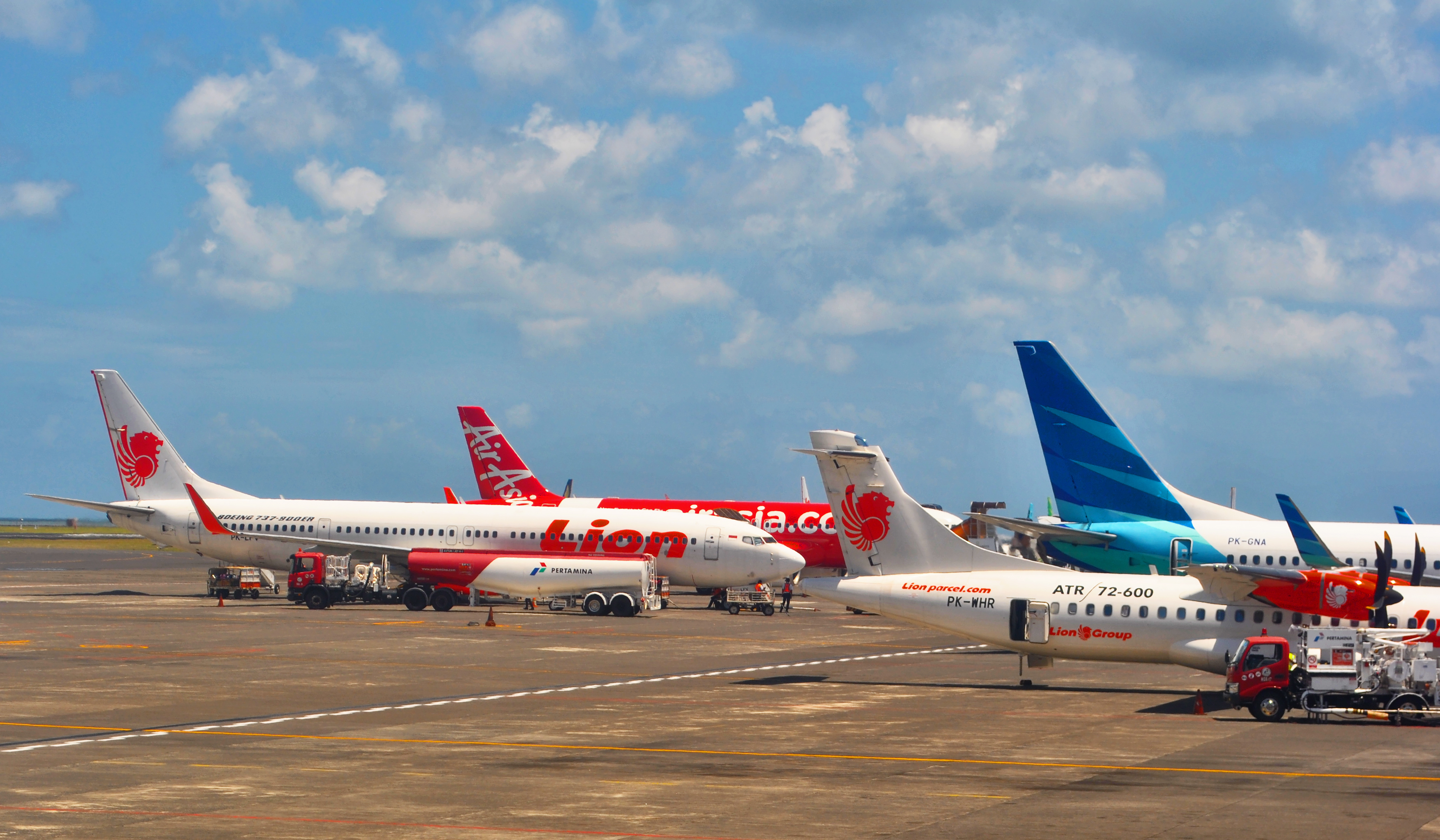
Founded in 2003 as a wholly owned subsidiary of Lion Air, Wings Air exists to reach the places the jets cannot. It flies an all-turboprop fleet of around 50 ATR 72-500s and 72-600s into the short and often rough airstrips of Indonesia's remote east and its smaller islands, feeding passengers from tier-two and tier-three towns into the group's larger hubs, and from 2026 it is set to resume international flying with a short hop from Kupang to Dili in East Timor. It has never recorded a fatal accident, though its rugged operating environment has brought its share of minor incidents, including runway and taxiway excursions and, in a sign of where some of its routes go, an ATR that was shot at by an armed group while landing in the Papua highlands in 2024.
On the safety scale Wings Air lands on five stars. It is IOSA registered, holds a clean record on fatal accidents and pilot-related incidents and carries no EU ban, dropping two points on the operating-standards assessment which in part covers the difficult terrain and basic airfields it operates to and from.
Lion Air — 4/7 safety rating
The country's largest private airline sits well down the table on three stars, and its chequered history is the reason.
Lion Air launched in 2000 and grew explosively into Indonesia's biggest carrier, famous for record-breaking aircraft orders and for dragging air travel within reach of tens of millions. That growth came at a cost. The airline's safety record is among the most scrutinised in the region, marked by a string of runway excursions and written-off aircraft, a 2013 crash in which a Boeing 737 landed short of the runway at Bali and broke apart in the sea, remarkably without loss of life, and above all the catastrophe of 29 October 2018. On that morning Flight 610, a brand-new Boeing 737 MAX 8, plunged into the Java Sea twelve minutes after taking off from Jakarta, killing all 189 people on board. The crash, together with a near-identical Ethiopian Airlines accident months later, grounded the entire 737 MAX fleet worldwide and became one of the defining aviation safety stories of the decade.
Today Lion Air flies a fleet of Boeing 737-800s, 737-900ERs and 737 MAX 8s alongside Airbus A330-300s and A330-900neos on higher-density routes, with an average fleet age of around 13 years. On the safety scale it is, notably, IOSA registered and carries no EU ban, but it loses two points for the fatal accident within the past ten years and one for the associated pilot-related incidents. The airlines rating will be revaluated in 2028.

Sriwijaya Air — 2/7
At the bottom of the table sits Sriwijaya Air, together with its regional partner NAM Air, on a single star.
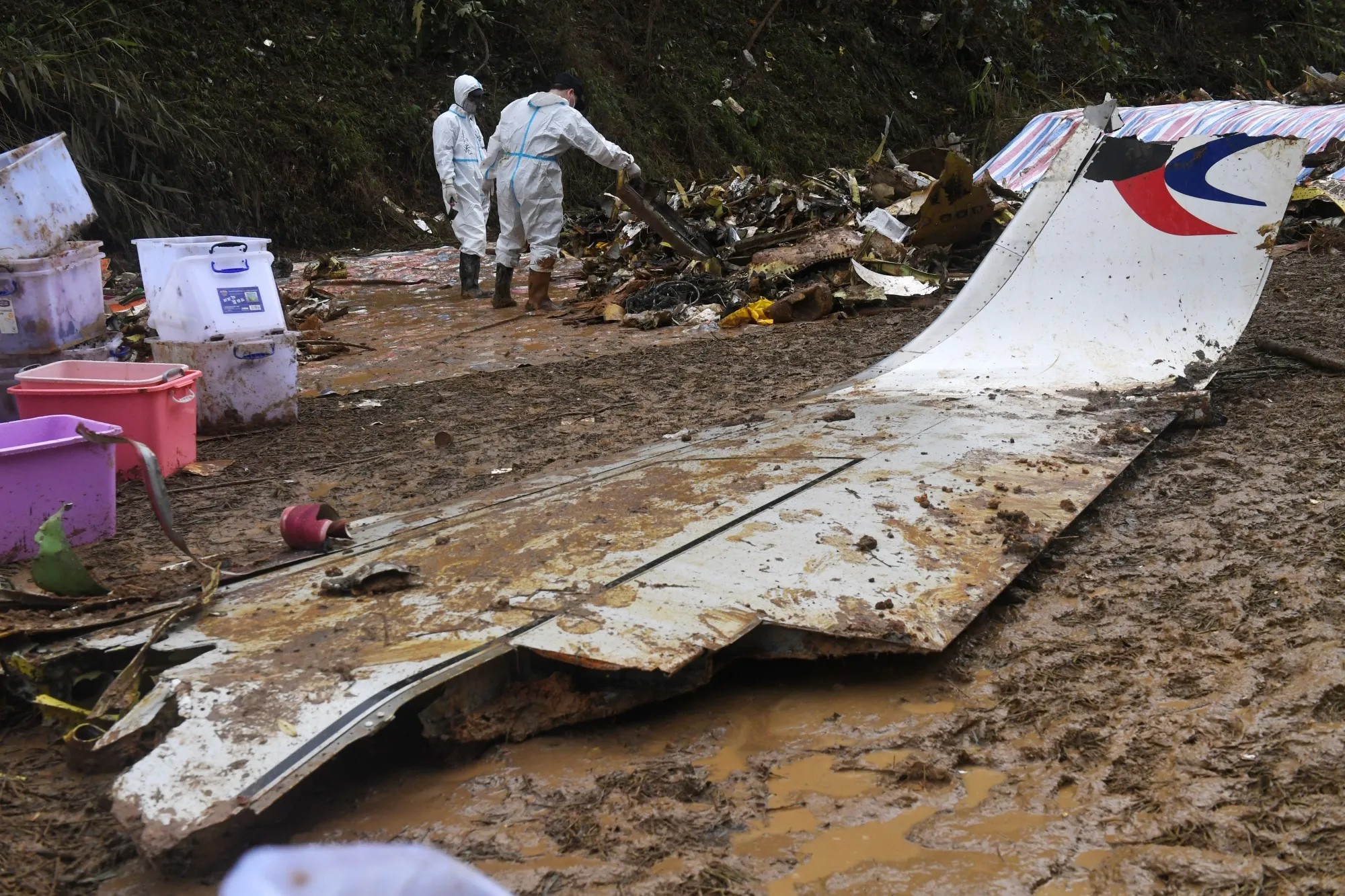
Sriwijaya launched in 2003 and built a mid-market niche on domestic and regional routes, but it has never fully recovered from its own tragedy. On 9 January 2021 Flight 182, an ageing Boeing 737-500, crashed into the Java Sea minutes after departing Jakarta in heavy rain, killing all 62 people on board. Investigators focused on an autothrottle fault and the crew's failure to notice the resulting asymmetry in engine thrust. The airline has since operated a much-reduced schedule under the operational wing of the Garuda group, flying a small fleet of Boeing 737s with an average age of 25 years.
Its two-star rating is the lowest of any major Indonesian carrier. Sriwijaya loses two points for the fatal accident in the past decade, one for the pilot-related factors, two for the absence of IOSA registration and one on operating safety standards. It is the starkest illustration in the country of how heavily a recent fatal accident, combined with thin audit credentials and an ageing fleet weighs on a safety score.
The newer names
Beyond the established carriers, two newer airlines are reshaping the market. Pelita Air, owned by state energy giant Pertamina, has grown rapidly since 2022 into a credible full-service challenger flying a young Airbus A320 fleet, and it has drawn strong early reviews. Super Air Jet, a Lion-linked low-cost start-up is aimed at younger travellers. These carriers are still building the audit history and track record that the AirineRatings safety scale rewards and neither are IOSA registered.

The bottom line
Indonesia's aviation reputation was built over a grim couple of decades, and reputations like that are slow to fade. Yet the numbers tell a story the old headlines have not caught up with. The country that Europe locked out of its airspace until 2018 now has two carriers holding a full seven star safety rating.
Behind them the picture is more mixed, but not alarming. Batik Air, AirAsia Indonesia and TransNusa all sit on five stars, and in most cases the only thing keeping them from climbing higher is IOSA registration. AirAsia Indonesia in particular moves between five and seven stars as its IOSA status changes, and would return to the top tier the moment that is back in place. The real laggards are the two carriers still marked by tragedy, Lion Air on three stars after the 2018 MAX disaster and Sriwijaya Air after the loss of Flight 182 in 2021.
For travellers weighing up who to fly, the guidance is straightforward. The Garuda group now sits at the very top and is a safe bet on any route, the five-star carriers are solid choices backed by clean recent records, and only at the bottom of the table does recent history give real pause. Fleet ages have crept up across the sector as airlines wrestle with financial and maintenance pressures, so newer is not always what you will get, but the direction of travel is clear. Indonesia's skies are far safer than their reputation suggests, and for a country that once sat on every blacklist going, that is no small thing.
Have questions or want to share your thoughts?