K2 crash latest update

By Airline Ratings Fri Jul 10, 2026
Summary
Search teams have recovered wreckage from K2 Airways flight KTA1732, confirming the Boeing 737-400 freighter crashed into the Arabian Sea on 7 July.
The debris was found 53 nautical miles, roughly 98km, south of Ormara after about 12 hours of searching.
All five crew are still missing. The main fuselage and the flight recorders have not been located.
The crew reported a navigation system problem minutes before the aircraft entered a rapid and erratic descent.
This is Pakistan's first fatal airline crash since the 2020 PIA A320 disaster in Karachi.
What started on Tuesday night as an aircraft that simply dropped off the radar is now confirmed as a crash. Pakistani search teams have recovered wreckage from the K2 Airways Boeing 737-400 freighter, registration AP-BOI, that went down in the Arabian Sea while flying from Sharjah to Karachi. Rescuers found the debris 53 nautical miles, about 98km, south of the coastal town of Ormara after roughly 12 hours at sea. All five crew are still missing, and the operation has since turned into a difficult deep-sea recovery, slowed by rough monsoon conditions and a large search area.
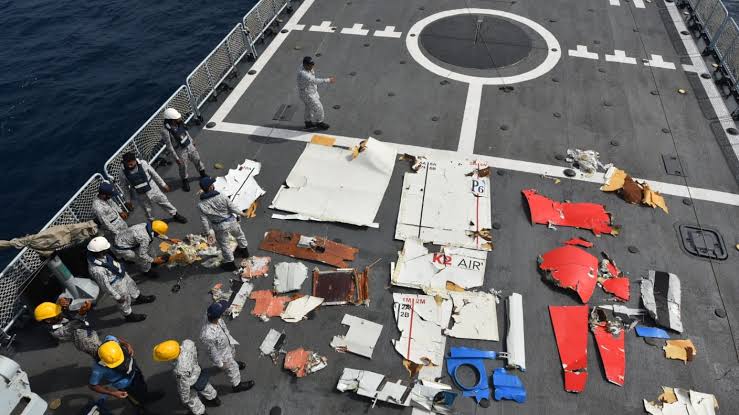
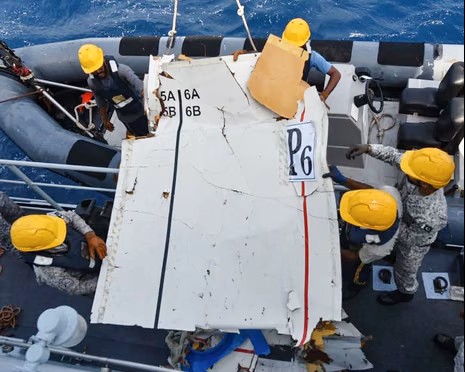
The Pakistan Navy and the Pakistan Maritime Security Agency led the effort, deploying a mix of ships and aircraft to pin down the location. Photographs released by the Pakistan Airports Authority show naval personnel lifting pieces of the aircraft onto a ship's deck. It is the first hard evidence of what happened to flight KTA1732 since it vanished.
What we know about the final minutes
The picture from the aircraft's last few minutes is troubling. K2 Airways flight KTA1732 left Sharjah bound for Karachi, a routine two-hour hop that Pakistani freight crews fly all the time. At 9:18pm Pakistan time, around 155 nautical miles west of Karachi, the crew radioed the Karachi Area Control Centre to report a navigation system issue. Controllers began guiding the aircraft in. Just three minutes later, at 9:21pm, radar showed the 737 descending rapidly and swinging onto a sharply different heading. Radar and radio contact were then lost.
Flightradar24's tracking data from those final minutes looks chaotic. The aircraft dropped roughly 5,000 feet in under a minute, climbed back around 6,000 feet in about 30 seconds, then entered a catastrophic dive from around 36,600 feet. The last data point placed it at just 1,100 feet with a vertical speed of minus 22,400 feet per minute, close to 250mph straight down, and a ground speed of 114 knots. That is the profile of an aircraft in serious trouble, though nobody has confirmed the cause yet.
It is also worth pointing out that shortly after departure from Sharjah, the aircraft, along with every other flight in the area, ran into GNSS interference that degraded its tracking and forced Flightradar24 onto Multilateration (MLAT). Once it cleared that zone the ADS-B data returned to normal, and the jamming does not appear to have played a role in the loss. Aviation safety analyst David Learmount has urged caution on the navigation-fault reports, noting they are "not reliable" and pointing out the freighter stayed within radar range of the coast the whole way, so controller assistance was readily on hand.
The search and the crew
K2 Airways has named the five crew as Captain Muhammad Rizwan Idrees, First Officer Faisal Jatoi, Loadmaster Muhammad Toufique Khan and engineers Muhammad Arif Siddiqui and Muhammad Hamid. In its statement the airline said it was cooperating fully with the Pakistan Civil Aviation Authority and other agencies, adding, "We continue to pray, earnestly, for the safety of our colleagues."
Finding them is proving hard. Retired Rear Admiral Faisal Shah told the Associated Press that the main body of the aircraft is still missing and may need specialised deep-sea equipment to reach, with the water in the crash area running to around 3,000 metres deep. Officials have also cautioned that floating debris does not necessarily mark the impact point, because currents, wind and swell push wreckage around after a crash.
Finding an aircraft that has gone down at sea is one of the hardest jobs in aviation. Salt water swallows wreckage fast, and deep water like the trench off Ormara puts the seabed well beyond the reach of divers, leaving the work to sonar and remotely operated vehicles. Time is against everyone too. Each flight recorder carries an underwater locator beacon that pings for around 30 days before the battery dies, so investigators are effectively racing a clock. Ocean currents make it harder still, scattering light debris across huge distances while the heavy fuselage settles close to the impact point. The drawn-out hunts for Air France 447 and MH370 showed just how long, costly and uncertain these searches can become.
The aircraft's history
The jet at the centre of all this had a long working life before it reached K2 Airways. AP-BOI began as a passenger aircraft delivered to Russian flag carrier Aeroflot in 1999, with Garuda Indonesia taking it on from 2004. It was pulled from passenger service and converted to a freighter in 2012, going into service with TNT Airways of Belgium. TNT Airways later became ASL Airlines Belgium, which continued flying the aircraft, and it passed to the FedEx Express fold in 2017 after FedEx acquired TNT Express. The 27-year-old freighter is owned by lessor AerCap and was delivered to K2 Airways in October 2024.
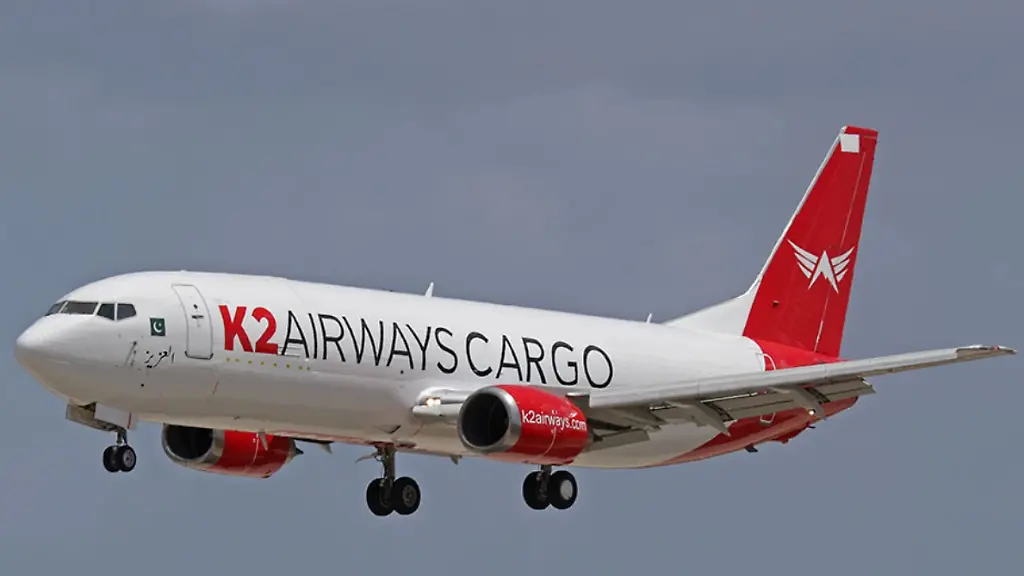
The loss is a heavy one for K2 Airways in every sense. AP-BOI was the Karachi-based carrier's only aircraft, so its destruction leaves the airline without a freighter to fly. Its previous flight had been on 28 June.
What happens next
Now that wreckage has been found, the focus shifts to two things: recovering the crew and locating the flight recorders. The cockpit voice recorder and flight data recorder are the pieces investigators most want, because they can explain what the crew saw, what they did and what the aircraft was doing in those final three minutes. Until the main fuselage is reached, those answers stay on the floor of the Arabian Sea.
Investigators will pull together ADS-B data, air traffic control recordings, the recorders once found and the aircraft's maintenance records to work out what actually happened. The crew reported a navigation fault, but authorities are being careful not to name a cause this early, and the reported fault will need corroboration before anyone can lean on it.
Boeing has not commented publicly. The crash also carries a wider significance for Pakistan. It is the country's first fatal airline crash since May 2020, when a Pakistan International Airlines Airbus A320 came down short of the runway in Karachi and killed 97 of the 99 people on board. That accident, later traced to human error and poor communication, triggered bans on Pakistani carriers by the United States, the European Union and the United Kingdom. Those suspensions were only lifted between 2024 and 2025.
You can read our initial report on the disappearance here, and browse independent safety ratings for more than 320 airlines. AirlineRatings will keep updating this story as verified information emerges.
Have questions or want to share your thoughts?