Air India 787 crash: new evidence seemingly clears pilots

By Josh Wood Mon Apr 13, 2026
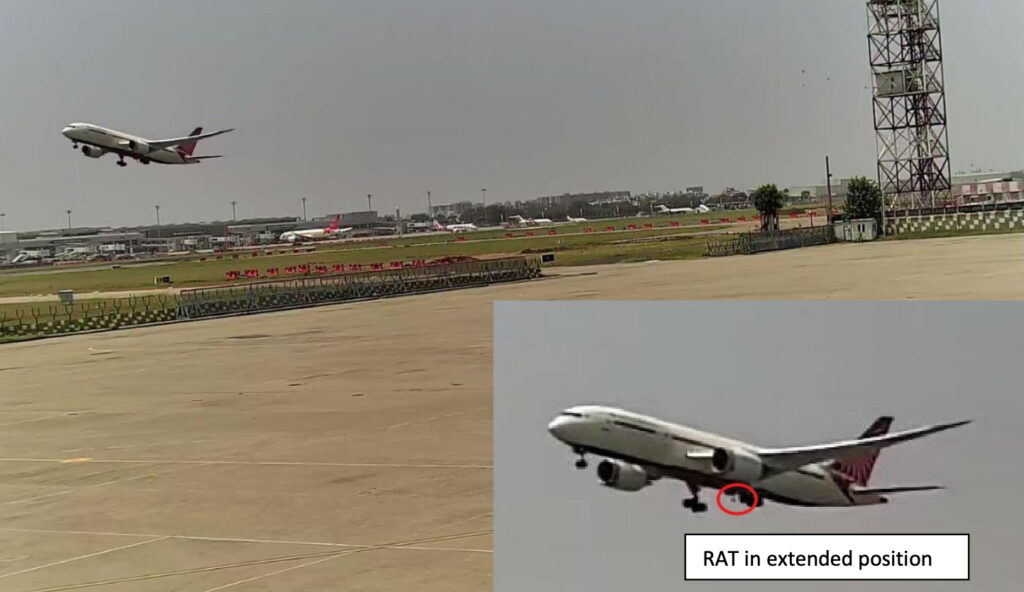
The Safety Matters Foundation of India (SMF) has published the results of its analysis of images captured from Air India Flight 171, which crashed shortly after takeoff from Ahmedabad on July 12, 2025. Experts at the SMF have stated that the Ram Air Turbine (RAT) was deployed 2.5 seconds before the fuel switches moved to CUTOFF. Crucially, this indicates that a systemic failure occurred almost immediately after the aircraft became airborne, rather than the event being caused by human input from the cockpit.
Before this announcement, public opinion surrounding the investigation had largely centred on the chief pilot being at fault, with speculation that the fuel switches had been deliberately moved to CUTOFF.
Cockpit Voice Recorder evidence recovered by accident investigators captures one pilot asking, “Why did you cut off?”, with the other responding, “I did not do so”. Videos circulating online have further fuelled this theory, demonstrating that the fuel cutoff switches cannot simply move on their own, nor can they be accidentally knocked, adding weight to the pilot-blame narrative.
The new evidence relating to the RAT directly corroborates the exchange between the pilots, potentially clearing them of wrongdoing and instead pointing to an aircraft system failure. This, in turn, opens an entirely new line of inquiry into what caused this tragic accident.
The CCTV image in question, shown below, was captured at 08:08:41, at which point the aircraft was already airborne. The SMF concluded that “the cause cannot come after the effect.”
Not the only Air India fuel cutoff incident
In February 2026, an Air India Boeing 787-8 Dreamliner (registration VT-ANX) had its left (engine 1) fuel switch move from RUN to CUTOFF twice on the ground before a flight between London Heathrow and Bangalore. As a response, Air India grounded the aircraft pending investigation.
READ: Air India grounds 787 after unsettling fuel cut-off switch defect
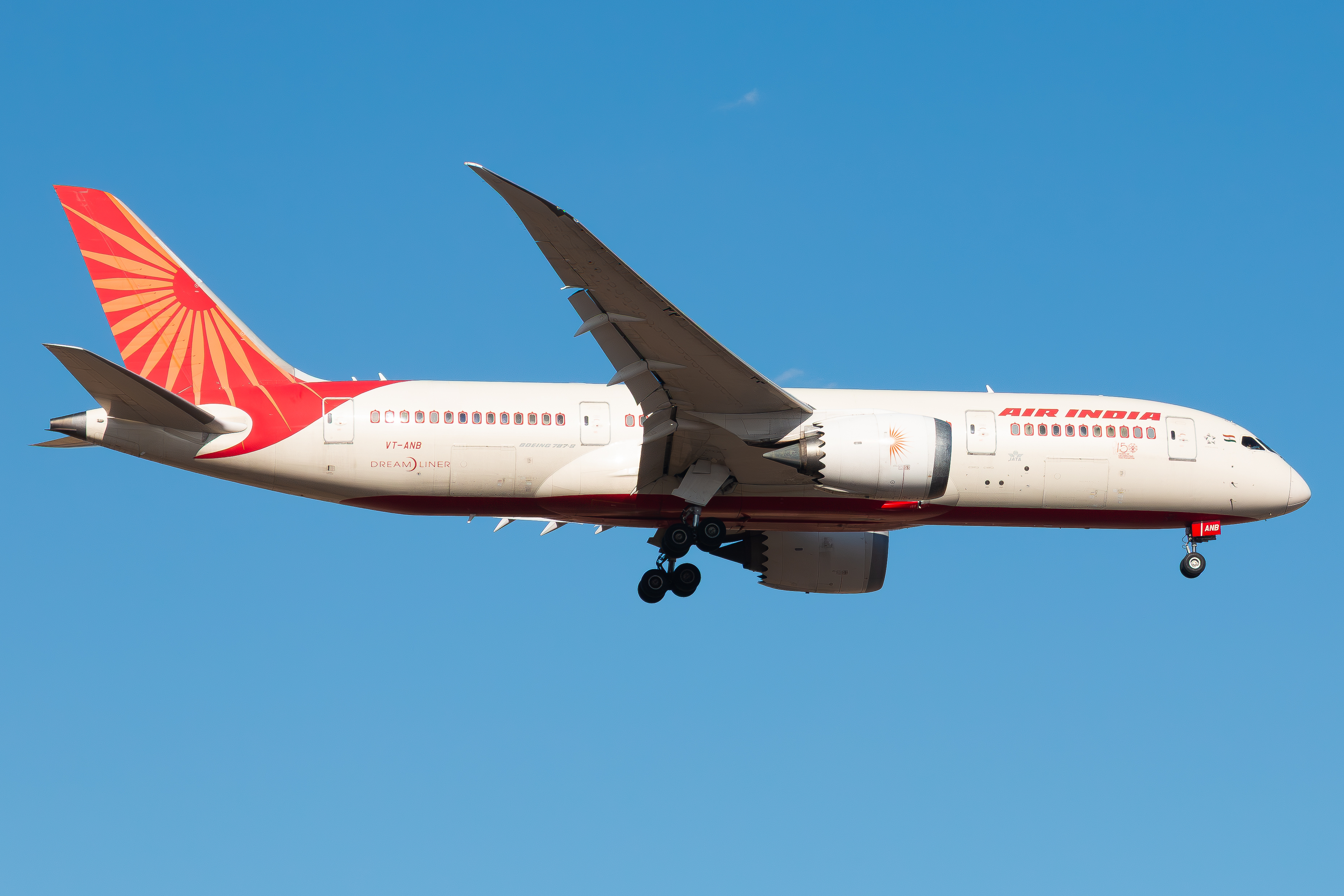
Seven years before the AI171 crash, in December 2018, the Federal Aviation Administration (FAA) of the US issued a Special Airworthiness Information Bulletin warning of the potential disengagement of the fuel cutoff switches. The bulletin was specific to certain aircraft, including the Boeing 787-8, and the part number in question was fitted to VT-ANB.
The bulletin was advisory and not mandatory, and according to Air India’s own submissions to investigators, the recommended inspections were never conducted. A separate bulletin issued by General Electric (the engine manufacturer of engines fitted to VT-ANB) warned of potential thrust issues. Air India did not act on this non-mandatory safety bulletin either.
Crash timeline
The timeline below, taken directly from India’s Ministry of Aviation’s Preliminary Report, is significant as it shows how quickly events unfolded. Aircraft Communication Addressing and Reporting System (ACARS) data recovered by the SMF showed that the aircraft suffered electrical and flight control faults, including a stabilizer position transducer fault (“STAB POS XDCR”) approximately 15 minutes before the flight. These failures were transmitted before departure; however, there is no indication that the flight crew was made aware of any unresolved issue as the aircraft continued with pre-flight checks, taxi and departure.
08:08:33 – aircraft passes the critical decision speed to take off, known as V1.
08:08:35 – aircraft reached takeoff speed of 155 knots, known as Vr.
08:08:39 – liftoff confirmed by air and ground sensors.
08:08:39.5 – RAT deployment triggers.
08:08:41 – CCTV image captures aircraft taking off with RAT deployed.
08:08:42 – both fuel cutoff switches transitioned to CUTOFF, one second apart.
08:08:47 RAT hydraulic pump begins supplying power (AAIB data).
08:08:52 – Engine 1 fuel switch moved back to RUN.
08:08:56 – Engine 2 fuel switch moved back to RUN.
08:09:05 – MAYDAY MAYDAY MAYDAY call to air traffic control.
08:09:11 – EAFR recording stops.
Just 32 seconds after takeoff, the aircraft crashed into the hostel block of B.J. Medical College, killing all but one of the 242 onboard and 19 on the ground.
Read our article on the full timeline leading to AI171’s crash.
Read our coverage on AI171’s preliminary report.
Investigations are still underway as the first anniversary gets closer
Under the International Civil Aviation Organisation (ICAO) Annex 13, the state conducting the investigation is required to publish a final report within 12 months of the crash. If the report cannot be finalised during that time, an interim statement must be made publicly available detailing the progress of the investigation and any safety issues raised.
The crash occurred on June 12, meaning the 12-month deadline falls less than two months away. No final report has been published, and International Air Transport Association (IATA) data shows that out of the 268 accidents recorded between 2018 and 2023, only 52% of investigations were completed.
The photogrammetric analysis published on April 12 adds significant pressure on the Air Accident Investigation Branch (AAIB) to address the RAT timing in the upcoming report. Investigators will now look at this new data and determine the cause of the accident.
It is important not to speculate while official investigations are underway. All at AirlineRatings continue to offer condolences to all those affected by this crash. As the investigation progresses, we will continue to bring you up-to-date and accurate coverage.
Have questions or want to share your thoughts?
Sources: