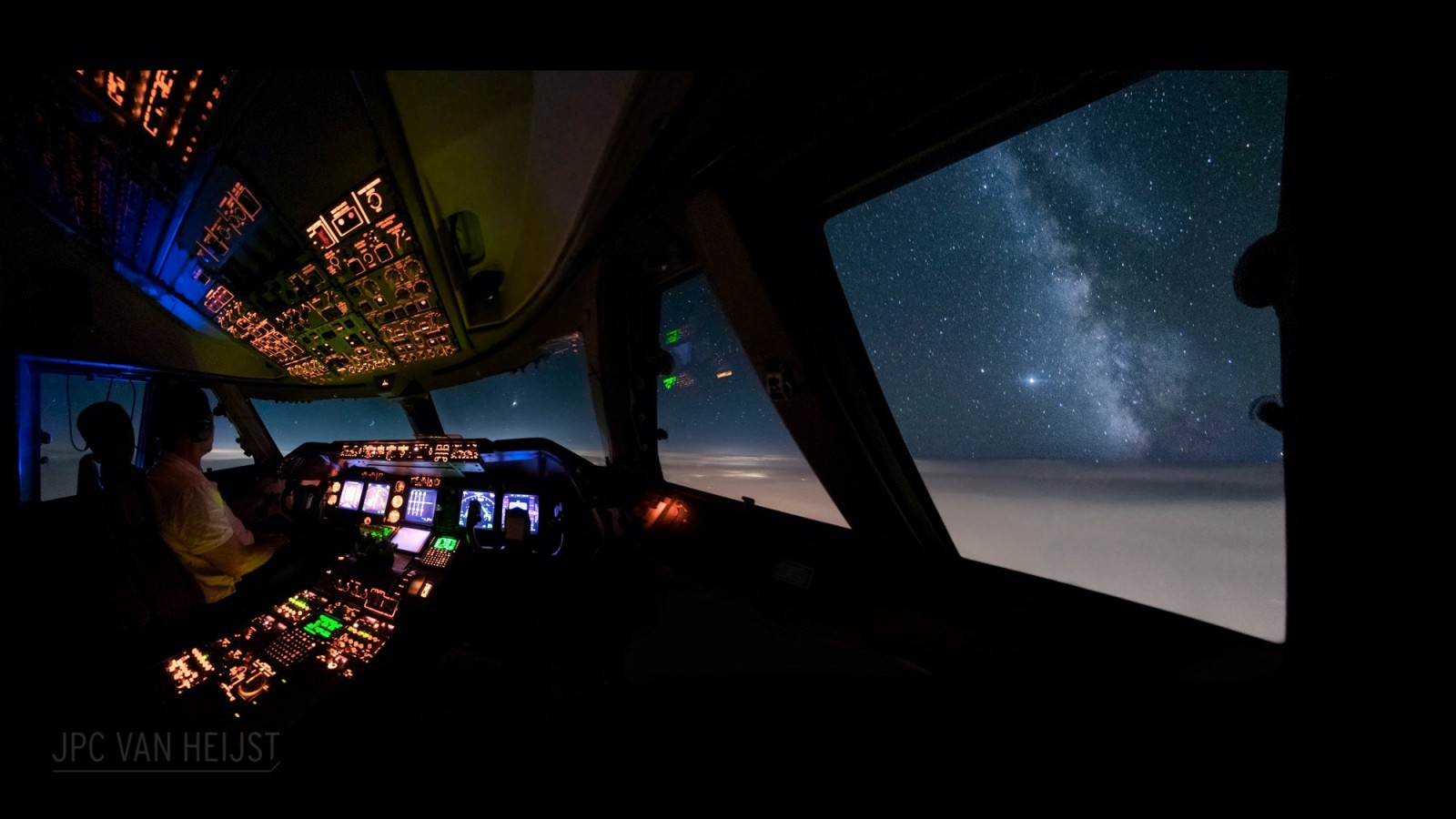

Billions and billions of stars have been captured from "spaceship 747" by pilot Christiaan van Heijst as he speeds vital cargo across the globe.
Christiaan takes up the story…
Over ten million superclusters in the observable universe. Each containing tens- or even hundred thousands of galaxies. Each containing hundreds of billions of stars. Each star home to multiple planets, most likely.
Punching a few numbers on my calculator, while eating my steak with veggies, presents me a rough number of 10^25 planets (or 10,000,000,000,000,000,000
That means that even if life starts on a planet or moon (and the chances of that happening are simply unknown), it takes an extraordinarily long time for it to eventually become intelligent. Is life common and teeming out there? Or are we unique in a sterile and lifeless universe? No-one knows and I'm open to either. Both invite a wide range of new questions to be explored and enjoyed.
 My colleague and I discussed a wide range of topics the last few days. From technical glitches of the 747 and fuel decisions to more important things like relationships, food, human nature, and life.
We dimmed all lights after sunset and quietly enjoyed the night sky unfolding before our windows.
My colleague and I discussed a wide range of topics the last few days. From technical glitches of the 747 and fuel decisions to more important things like relationships, food, human nature, and life.
We dimmed all lights after sunset and quietly enjoyed the night sky unfolding before our windows.
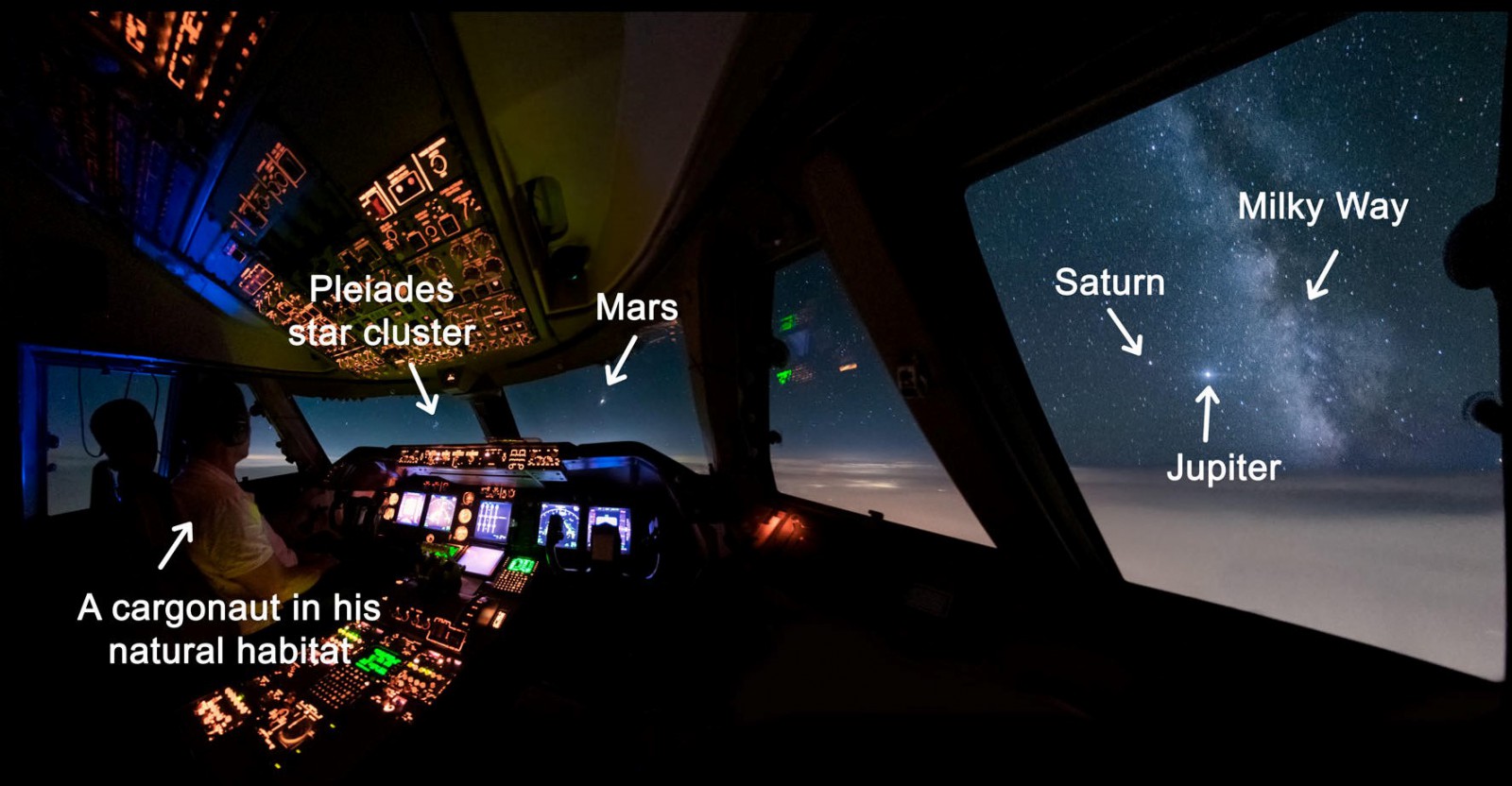
A moonless night revealed billions of stars, the bright core of the galaxy, a handful of planets, and all of the adventures that are waiting to be experienced out there one day.Technical data: Nikon D850, 10.5mm Fisheye, f/2.8, 13 seconds, ISO 8000.
Christiaan is one of the world’s leading aviation photographers and more of his work and more close encounter (s) can be found here.
You can follow Christiaan on Instagram here: @jpcvanheijst
Have questions or want to share your thoughts?