How did an Air Canada Express CRJ900 collide with a fire truck at La Guardia?

By Dev Lunawat Mon Mar 23, 2026
An Air Canada Express regional aircraft and an airport fire truck were involved in a ground collision at New York LaGuardia Airport, prompting an emergency response and major disruption to flight operations.
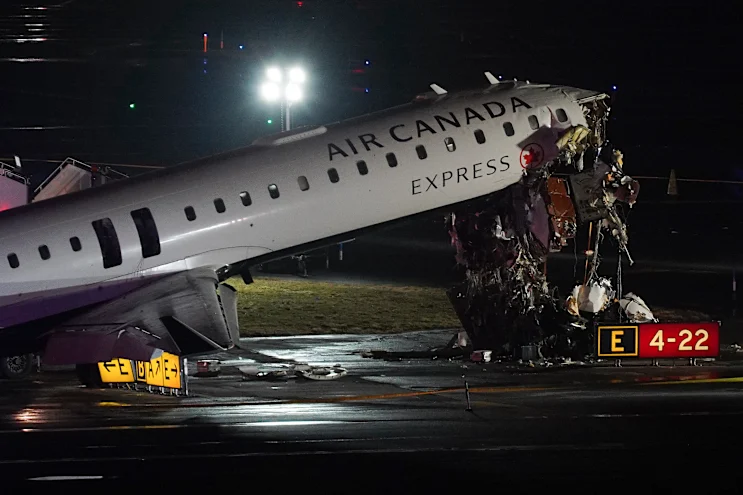
Flight AC8646, a Bombardier CRJ900 (registration C-GNJZ) operated by Jazz Aviation from Montreal, struck the fire truck while slowing down on Runway 04 after landing. Images from the scene are shocking and show significant damage to the aircraft's nose, with all onboard evacuating onto the airfield. The pilot and co-pilot died in the accident.
While the details are yet to be confirmed, ground collisions between aircraft and vehicles typically involve one or more failures in safety management.
What we know so far
The fire truck involved in the accident was responding to another incident at LaGuardia and was cleared to cross Runway 04 at taxiway D. Air traffic control recordings from the accident highlight the controller shouting “Stop! Stop! Fire #1 Stop!”, but no response was heard, and the truck collided with the aircraft on the runway.
At the time of impact, the aircraft was rolling out from its landing when its landing gear hit the truck, skidded onto the rapid exit taxiway F/ taxiway E intersection, then skidded a further 130 meters before coming to a stop on taxiway turnoff E.
The airport was immediately closed with a Notice to Airmen (NOTAM) issued, with it reopening at 02:00 local time.
Air Canada has acknowledged the accident, stating they are working very closely with authorities and local agencies to share the most accurate and up-to-date information as it becomes available.
.jpg)
How could this have happened?
New York LaGuardia Airport is busy with intersecting runways, leading to a high number of ground movements and severe congestion during peak hours. For a collision of this nature to occur, several attributions are typically considered.
Breakdown in communication
Aircraft and ground vehicles operating on taxiways must follow strict clearance instructions, with aircraft always having priority. A misheard or incorrectly issued clearance to either the aircraft or ground vehicle could result in both entering the incident area simultaneously. However, in this incident, the landing aircraft would have had priority.
Situational awareness and visibility
Airport environments are complex, especially LaGuardia. Restricted visibility from the flight deck or vehicle cab, combined with high workload, can reduce situational awareness, especially during peak traffic times. This incident occurred during darkness, which could be a contributing factor.
Coordination during emergency response
Fire vehicles often move quickly when responding to emergency calls. If the vehicle was repositioning or responding to an emergency call, which it was, this can add extra complexity, particularly if movements are time-critical.
Human factors
As with most aviation incidents, human factors such as workload, fatigue, or distraction can play a role. Even in highly controlled airport environments, small errors can align to create an accident.
Currently, there is no confirmation that any of these factors contributed to the accident and investigators will work to determine the sequence of events.
Recent Bombardier CRJ accidents highlight operational risks
The incident at LaGuardia comes amid a series of recent events involving Bombardier CRJ aircraft.
In February 2025, a CRJ900 operated by Endeavor Air crashed on landing at Toronto Pearson Airport, overturning on the runway following a hard touchdown. All 80 passengers and crew survived.
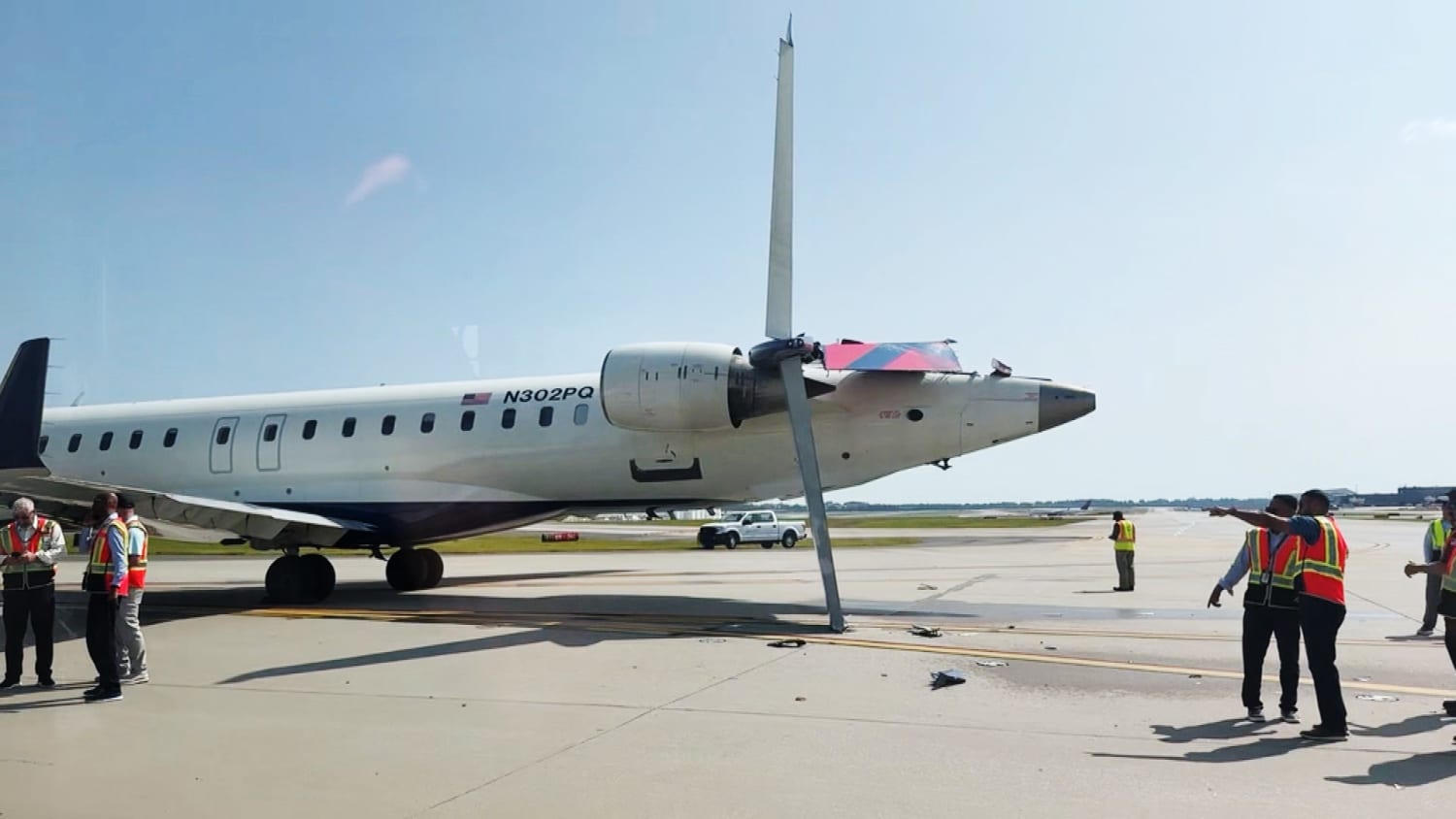
Other ground-related incidents have also occurred. An American Eagle CRJ200 collided with an aircraft tug at Chicago O’Hare Airport, injuring the vehicle operator. In September 2024, A Delta Connection (Endeavor Air) CRJ900 collided with a Delta Air Lines Airbus A350 whilst taxiing for departure. There were no injuries reported, but the tail of the CRJ was damaged substantially.
While each incident has different causes, they collectively underline the importance of situational awareness, communication, and coordination, especially during ground operations at busy airports.
Find out more about key accidents and 2025’s safety record here.
As the investigation unfolds, attention will center on how multiple layers of safety interact in real-world operations. Understanding where the breakdown occurred will be essential not only for LaGuardia but for all busy airports across the world.
While ground collisions remain rare, this incident serves as a reminder of how complex busy airports can be. With multiple moving parts operating closely, even a brief breakdown in communication or situational awareness can have serious consequences.
All at AirlineRatings offer their condolences to the two pilots who died, and all those affected and involved.
AirlineRatings’ safety rating of Air Canada Express or its parent company, Air Canada, will not be assessed until the final cause of the accident has been determined. If the accident is determined not to be the airline's fault, the safety rating will not be downgraded under our robust methodology.
Have questions or want to share your thoughts?