A review of aviation accidents in 2025: Causes and safety takeaways

By Josh Wood Thu Jan 29, 2026
Last year was a sobering year for aviation, marked by several high-profile accidents that captured global attention. From the mid-air collision over Washington, D.C., to the tragic loss of Air India Flight 171, these events prompted renewed scrutiny of aviation safety and operational oversight.
In an era of smartphones, CCTV, and real-time data, aviation accidents are now witnessed almost as they happen, shaping public perception long before investigations are complete. This article summarises the most significant aircraft crashes of 2025 and places them in the wider context of modern aviation safety.
Air Busan Flight 391
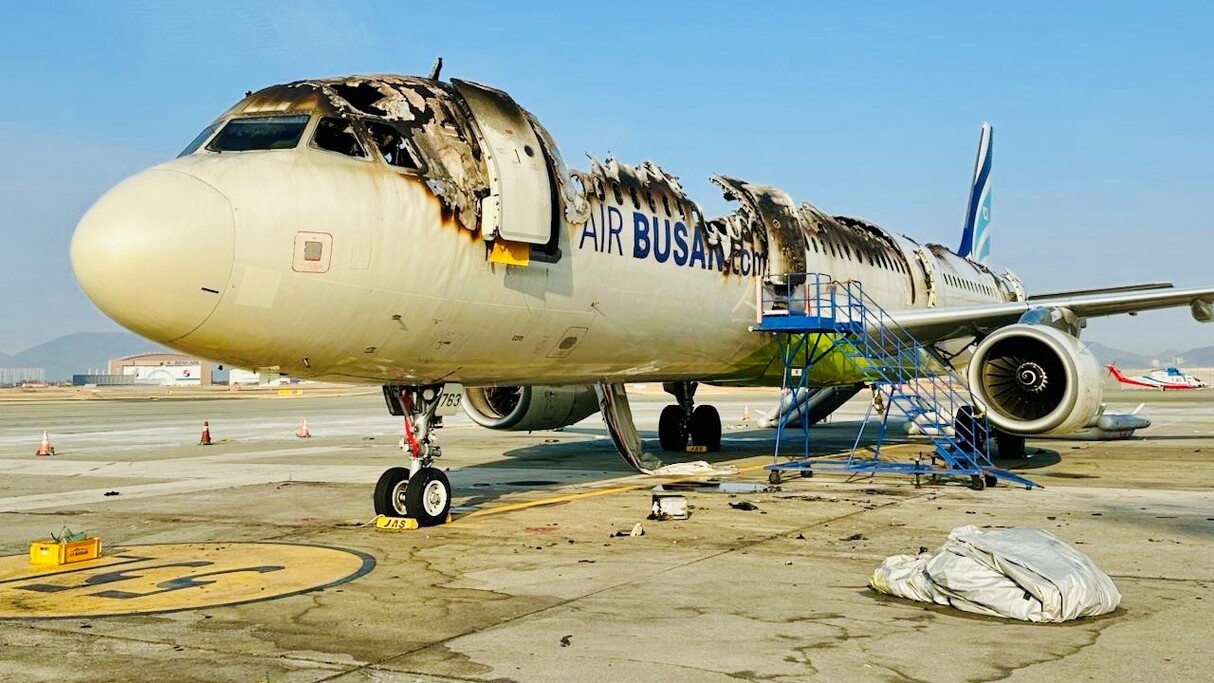
Back on the 28th of January, an Air Busan A321 (registration HL7763) was operating a scheduled service from Gimhae, South Korea, to Hong Kong. The aircraft caught fire while preparing for taxi, resulting in 27 injuries.
The fire, which was discovered to have been caused by a power bank stored in the overhead locker, led to an industry-wide change in how batteries are stowed within the cabin. Numerous airlines worldwide have now banned the use and charging of power banks in the cabin, including Emirates, Lufthansa, and Singapore Airlines.
AirlineRating.com welcomes the changes in power bank usage currently sweeping the industry. A recent trip to IATA’s World Safety & Operations Conference (WSOC) highlighted the dangers batteries pose onboard. The average passenger carries four lithium battery items onboard, from phones, laptops, smart watches, and electronic cigarettes. Shockingly, on board an A380 with 520 passengers, that’s over 2000 lithium battery items.
Potomac River mid-air collision
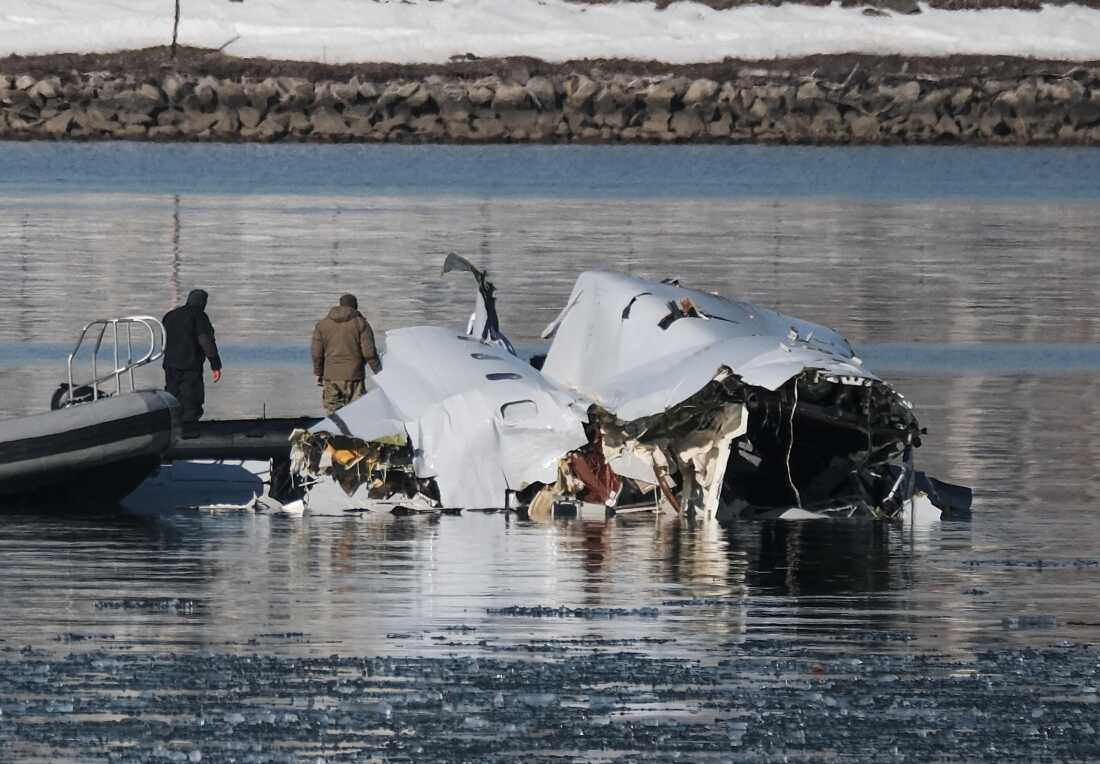
We can all remember the shocking scene from Ronald Reagan Airport (DCA) in Washington, D.C. On the 29th of January, a PSA Airlines Bombardier CRJ700 (registration N709PS) operating as Flight 5342, collided mid-air with a U.S. Army Sikorsky UH-60L Black Hawk helicopter during final approach to Runway 33.
The collision occurred over the Potomac River approximately 0.5 miles southeast of the airport, after the helicopter crew reported the CRJ in sight and requested visual separation, which was approved by air traffic control. Flight data and radar information indicate both aircraft were operating at similar altitudes in night visual meteorological conditions, with multiple air traffic control transmissions partially blocked or not received by the helicopter crew.
Both aircraft were destroyed upon impact with the river, resulting in the deaths of all 67 people on board. The investigation remains ongoing, with particular focus on air traffic control communications, helicopter routing, altitude compliance, and human factors.
Delta Connection Flight 4819
On the 17th of February, a Delta Connection Bombardier CRJ900 (registration N932XJ) experienced a hard landing and subsequent landing gear fracture, leading to its collapse and overturning on the runway at Toronto Airport. Luckily, thanks to the swift and professional action of the crew, all of the 80 occupants survived.
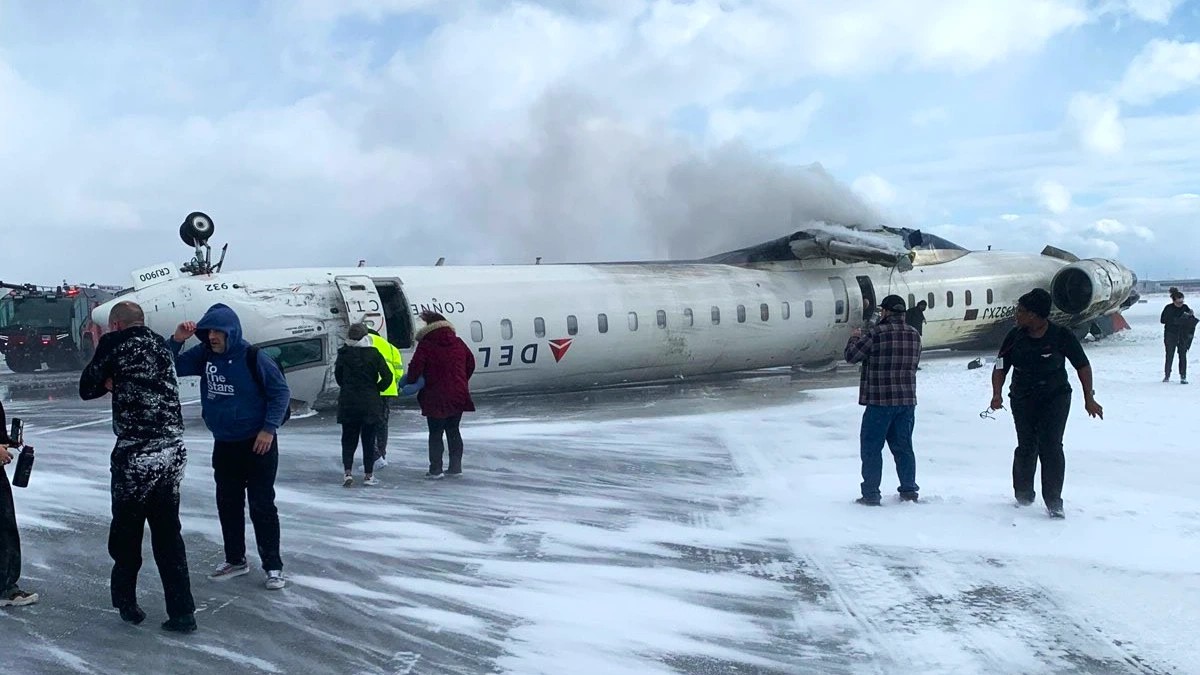
The Transportation Safety Board of Canada (TSB) determined that the aircraft was on an unstable approach, descending at approximately 1,100 feet per minute, significantly exceeding the recommended limit of 720 feet per minute. At the time of the incident, weather conditions were gusty, requiring the flight crew to maintain a higher than normal approach speed and make timely power and pitch adjustments to counter wind fluctuations. The investigation remains ongoing, and no conclusions have yet been issued.
Air India 171
On the 12th of June, an Air India B787-8 Dreamliner (registration VT-ANB) flight bound for London Gatwick crashed after take-off in Ahmedabad, India. All but one of the 242 occupants died, as well as 19 on the ground. This accident marked the first hull loss of a Dreamliner aircraft.
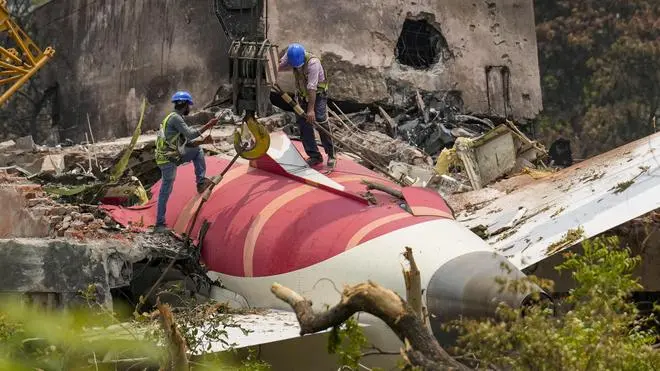
Seconds after departure, both engine fuel control switches transitioned from RUN to CUTOFF within one second of each other, leading to a rapid loss of thrust on both engines during the initial climb. Flight recorder data shows the aircraft began losing altitude before clearing the airport perimeter, with the ram air turbine (RAT) deploying automatically as systems were lost.
Although the fuel control switches were subsequently returned to RUN and both engines showed signs of relight, thrust recovery was insufficient. The aircraft impacted buildings approximately 0.9 nautical miles beyond the runway, resulting in catastrophic damage and loss of life. The investigation remains ongoing, and no final cause has yet been determined.
Emirates SkyCargo 9788
On the 19th of October, a B747F (registration TC-ACF) operated by Air ACT on behalf of Emirates Sky Cargo crashed into the South China Sea while landing at Hong Kong Airport. All four crew members survived, while there were two ground fatalities in a vehicle that the aircraft struck.
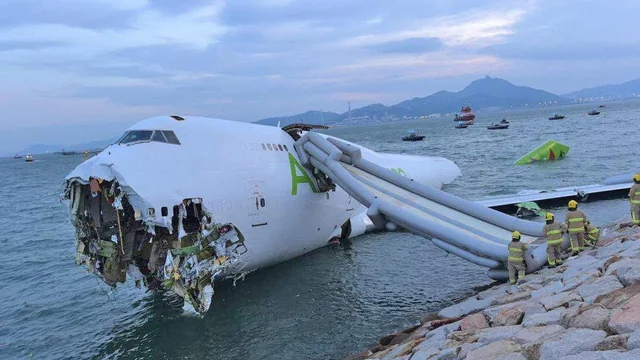
During the landing roll, an AUTOBRAKES alert appeared on the flight deck, after which the captain assumed control from the co-pilot. The aircraft subsequently veered to the left, exited the runway, and collided with a stationary airport security vehicle before breaching the perimeter fence and coming to rest in the sea.
Flight data indicated abnormal thrust behaviour on the No.4 engine during deceleration, while weather conditions, runway conditions, and air traffic control services were normal at the time. The investigation remains ongoing, with no conclusions having been published yet.
UPS Airlines Flight 2976
On the 4th November 2025, UPS Flight 2976, a McDonnell Douglas MD-11F (registration N259UP), crashed shortly after take-off from Louisville Muhammad Ali International Airport while operating a cargo service to Honolulu.

Shortly after rotation, the aircraft’s left engine and pylon separated from the wing, resulting in an immediate loss of thrust and a post-separation fire. Flight data indicates the aircraft climbed to only around 30 feet above ground level before beginning to lose altitude, striking airport infrastructure and crashing into nearby buildings before being engulfed in flames.
There were 14 fatalities, three flight crew, and 11 on the ground. Preliminary examination has identified fatigue cracking and overstress failure in the left engine pylon attachment structure, with further analysis ongoing
Accident risk mitigation is key
While the causes of accidents vary, each reinforces the multi-layered nature of aviation safety and the systems, processes, and training airlines implement to reduce risk. Modern investigations increasingly point to risk accumulation rather than a single point of failure, underscoring the importance of procedural discipline, robust oversight, and timely regulatory response.
As global fleets expand and airspace becomes more complex, managing risk across aircraft systems, flight operations, air traffic control, and cabin safety remains critical. The events explored in this article serve as a reminder that aviation safety is not linear, but an ongoing process requiring continuous vigilance, adaptation, and learning.
Have questions or want to share your thoughts?