India opens its latest airport amid growing passenger demand: Noida International Airport

By Dev Lunawat Mon Mar 30, 2026
India inaugurated its newest major aviation hub on March 28, as Prime Minister Narendra Modi officially opened Noida International Airport (DXN). Commercial flights are set to begin in mid-May 2026, with the airport initially handling domestic services before international routes follow later this year.
Located 75 kilometers from central New Delhi, DXN airport is the centrepiece of India’s strategy to create a dual-airport system for the capital, mirroring the approach taken by London with Heathrow and Gatwick, and New York with JFK and Newark.
Why Noida International Airport is needed
Indira Gandhi International Airport (DEL) in Delhi has long been operating at the limits of its capacity. As one of the busiest airports in Asia, DEL faces congestion that leads to extended wait times and terminal crowding, a problem that has grown in line with India’s booming domestic aviation market. Tens of millions of new passengers have been added to the country’s network over the past decade.
Noida International Airport Phase 1 infrastructure is designed to handle 12 million annual passengers, with the long-term plans projecting a capacity of up to 70 million. Once complete, DXN will have multiple terminals and six runways, placing it among the largest airports globally by throughput. The dual-airport model gives the wider Delhi region a combined capacity exceeding 100 million annual passengers.
.jpg)
Noida International Airport’s design, technology, and strategic location
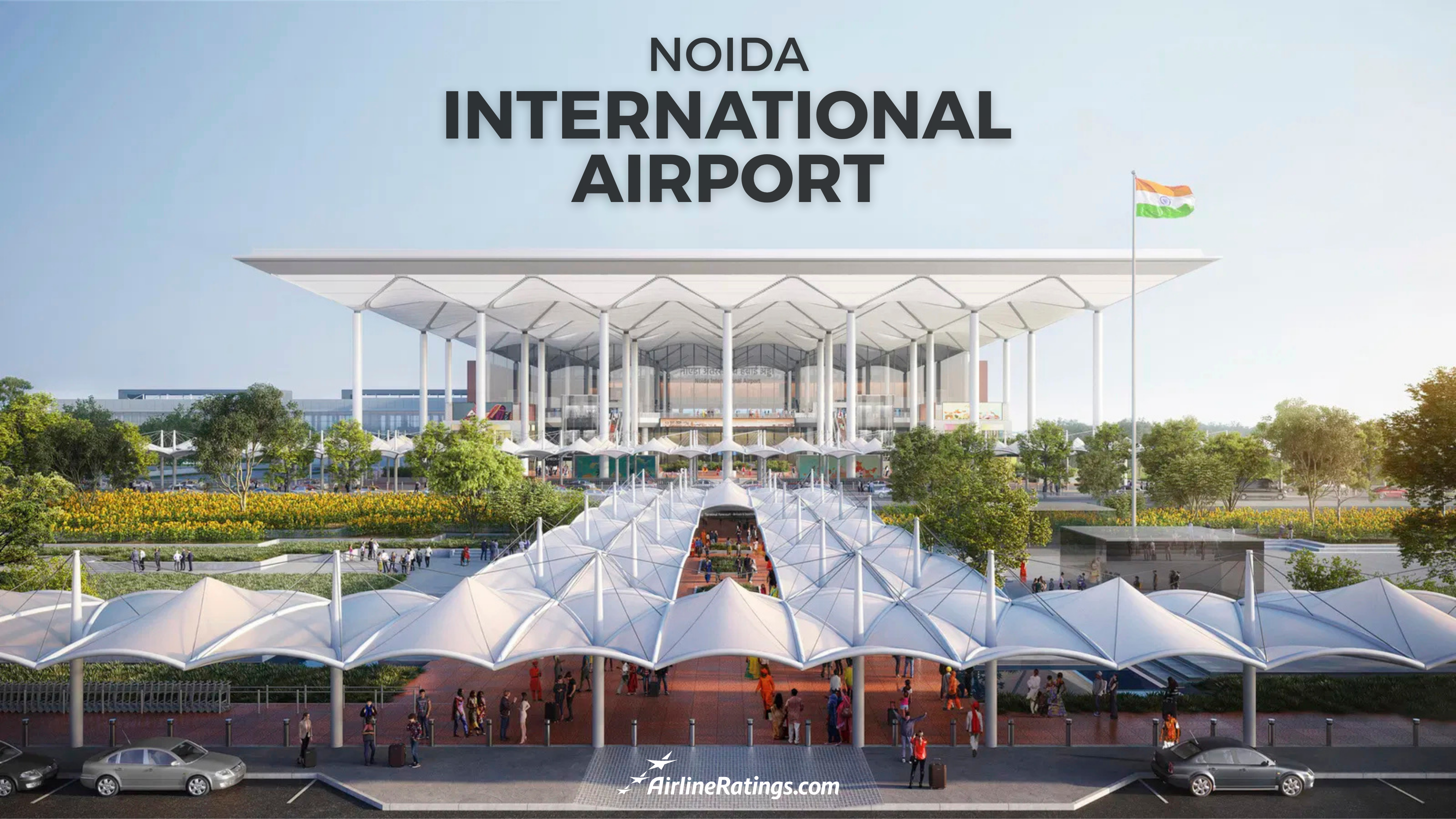
The terminal has been built to India’s first net-zero emission standard, running entirely on renewable energy. Its architecture draws on the traditional courtyard designs of North India, incorporating natural light and green spaces throughout the terminal building.
Operationally, the airport has implemented full biometric processing through India’s DigiYatra system, meaning that facial recognition replaces paper ticketing and manual check-in queues, as at Hong Kong International Airport. The airport’s stated target is a 10-minute processing time from entrance to boarding gate, though that figure represents operations under optimal conditions rather than a guaranteed passenger experience.
The new airport's position along the Yamuna Expressway is one of the commercially significant features. Travellers arriving at DXN can reach the home of the Taj Mahal, Agra, in under two hours. The cities of Muthura and Vrindavan are also within a short drive, as well as the Buddha International Circuit.
For business travellers, the airport sits adjacent to a growing technology and industrial corridor in the Noida Greater region, positioning DXN as a primary gateway for corporate traffic.
A future designed for growth
Phase 1 infrastructure is in place for the launch in May. Subsequent phases will add terminals and additional runway capacity toward the 70 million passenger masterplan. If international carrier announcements follow as expected, DXN will move quickly from a domestic relief valve to a genuine gateway and a needed alternative gateway to northern India for long-haul travellers currently routing through the existing crowded airport in Delhi.
Indian aviation is thriving amid increased demand
India is spearheading a vast aviation overhaul to accommodate 665 million annual passengers by 2031. Operational commercial airports have surged from 74 to over 160, targeting 220 by 2030. Through India’s UDAN (regional airport growth) programme, air travel is booming, connecting remote regions and opening new tourism corridors for global travellers.
Led by mega-projects at Noida and Navi Mumbai, this boom has triggered record aircraft orders, with IndiGo having almost 1000 aircraft on order. India is also developing a global maintenance hub to rival Singapore. With sustainable Aerocities and a strategic location between Europe and Asia, India is now a primary global transit challenger.
Have questions or want to share your thoughts?