Which airlines in Thailand are the safest

By Sharon Petersen Thu May 14, 2026
Thailand is synonymous with resort holidays, epic adventures and large family gatherings. It's a place on most people's bucket lists, but which airlines in Thailand are the safest?
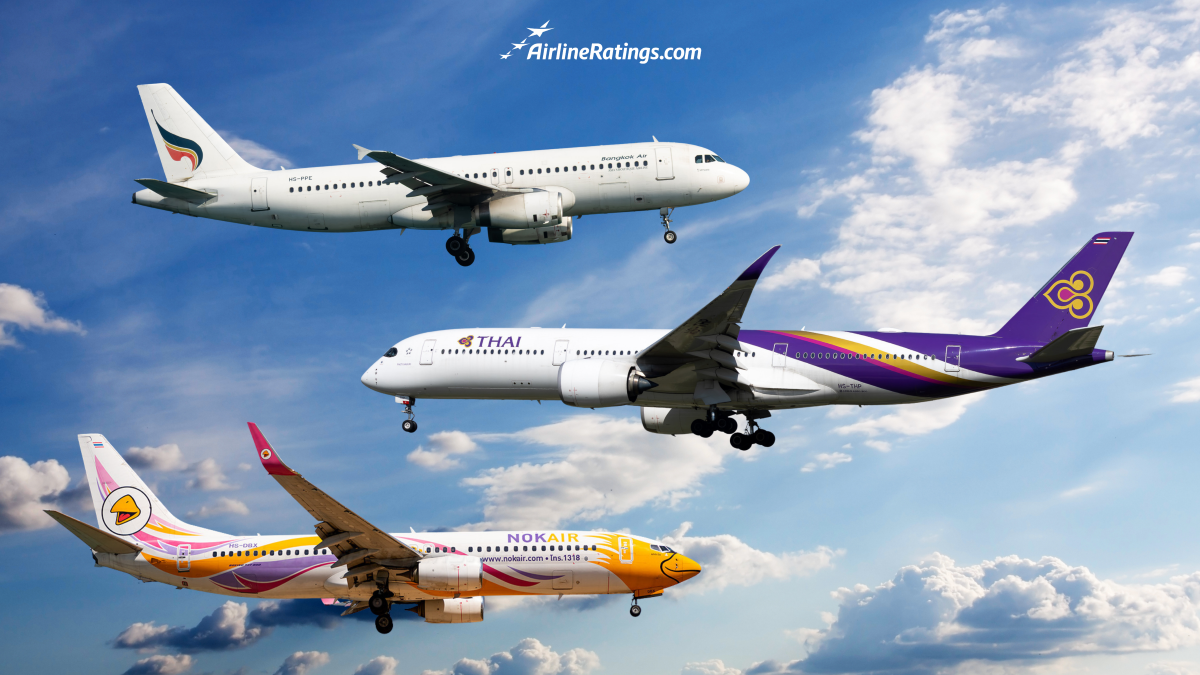
There are seven airlines in Thailand: Thai Airways, the regional flag carrier and a premium airline; Bangkok Airways, a boutique full-service regional carrier; and then 5 low cost carriers, being Nok Air, Thai Lion Air, Thai AirAsia and Thai AirAsia X (the long-haul arm of AirAsia), and Thai VietJet Air.
In good news, five of these seven airlines hold a Seven Star Safety Rating with AirlineRatings. This means they all have a 10-year fatality-free history, are IOSA registered, have no major operating concerns and are not part of the EU black list.
The two airlines not rated Seven Stars for safety are Thai AirAsia and Thai VietJet, neither of which is currently IOSA registered.
Looking at each Thai airline's fleet size and average fleet age:
Thai Airways has 83 aircraft with an average age of 10.5 years
Thai AirAsia has 63 aircraft with an average age of 11.5 years
Thai Lion Air has 36 planes at 12.6 years of age
Bangkok Air has 23 aircraft at 15 years old
VietJet Air Thailand has 22 planes at 6.5 years of age
Thai AirAsia X has 11 aircraft at 14 years old
Nok Air has 10 aircraft at 11 years old
READ: World’s Safest Airlines for 2026
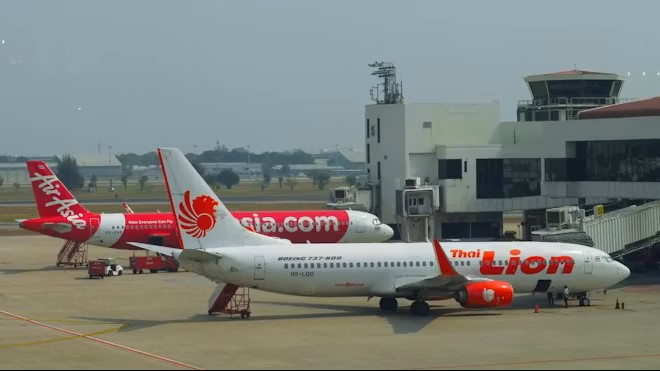
Flying in Thailand is now safe, but it didn't use to be
Flying in Thailand itself has become a much safer prospect over the past 10 years.
Back in 2015, all Thai-based airlines faced a ban from the Federal Aviation Administration in the USA due to safety concerns. The International Civil Aviation Organisation (ICAO) red-flagged Thailand in June of the same year over safety concerns. At this point AirlineRatings was unable to recommend the safety of any Thai-based airline.
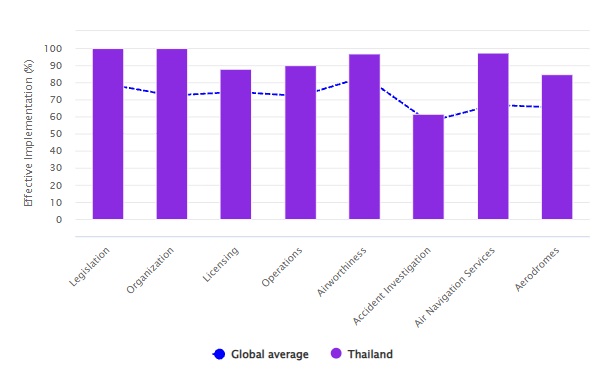
Fast forward 11 years and, as the graph below shows, Thailand now meets global standards in all ICAO country audit parameters. These parameters don't necessarily reflect aircraft safety, but they do give an idea of the systems in place within the operating country of jurisdiction to maintain exceptional safety.
Looking at accidents and incidents, the national carrier certainly had a somewhat chequered safety history a decade back. These days though, the incident rate is no worse than airlines synonymous with safety that operate in the region, like Emirates, Qatar and Korean Air.
So, who should you fly in Thailand?
In great news, passengers have a choice, which is not something they had 10 years ago. Most airlines have a 7/7 safety rating and the airlines all operate fleets of a similar age. Whilst Thai AirAsia is not IOSA certified and has a safety rating of Five Stars, the organisation and its sheer volume of short-haul flights speak volumes when it comes to safety. Put simply, they fly an awful lot without incident. Airlines like Thai AirAsia, Thai Lion Air and VietJet also have the backing of huge parent companies, giving them good financial stability and access to resources, including spare parts and aircraft.
With all airlines offering comparable safety, the choice for passengers comes down to route network, frequency of operations, price and inclusions. For medium to long haul travel we would pick Thai Airways over Thai AirAsia X because of the comfort offered. Similarly, if a low-cost carrier flew the same route as Bangkok Air at the same price point, we would choose Bangkok Air simply because we can't go past a complimentary snack on a plane.
There's no outright winner, and that's exactly the point. Thailand has rebuilt its aviation credentials over the past decade to the point where every carrier in the country meets global safety standards. For passengers, that's a genuinely great position to be in — the decision now comes down to route, schedule, price and inclusions rather than which airline is safest to board.
Have questions or want to share your thoughts?