Power banks, turbulence and unruly passengers: the WSOC 2026 sessions that will shape your next flight

By Airline Ratings Fri Sep 18, 2026
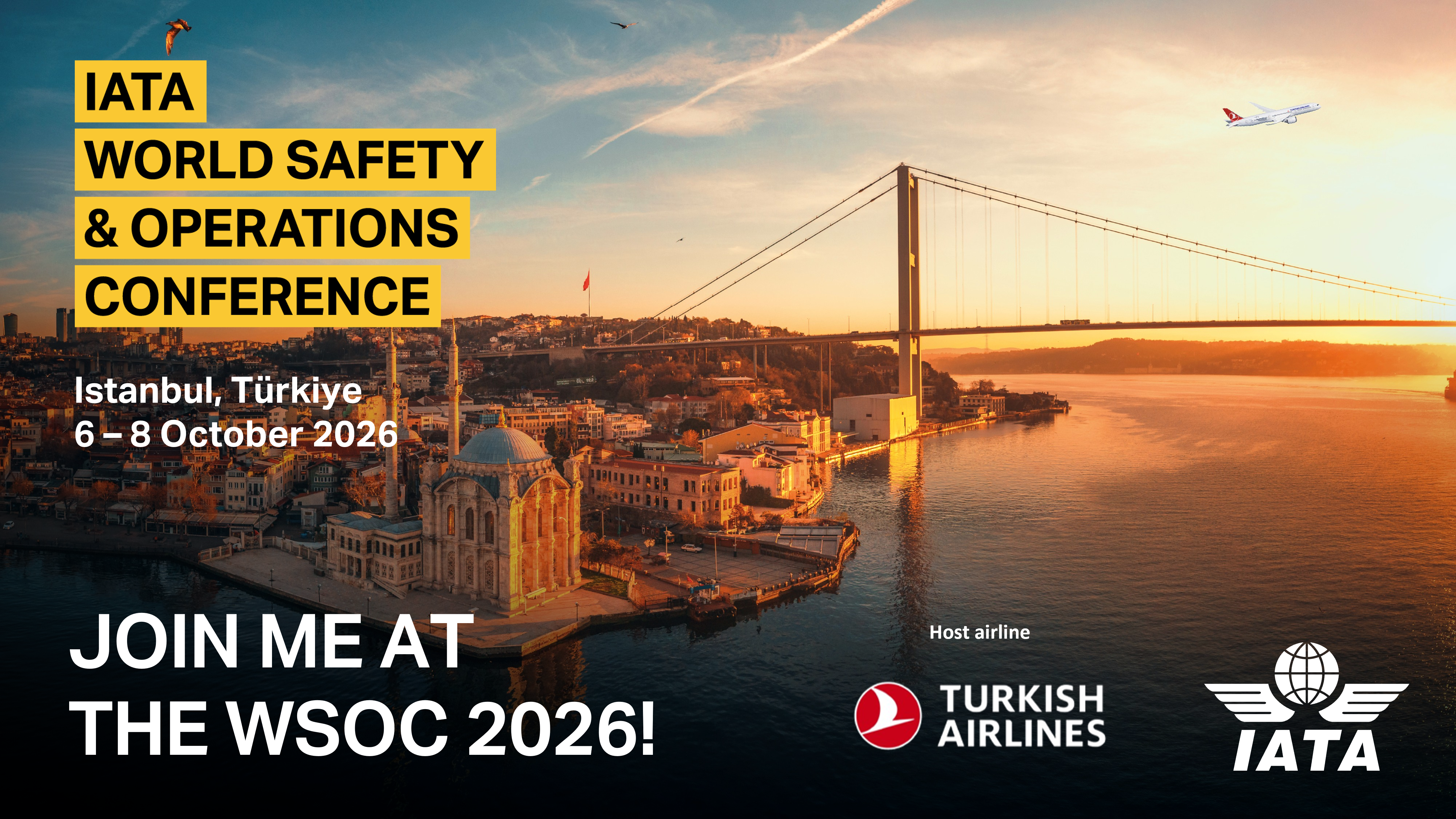
Most passengers will never hear of the World Safety and Operations Conference, yet the rules they meet at the gate and in the cabin often start life in rooms like the ones IATA has booked at the Hilton Istanbul Bomonti Hotel and Conference Center this October. The safety managers who decide whether you can charge a power bank at your seat, how crews handle a disruptive traveller and what happens when someone falls ill at 38,000 feet will spend three days comparing notes, and the programme reads like a list of the questions our readers send us every week. IATA
Lithium batteries in the cabin
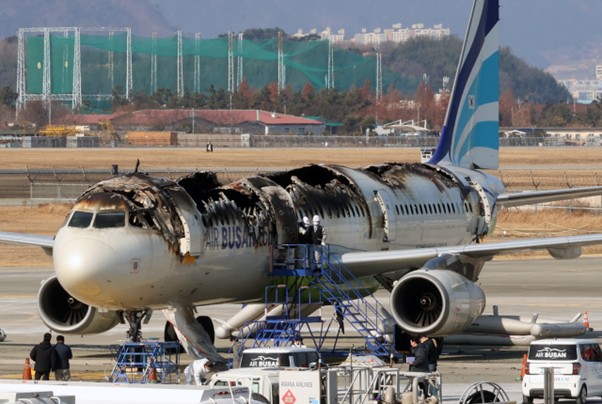
Power bank rules have shifted repeatedly since the Air Busan fire in January 2025, and they still differ from one airline to the next, which leaves passengers confused at the gate. The programme acknowledges the problem directly, saying it can be hard to keep up with the changing regulations and guidance, and a session moderated by Lufthansa with speakers from China Southern Airlines and UL Standards and Engagement will try to align what the industry expects of travellers.
Unruly passengers
A session led by KLM with cabin safety managers from Emirates, Turkish Airlines and Air China will look at what is happening to unruly passenger rates globally, which changes in behaviour crews are seeing and what can bring incidents down to an acceptable level.
Safety messages that passengers hear
Airlines know that many travellers tune out the safety briefing, so a session moderated by United Airlines with a safety promotion specialist from EASA will ask how carriers can deliver safety messages in a way that appeals to passengers and encourages them to comply. The programme frames onboard safety as a shared responsibility between passengers and cabin crew, which is a theme we return to often in our own onboard audits.
Medical emergencies and crew fatigue
WestJet moderates a session on how in-flight medical support is moving towards integrated, data-driven response systems, with Qatar Airways among the speakers. A separate session on cabin crew, led by American Airlines, includes a fatigue risk manager from Air Europa and looks at how safety managers can support crews in a changing cabin environment.

The risks passengers cannot see
Beyond the cabin, IATA data scientists will show how the association uses ADS-B and incident data to help the industry identify GNSS jamming and spoofing events, a growing problem near conflict zones. A panel with Qatar Airways' geopolitical risk manager will examine how airlines keep flying safely as conflicts reshape airspace access and route planning. The conference also hosts a full-day Turbulence Aware Forum, limited to 100 seats, where member airlines explain how shared turbulence data supports their operational decisions, a subject that has had passenger attention since the Singapore Airlines SQ321 accident in May 2024.
Why it matters
The closing panel, which includes Turkish Airlines and Airbus, will set IATA's safety agenda for 2027 with a promise to report back on results at next year's conference, so the decisions taken in Istanbul should be visible to travellers within months. Registration and the full programme are on the IATA WSOC page.
Airline Ratings is proud to be an official media partner of WSOC 2026.
Have questions or want to share your thoughts?