Investigators lower prediction on drone conflicts with planes

By Steve Creedy Mon Aug 14, 2017
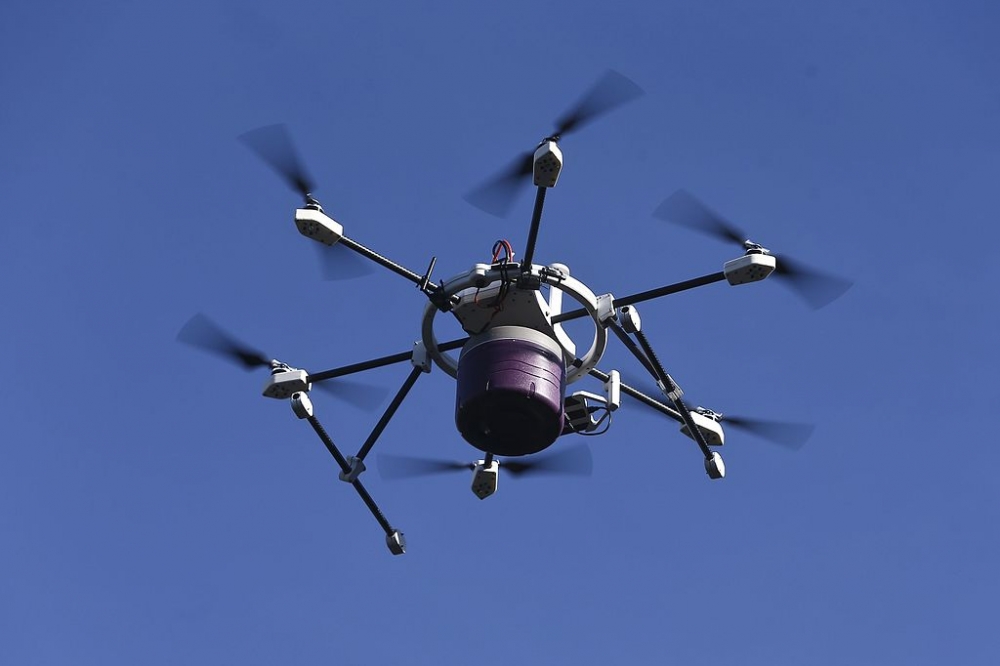
Australian air safety investigators have revised a prediction that the number of close encounters between aircraft and drones could rise by 75 per cent this year.
A new report by the Australian Transport Safety Bureau downgraded the estimate after the expected spike in close encounters failed to eventuate in the first half of the year.
But the report continued to warn of increasingly rapid growth in the number of remotely piloted aircraft systems (RPAS) in Australia and said the number could double by the end of 2017.
“This presents an emerging and insufficiently understood transport safety risk,’’ it said, calling for close monitoring of the phenomenon.
The number of drone-related safety incidents reported to the ATSB increased rapidly between 2012 and 2016 and this was expected to continue this year.
“However, the first half of 2017 saw significantly fewer occurrences than predicted given the previous data,’’ the report said. “Current forecasts—incorporating data up to the end of June 2017—predict the number of RPAS occurrences reported to the ATSB in 2017 to be comparable to 2016.”
The report did not say why there were fewer than expected drone-aircraft conflicts in the first half of this year but cautioned the uncertainty underlying the bureau’s forecasts meant they were “indicative of an increase only and are not intended to be accurate predictions of future RPAS near encounters”.
Australia’s Civil Aviation Safety Authority (CASA), which regulates drones, has been conducting a campaign to educate RPAS owners about their responsibilities.
CASA also this month launched a discussion paper looking at issues such as the registration and regulation of drones; training and education of operators; counter-drone technology; and geo-fencing. It has expressed concern that the use of counter-drone technology by people worried about an invasion of privacy could create more problems than it aims to solve.
The ATSB found there were 152 near encounter incidents and two serious incidents reported to the ATSB between January 2012 and June 2017.
More than half of all near misses occurring from January 2012 to June 2017 involved near encounters with manned aircraft and almost three‑quarters of these occurred between January, 2016, and June, 2017.
Most occurred in capital cities, Sydney in particular, and at altitudes of more than 1,000 ft above mean sea level. Drone operators are not allowed to fly their machines higher than 400ft without getting permission from CASA.
The ATSB has never received a verified report of a plane hitting a drone and the report said there had been five known collisions worldwide.
“Three of these resulted in no damage beyond scratches,’’ it said. “However, one collision with a sport bi-plane in the United States in 2010 resulted in a crushed wing. Fortunately, the aircraft landed safely.
“Less fortunately, a Grob G 109B motor glider had a wing broken by an RPAS collision in 1997 in Germany, resulting in fatal injury to the two people on board.”
The small number of collisions mean little is known about what would happen if a drone hit a larger commercial aircraft but mathematical modelling using bird strike data suggests the RPAS would go through the engine in about 8 percent of strikes.
The report said a higher proportion of drones would be expected to cause engine damage and shutdown compared to the 20 per cent of ingestions involving birds.
The situation was more dangerous for smaller aircraft.
“RPAS have the potential to damage a general aviation aircraft’s flight surfaces (wings and tail), which could result in a loss of control,’’ the report said. “Furthermore, a collision with a general aviation aircraft’s windscreen poses a high risk of penetration.
“A collision with a helicopter’s windscreen poses a similar penetration risk. Any impact on a helicopter’s tail rotor could cause catastrophic failure of the rotor.”
Have questions or want to share your thoughts?