Cabin safety will lead the agenda at IATA WSOC in Istanbul

By Airline Ratings Fri Jul 24, 2026
Every year, new safety challenges emerge for airlines, regulators and manufacturers, demanding fresh thinking and closer collaboration. From lithium battery regulations to crisis management and the growing role of artificial intelligence, these issues will take centre stage this October when the industry's leading safety professionals meet in Istanbul.
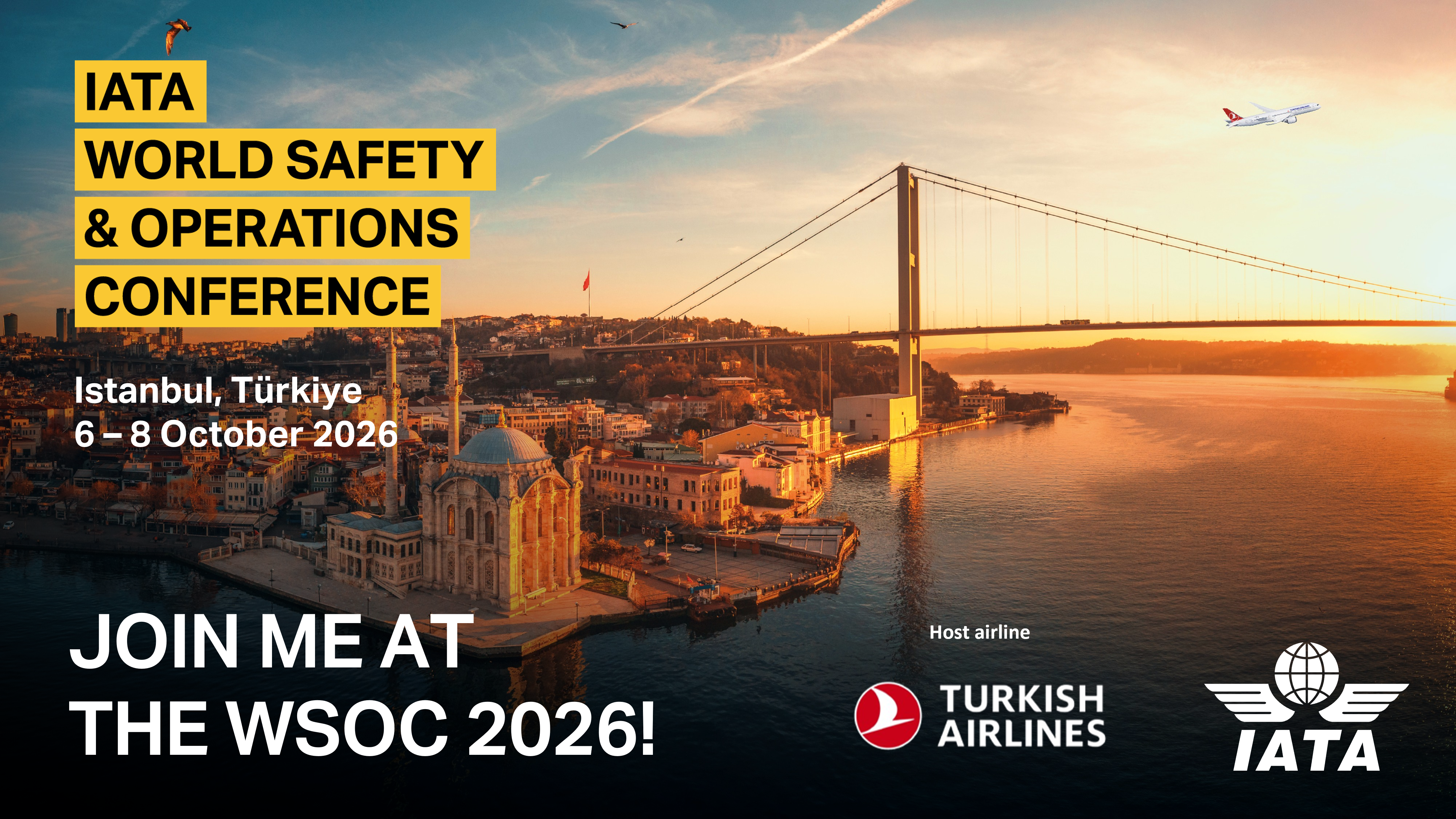
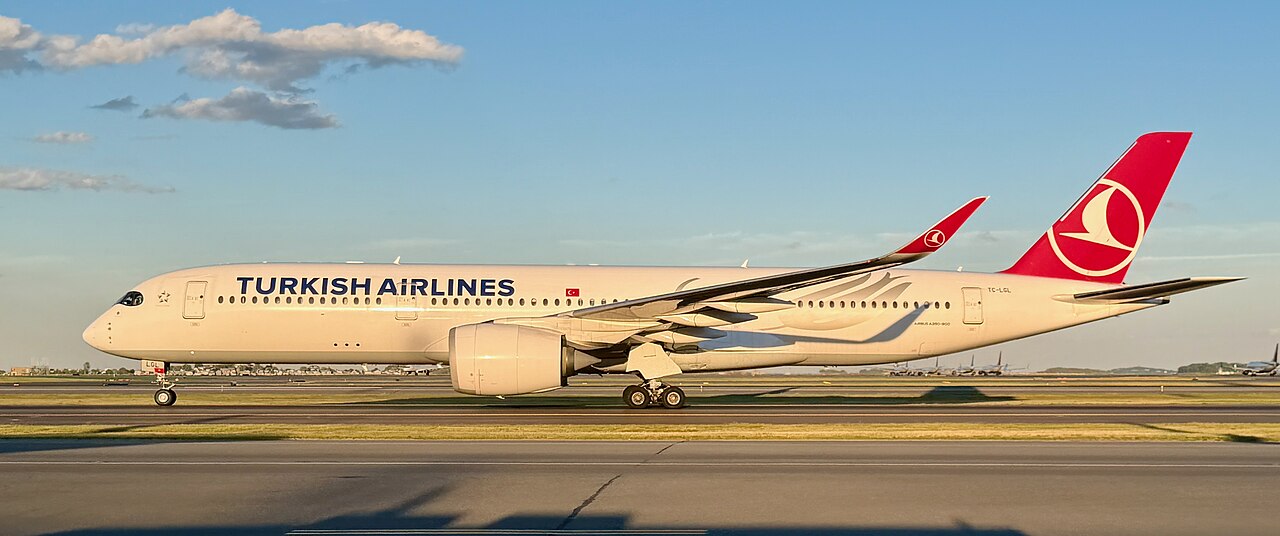
The IATA World Safety and Operations Conference (WSOC) runs from 6 to 8 October at the Hilton Istanbul Bomonti Hotel & Conference Center. WSOC brings together safety, flight operations, cabin operations, maintenance, and crisis management under one roof over three days, with over 45 hours of sessions split across four parallel tracks. More than 850 delegates from 62 countries attended the 2025 edition in Xiamen. This year’s conference returns to Europe for the first time since 2022, with Turkish Airlines having the honour of being the host airline.
IATA’s theme for 2026 is Performance Through People, which will explore the argument that safety performance still relies on human judgement. As artificial intelligence begins to play a role in safety departments, this year’s discussions will be pivotal in ensuring airlines maintain a level of human oversight.
Lithium battery awareness and regulation
Julia Arnds, Flight Safety Cabin Specialist at Lufthansa, will host a session on 7 October discussing which groups actually influence lithium battery policy, and how the industry can align on a shared expectation. Emily Brimsek of Underwriters Laboratories joins the panel alongside Rachid Zine-eddine of AVIA-SEC and Liang Liang of China Southern Airlines.
The question underneath the session is practical, as airlines have introduced power bank restrictions at different speeds in response to a rise in lithium battery incidents. This discussion will help airlines align, and ultimately guide passengers to a comprehensive industry-wide rule.
Understanding how to manage unruly passengers
Frederic Wille of KLM leads the unruly passenger session on 8 October, with Anabel Brough of Emirates, Özlem Çeri of Turkish Airlines and Shu Zhang of Air China. The panel looks at global incident rates, at how the behaviour itself has changed, then at what actually reduces it.
This discussion is timely as CEO of Ryanair, Michael O’Leary, has called for a ban on early-morning drinking and a two-drink ban at airports. O’Leary has stated that Ryanair is forced to divert a flight per day due to intoxicated unruly passengers, and that airports are pushing safety issues onto airlines.
Inflight medical response
Carol Lauinger, Program Manager Cabin Safety and Quality at WestJet, chairs a session on 7 October covering how inflight medical support is moving toward integrated, data-driven systems. Dr Bryan McCarty of MD Onboard, Felix Brand of CardioSecur and Eric Dinear Tampal of Qatar Airways make up the panel.
Safety messaging that passengers absorb
The session we find poignant runs on 7 October and is educating and informing passengers. Jay Lee of United Airlines leads the session, with John Franklin of EASA, Trisha Ferguson of The Interaction Company and Elise May of Southwest Airlines joining.
The theme is that onboard safety is a shared responsibility and not a briefing delivered to passengers who are disengaged. This discussion links directly into AirlineRatings.com’s anonymous onboard cabin safety audit, where we assess how cabin crew prepares the cabin for safe flight. One of our independent assessment points includes how crew react and engage with passengers who do not cooperate.
Suggested Read: Airline safety ratings and awards
Beyond the cabin
The opening plenary on 6 October talks about geopolitical risk and its impact on people performance, a reflection of how conflict zone routings and GNSS interference now shape daily operating decisions. The industry has seen mass disruption this year due to the tensions in the Middle East, and airlines must be prepared and resilient for any future interruption to operations.
Mark Searle, Global Safety Director at IATA, opens the Safety track with Chris Collins of Delta, Francesco Gaetani of EASA and Yannick Vanhaecke of Airbus in a press conference format. İsmail Ustaoğlu, SVP Corporate Safety at Turkish Airlines, appears on the safety leadership panel on 7 October, and Rich Allen-Williams of British Airways closes the track on 8 October with a session on preparing the next generation of safety leaders.
A full day of workshops and forums runs on Monday 5 October, ahead of the main programme. The Emergency Response Planning Forum operates under the Chatham House Rule with 80 seats, and airlines take priority. Other sessions cover IOSA and quality management, competency-based training approval, airspace efficiency, fuel efficiency and IATA's Turbulence Aware platform.
How to attend
Registration is open now, and prices run at $760 for IATA member airlines, $1,300 for IATA Strategic Partners, and $1,450 for airports and regulators. The general public can attend for $1,525 and $300 for students.
The venue sits in the Bomonti district, a short walk from Osmanbey metro station. Allow 40 to 50 minutes by road from Istanbul Airport, or 60 to 80 minutes from Sabiha Gökçen.
Airline Ratings attends WSOC 2026 as a media partner, and we will report live from Istanbul across the three days.
Have questions or want to share your thoughts?