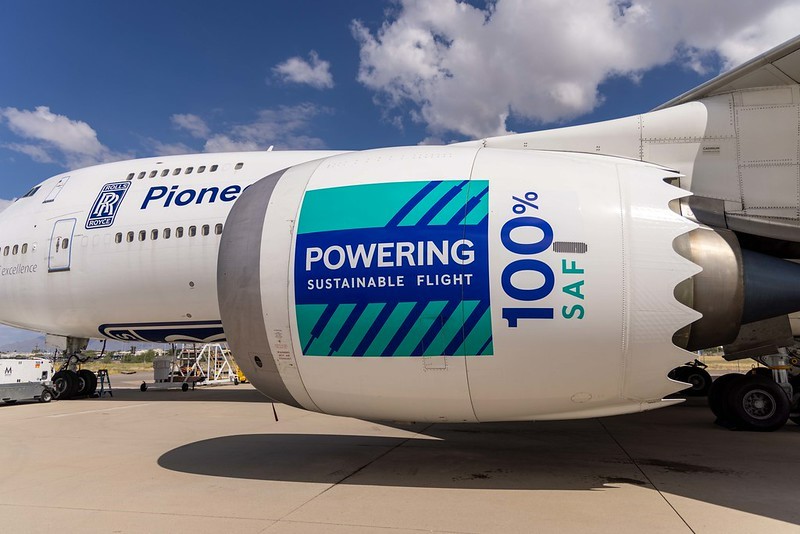
Rolls-Royce Trent 1000 passes 100% sustainable fuel test

By Steve Creedy Wed Oct 20, 2021
Evidence continues to mount that 100% sustainable aviation fuels (SAFs) can be successfully used in aircraft engines after a successful test flight by Rolls-Royce, Boeing and World Energy.
The test flight in the US of almost four hours used the Rolls-Royce Boeing 747 Flying Testbed aircraft with a Trent 1000 engine running 100 percent SAF and three RB211 powerplants using regular fuel.
Rolls said initial indications were that there were no engineering issues “providing further proof of the fuel’s suitability for commercial use”.
READ: Southwest plan to reduce unit carbon emissions by 20% by 2030
The latest results add to those from tests carried out on Tent XWB and Pearl engines on the ground and in the air.
Aircraft are currently certified to operate on a maximum of a 50% SAF blend but the UK engine manufacturer has pledged that all of its Trent engines will be compatible with 100% SAF by 2023.
Boeing closely collaborated on the flight, providing technical support and oversight on aircraft modifications as well as ensuring the 747s systems operated as expected.
“We believe in air travel as a force for cultural good, but we also recognize the need to take action to decarbonize our industry,’’ said Rolls-Royce director product development and technology civil aerospace Simon Burr.
“This flight is another example of collaboration across the value chain to make sure all the aircraft technology solutions are in place to enable a smooth introduction of 100% SAF into our industry."
Boeing vice president of environmental sustainability said the flight’s success further illustrated that SAF could fully replace conventional jet fuel over the long term. She said it was a viable alternative solution for decarbonizing aviation over the next 20 to 30 years.
SAFs form a cornerstone of the International Air Transport Association’s plan to achieve net-zero emissions by 2050.
IATA predicts the industry will need to mitigate 1.8 gigatons of carbon by 2050 and SAFs could account for up to 65% of this.
Have questions or want to share your thoughts?