New US screening technology addresses laptop issues

By Steve Creedy Thu Jun 15, 2017
A new screening technology which may allow large electronic devices to remain in airline cabins has begun testing in the US as part of a cutting-edge partnership between American Airlines and the Transport Security Administration.
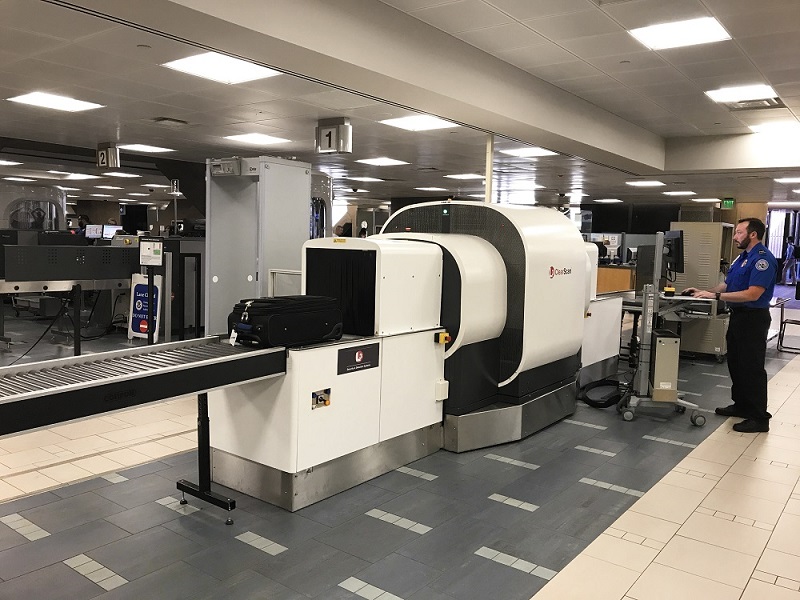
The futuristic-looking Computed tomography (CT) checkpoint scanning equipment uses an X-ray camera that spins around the conveyor belt to shoot hundreds of images and build a 3-D picture of carry-on items.
It also applies what the TSA describes as “a sophisticated algorithm” to detect explosives and officers are on hand to open bags if further screening is needed.
The system is designed to speed up the security process by allowing people to leave laptops as well as liquids, aerosols and gels in their bags.
The TSA has partnered with American Airlines and has already begun a demonstration in one checkpoint lane in Terminal 4 Phoenix Sky Harbor International Airport (PHX). A similar demonstration will begin in Terminal E at Logan International Airport (BOS), in Boston, later this month. Passengers will be asked if they’re willing to volunteer to use the screening.
“The safety and security of travelers is the number one priority of TSA and our partnership with industry is critical in helping develop innovative and critical security enhancements,” TSA acting administrator Huban Gowadia said in a statement. “We already use this type of technology for checked baggage, and we expect these smaller checkpoint-sized machines will provide the same high level of security.”
A successful test could see the TSA and American deploy CT technology to other locations.
Another US company, One Resonance Sensors, says it has developed a more compact and less costly scanner that specialises in screening devices such as laptops and notebooks.
The company says its MobiLab ES scanner is being assessed by the TSA and uses radio-frequency electromagnetic waves to inspect electronic devices.
The new technology comes as the Department of Homeland Security is considering extending a ban imposed in March on taking laptops and other large electronic devices as carry-on US-bound direct flights from 10 North African and Middle East destinations.
Have questions or want to share your thoughts?