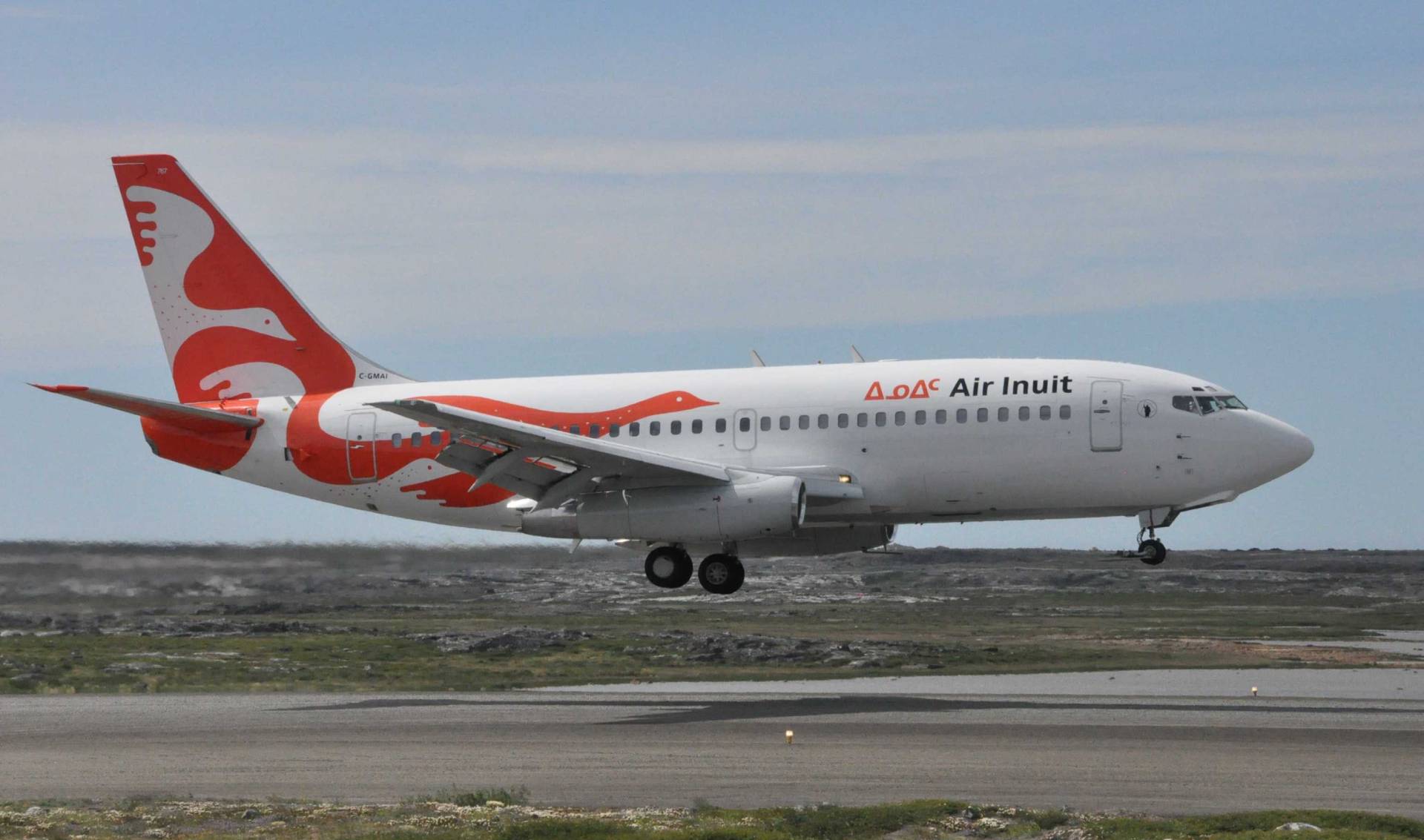
This Canadian airline flies 49-year-old aircraft: we tell you why
By Josh Wood Thu Feb 19, 2026
Air Inuit is a Québec-based regional airline operating passenger and cargo services to remote communities across northern Québec and Arctic Canada. It flies in one of the world’s harshest aviation environments, where winter temperatures regularly fall below −40°C and many airfields are short, unpaved gravel strips.
To combat these conditions, Air Inuit operates a highly specialised fleet including De Havilland Canada Dash 8s, DHC-6 Twin Otters, and—most notably—the Boeing 737-200, a jet aircraft retired by most airlines decades ago. Despite its age, the 737-200 remains uniquely suited to the region’s infrastructure and operating demands. In fact, the airline’s oldest aircraft are its Twin Otters, with an average age approaching 50 years. Overall, Air Inuit operates one of the oldest active fleets in commercial aviation, with an average fleet age of around 35 years according to Planespotters.com.
Aircraft | Number in Fleet | Average Age |
Boeing 737-200 | 4 | 46-years |
Boeing 737-300 | 1 | 34.3-years |
Boeing 737-800 | 3 | 13.3-years |
DHC-6-300 Twin Otter | 7 | 48.6-years |
DHC-8-100 | 4 | 36.6-years |
DHC-8-300 | 13 | 30.2-years |
TOTAL | 31 | 35.5-years |
Aircraft selection at Air Inuit is driven not by passenger demand or competition, but by geography and necessity. Many Nunavik communities have populations of fewer than 1,500 people and lack road access. For much of the year, sea routes are frozen, and overland transport is impossible, making aviation the only reliable year-round link for medical travel, food supplies, and access to essential services.
Rather than functioning as a conventional airline, Air Inuit forms a year-round transport lifeline. For many communities with no road or rail access, aircraft are the only dependable way to move people, food, medicine, and supplies.
Why the Boeing 737-200 still works in the Arctic
In the Arctic, newer aircraft are not always better. The Boeing 737-200 remains uniquely suited to the region, and its continued use demonstrates how geography, infrastructure, and reliability can outweigh the fuel-efficiency advancements of modern jets.
Air Inuit uses the Boeing 737-200C (Combi) variant, enabling the aircraft to carry both cargo and passengers on the same flight. This is essential for the airline’s route network, where communities rely on aircraft for food, medical supplies, mail, and everyday goods. The cabin can be reconfigured depending on the demand, enabling alternate combinations of freight pallets and seating, making the aircraft exceptionally versatile for remote operations.
Gravel kits are bespoke to the 737-200
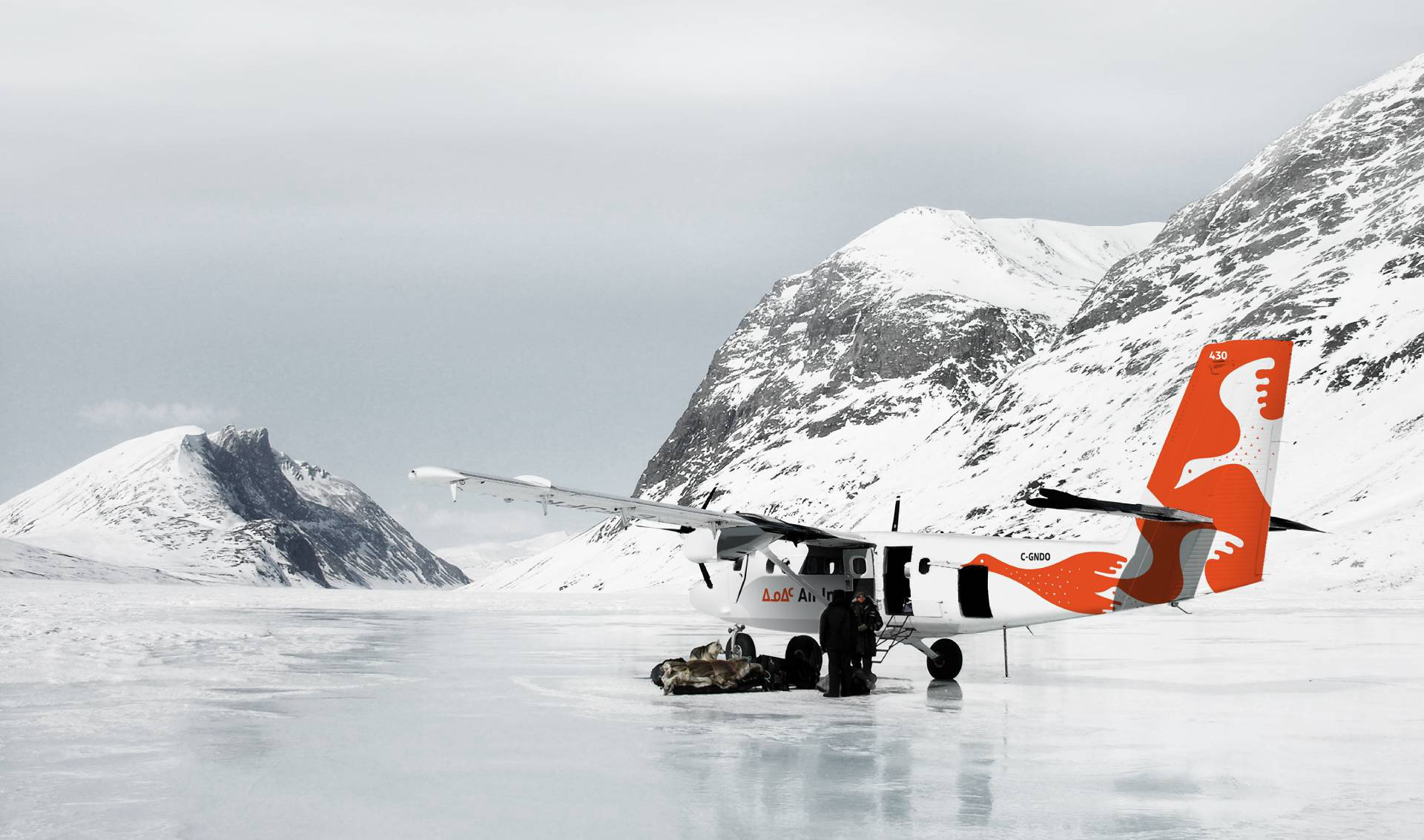
A major reason for the aircraft’s longevity is its ability to operate from unpaved runways. Many northern airstrips cannot be fully paved because shifting permafrost causes surfaces to crack and deform. To combat this, Air Inuit’s 737-200 fleet is fitted with gravel-runway modification kits.
These modifications include a nose-gear gravel deflector to prevent gravel from striking the fuselage, reinforcement around the flap mechanisms, protective shielding for brake lines, and vortex dissipators on the engines that redirect airflow and prevent debris ingestion. The aircraft is also coated with abrasion-resistant paint, and additional lighting assists crews operating in darkness and blowing snow.
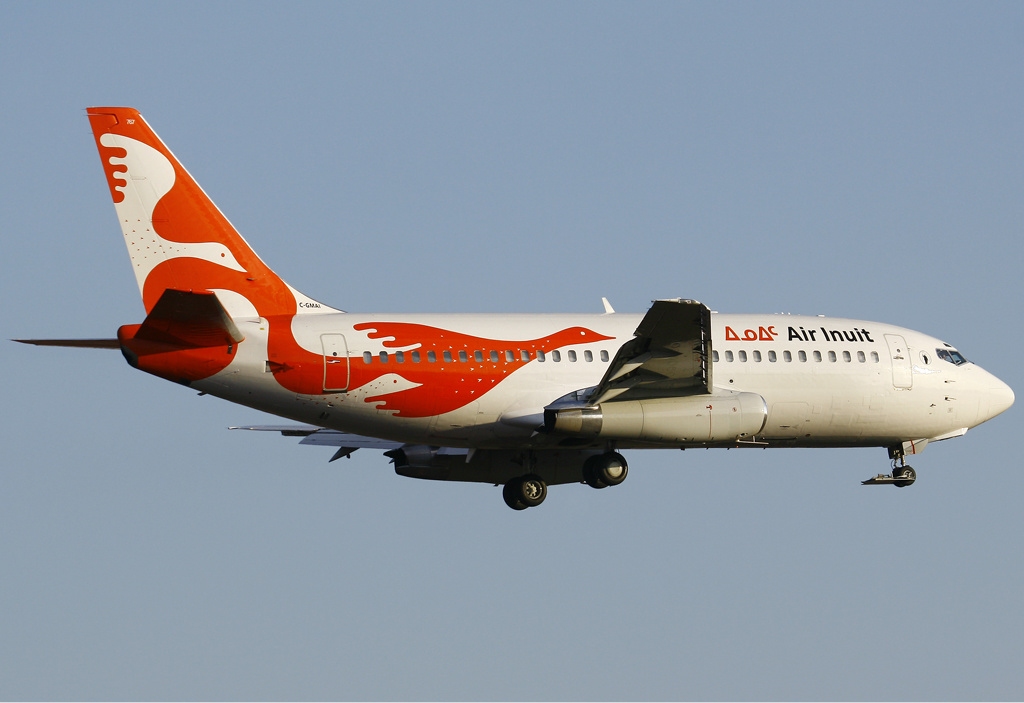
The Twin Otter: reaching the smallest communities
More of an airborne utility vehicle than a conventional airliner, the De Havilland Canada DHC-6 Twin Otter serves Air Inuit’s smallest and most remote airfields.
The Twin Otter’s short take-off and landing capability enables operations from short gravel strips, compacted snow, and airfields with minimal ground equipment. Many of the communities it serves lack airport infrastructure, meaning aircraft must be capable of operating independently even in severe winter conditions.
Flights frequently carry essential cargo as well as passengers, representing communities’ daily connection to the outside world.
The Dash 8: regional connector
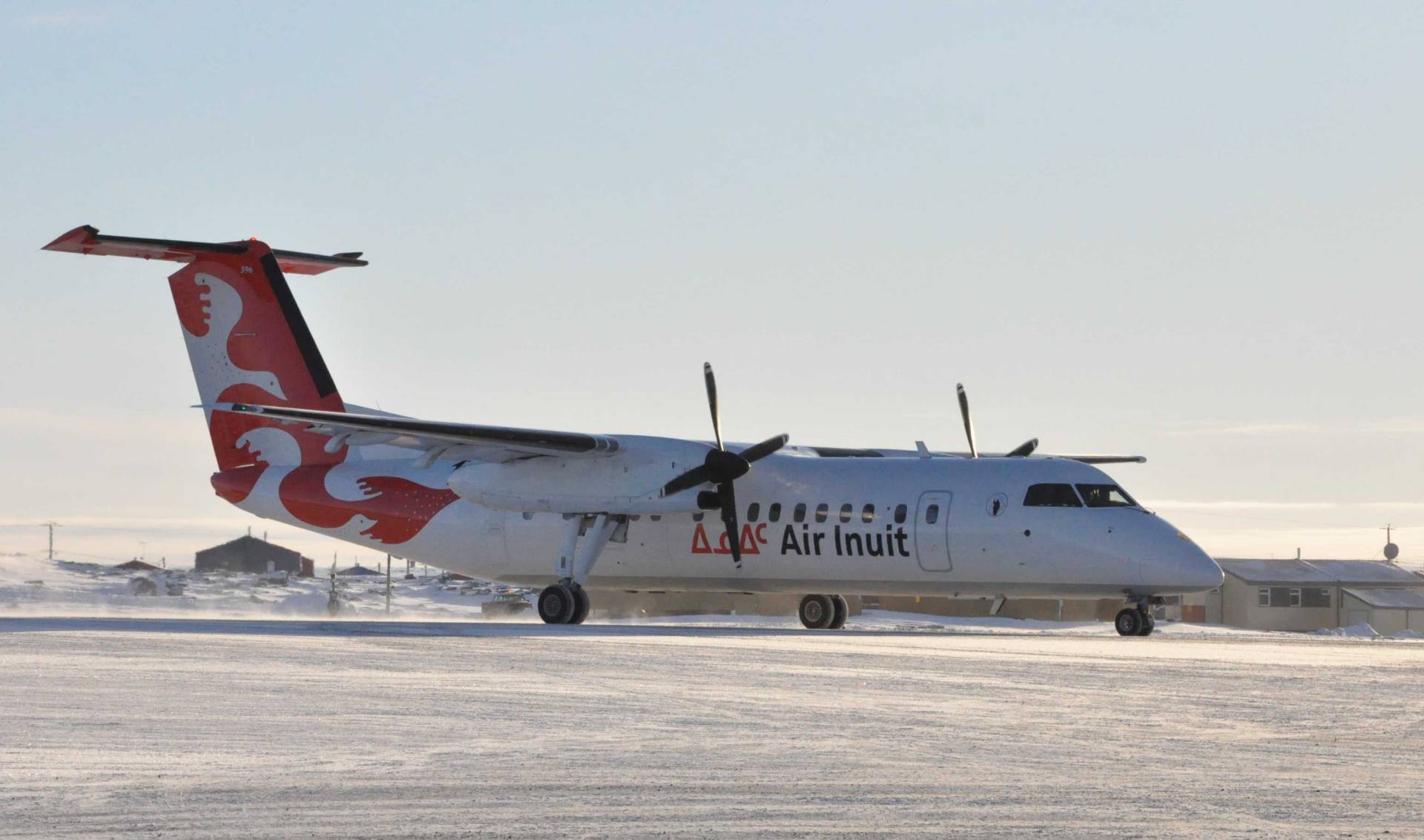
The De Havilland Canada Dash 8 turboprop aircraft serves as a vital link for smaller villages with regional centres such as Kuujjuaq, consolidating passengers and freight from multiple communities.
The Dash 8 has a pressurised cabin, higher cruising speeds, and an increased payload while still having the flexibility to operate into challenging airfields. The aircraft can continue to operate from short or unpaved runways and perform reliably in icing conditions.
Where the Boeing 737-200 fits into the network
The Boeing 737-200 represents the final stage in Air Inuit’s transport chain. Passengers and cargo arriving from smaller settlements transfer onto the larger jet, which connects Nunavik to southern Québec, including Montréal.
Rather than serving purely as a passenger aircraft, the jet functions as a supply aircraft capable of moving bulk shipments, building materials, and heavy freight that smaller aircraft cannot carry.
How the 737-800 complements the 737-200
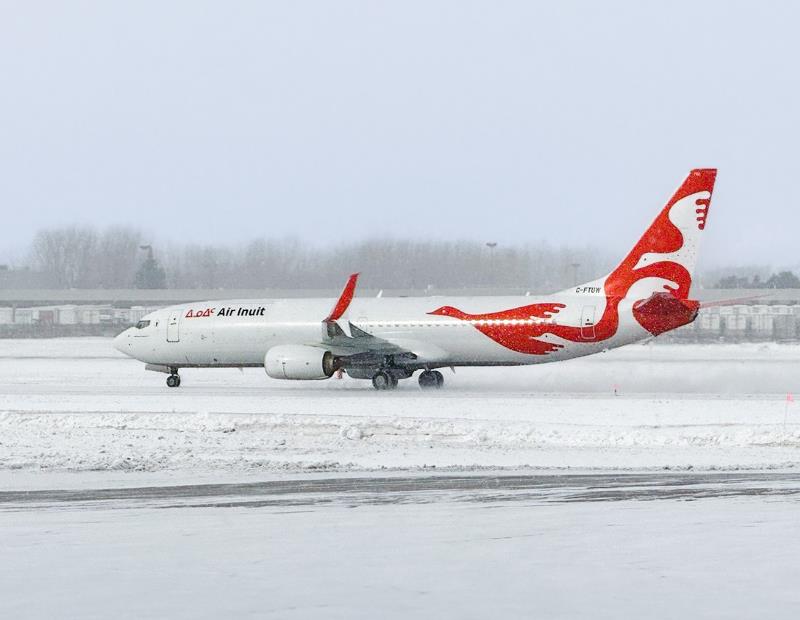
Air Inuit has begun modernising its jet fleet and now operates Boeing 737-800 aircraft in both combi and cargo configurations. These newer aircraft provide improved fuel efficiency and greater payload capability on routes where airport infrastructure allows conventional jet operations.
However, each aircraft type fulfils a very different role.
The 737-800 is primarily used where paved runways and ground handling facilities are available. It carries higher volumes of freight and passengers more efficiently and forms an important link between northern communities and larger regional centres.
Suggested read: Boeing 737 NG and MAX Compared: Evolution, Innovation, and Controversy
The 737-200 is designed around accessibility rather than fuel efficiency because it can safely operate from gravel runways. At these airports, reliability and the ability to land on unpaved runways are more important than fuel burn or passenger comfort.
Rather than replacing older jets, Air Inuit uses the 737-800 to complement the classic variant on higher-capacity routes and with bulk cargo transport. The 737-200 continues to operate to airfields that remain unsuitable for most modern jets.
What to expect on board as a passenger
Onboard Air Inuit’s Boeing 737 and Dash 8 flights, complimentary hot meals are available to be pre-booked, with complimentary snacks provided on most flights. Two glasses of wine are also offered on certain routes to Montréal.
Passengers are also offered complimentary high-speed Wi-Fi on 737-800 routes between Montréal and Kuujjuaq. A bring-your-own-device in-flight entertainment system is also available on 737 and Dash 8 flights over 30-minutes, where magazines, video games, movies, and TV shows are available.
You can find out more on Air Inuit’s in-flight services here, and their entertainment choices here.
More than an airline
While the Boeing 737-200 is largely retired elsewhere, in northern Québec it remains a vital working aircraft for Air Inuit. Its mixed fleet reflects necessity rather than nostalgia, with each type supporting communities that rely on aviation for everyday life. For these settlements, the aircraft is not simply transport - it is infrastructure.
Have questions or want to share your thoughts?
Sources: