Miami Prime Air crash: Its service history spans three continents and seven operators, could this be a factor?

By Airline Ratings Tue Sep 8, 2026
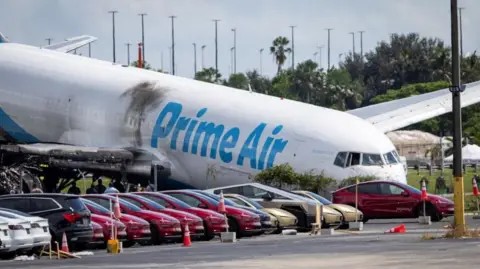
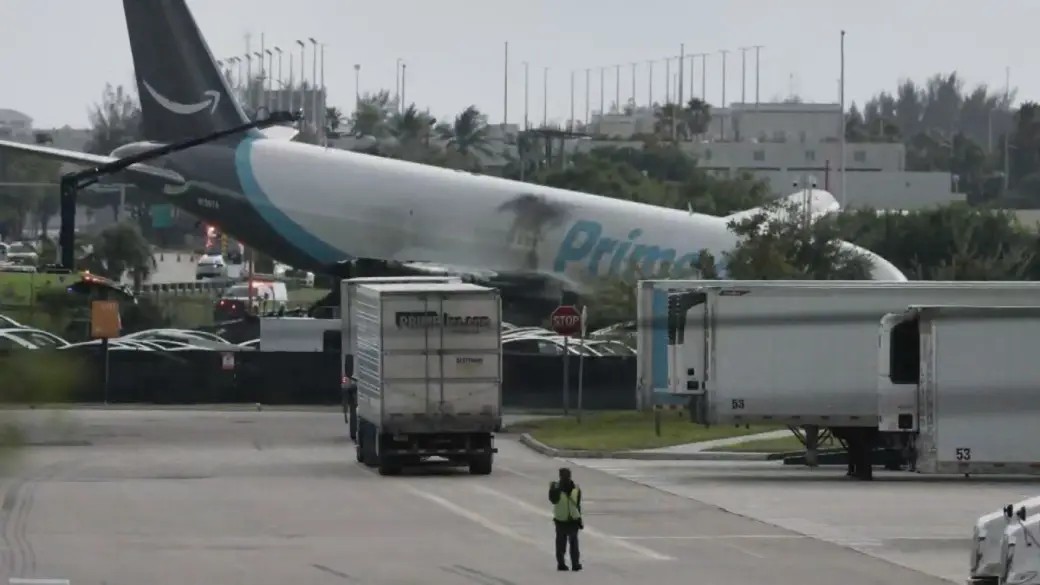
A Boeing 767-300 freighter flying for Amazon's Prime Air network overran the runway at Miami International Airport on Sunday 6 September, tearing through a perimeter fence and crossing a public road before it came to rest in flames beside an Amazon warehouse car park. Five people died and five more were injured, three of them critically.
The National Transportation Safety Board (NTSB) has recovered both the cockpit voice recorder and the flight data recorder and expects to release confirmed speed data from the recorders this week. Here is what has been established so far and where the investigation is heading.
The flight
Flight 7598 was operated by 21 Air LLC under contract to Amazon Air. The aircraft was on its third sector of the day, having flown Cincinnati to Miami, Miami to San Juan in Puerto Rico and then the return leg to Miami. It departed San Juan at 15:42 UTC and touched down on Miami's runway 30 at 13:53 local time after a flight of two hours and eleven minutes, according to Flightradar24.
Video of the landing shows the jet floating a considerable distance down the runway before the main gear touched. Flightradar24 data indicates the aircraft was still travelling at roughly 129 miles per hour (208 km/h) as it reached the end of the paved surface. It then ran on for about 400 metres beyond the runway, striking navigational aids, a 2012 Ford Econoline van carrying seven employees of Professional Ocean Service Corporation (an airline cleaning contractor) inside the airport boundary, then the perimeter fence and finally a Toyota Corolla Cross travelling on Northwest 67th Avenue outside airport property. A second fence line separating a robotaxi parking area was also hit.
NTSB chair Jennifer Homendy walked the full path of the wreckage on Monday and described it as "utter devastation". All five fatalities were occupants of the two vehicles. Both pilots survived and were extracted from the cockpit by Miami-Dade Fire Rescue, which deployed more than 60 units and around 200 personnel. The NTSB has not commented on the pilots' condition and has yet to interview them.
The aircraft
The airframe is the most unusual element of this story and deserves its own treatment.
N1997A is a Boeing 767-33A(ER), manufacturer's serial number 27310, line number 545. It first flew on 17 June 1994, which made it 32 years old at the time of the accident. It is powered by two General Electric CF6-80C2B6F engines.
Its service history spans three continents and seven operators:
1994: Delivered new to Belgian charter carrier Sobelair as OO-SBY, on lease from AWAS (Ansett Worldwide Aviation Services)
2000: Vietnam Airlines as VN-A768
2003: Returned to AWAS, then Air Europa of Spain as EC-IQA
2006: Kenya Airways as 5Y-KQQ
2010: Nordwind Airlines of Russia as VQ-BRA
December 2014: Withdrawn from service and stored at Shannon, Ireland
2015 to 2016: Ferried to Tel Aviv and converted from passenger to freighter configuration by Israel Aerospace Industries' Bedek division (hence the BDSF suffix, for Bedek Special Freighter)
August 2016: Entered cargo service with Atlas Air as N1997A, one of the first aircraft painted in Prime Air colours and nicknamed "Amazon One"
2024 to 2025: Stored at Miami-Opa Locka before returning to service
January 2025: Transferred to 21 Air's operating certificate, still in Prime Air branding
The FAA registry lists the owner as Andromeda Leasing II LLC at the Purchase, New York address of Atlas Air Worldwide. That places at least three companies in the chain of responsibility: an Atlas-affiliated lessor that owns the aircraft, Amazon, which sources and controls the 767 fleet flown on its behalf, and 21 Air, which holds the operating certificate and employs the crew.
Mary Schiavo, a pilot and former inspector general of the US Department of Transportation, told AP the NTSB will look closely at the maintenance history given the aircraft's long run of foreign ownership, including its Russian period. Who performed heavy and line maintenance, who managed the brake and thrust reverser components and what the lease required of each party will all be questions for the investigation.
Does the aircraft's age matter?
A 32-year-old freighter is old but far from unusual. Converted 767-300s make up the backbone of the Amazon Air, FedEx and UPS medium widebody fleets, and many of those airframes date from the mid-1990s. Age in itself is not a safety indicator provided the maintenance programme is sound and the structural inspections required of ageing aircraft are carried out. The more relevant questions are how the aircraft was maintained across seven operators and two long storage periods, and whether the braking and reverser systems performed as designed on Sunday.
The operator
21 Air is a Part 121 cargo carrier headquartered in Greensboro, North Carolina, with operating bases including Piedmont Triad International and Miami. It began flying for Amazon Air in late 2024. As of April 2026 the company was owned primarily by Houston Astros owner Jim Crane and had a close business relationship with Canadian cargo airline Cargojet.
What investigators will examine
Homendy said the NTSB has 32 people on site collecting perishable evidence and will not determine probable cause while there. Investigative groups will cover operations, human performance, aircraft systems, airport and survival factors.
The central question is why the aircraft landed long and did not go around. Aviation experts point out that the normal touchdown zone is within the first 914 metres (3,000 feet) of a runway, and that an unstabilised approach or a float beyond that zone should trigger a go-around under most carriers' standard operating procedures. Schiavo noted the video shows the aircraft floating without a clear flare to plant the main gear.
Weather is a second thread. It was not raining at the time but dark storm clouds and strong winds were reported around the airport. A tailwind component would have extended the float and eaten into stopping distance.
Braking and reverser performance is the third. The flight data recorder will show whether the crew applied full braking and reverse thrust promptly and whether the systems delivered the expected deceleration.
The fourth thread is the airport itself. Miami does not have an Engineered Materials Arresting System (EMAS) at the end of runway 30. EMAS beds of crushable material are credited by the FAA with saving at least 497 lives in overruns. Mike O'Donnell, the FAA's former director of airport safety and accident investigations, said Miami was not required to install one because it has a 1,000 foot (about 300 metre) runway safety area. The aircraft travelled roughly 400 metres beyond the pavement, so it would have needed more than the standard safety area in any case, but the investigation will consider whether an arresting bed would have stopped it short of the road.
Impact on operations
Miami closed all runways and taxiways immediately after the crash. Flights resumed on Sunday evening but by midday Monday inbound flights were delayed by more than five hours on average according to FlightAware. Around 232 flights were cancelled in the first 24 hours and more than 300 were delayed on Sunday alone. Two of the airport's four runways remained closed on Monday while the wreckage stayed in place and fuel was drained from the aircraft.
What happens next
The NTSB has flagged a further briefing this week with the first data from the recorders. A preliminary report normally follows within 30 days of an accident and the full report typically takes 12 to 24 months.
Amazon said in a statement that it was working closely with local authorities and officials to establish what happened.
Have questions or want to share your thoughts?