Laser tech aims to allow pilots to avoid turbulence.

By Steve Creedy Wed Aug 2, 2017
Boeing is looking to make flights smoother with a laser-based technology aimed at helping pilots avoid clear air turbulence and wind shear.
The US manufacturer is partnering with the Japanese Aerospace Exploration Agency (JAXA) to flight test LIDAR technology with the potential to measure winds as much as 17.5 kilometres (10.9 miles) ahead of an aircraft.
Boeing said this would give pilots enough time to take action to avoid wind shear or clear air turbulence, phenomena which do not offer visual clues and are often not detected by traditional onboard weather radar. Both can be dangerous for aircraft and cause injuries to passengers.
Read: 26 injured on China Eastern flight.
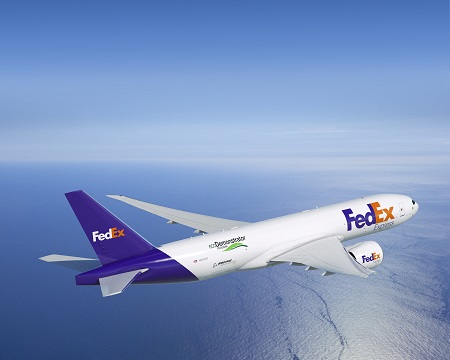
The LIDAR will undergo a six-week flight test program on board Boeing 777 freighter owned by FedEx as part of Boeing’s ecoDemonstrator flight-test research program. It will be one of more than 30 technologies tested during the 2018 program.
"Boeing's ecoDemonstrator flight-test programs accelerate innovation that enhances the safety and efficiency of commercial flight," said ecoDemonstrator program manager Doug Christensen.
"We're eager to continue working with JAXA so that we can both learn more about LIDAR technology."
LIDAR can provide a longer range and sharper picture than radar but it is unable to pierce through cloud cover.
The technology emits pulses of laser light which bounce off small dust and other particles. By observing the reflected light, the technology can measure wind speed along the path of the laser and give pilots a picture of what’s happening ahead.
There is also speculation that LIDAR, a key sensing technology used in driverless cars, will be a component of Boeing’s study of pilotless planes.
The manufacturer in June announced it would begin studying pilotless aircraft in a simulator this year and planned to fly the artificial intelligence technology next year.
Read: Boeing’s exciting crystal ball.
The LIDAR tests are timely given warnings air travel will get bumpier as carbon dioxide levels rise.
A study by the University of Reading found the chances of being tossed around an aircraft cabin due to turbulence could triple in coming years due to climate change.
Unexpected turbulence is already estimated to cost US carriers $US200 million annually and has implications for aircraft insurers and the efficiency of airline operations.
Read: Severe air turbulence could triple due to climate change.
Have questions or want to share your thoughts?