Broken bones as Aeroflot 777 hits turbulence

By Steve Creedy Mon May 1, 2017
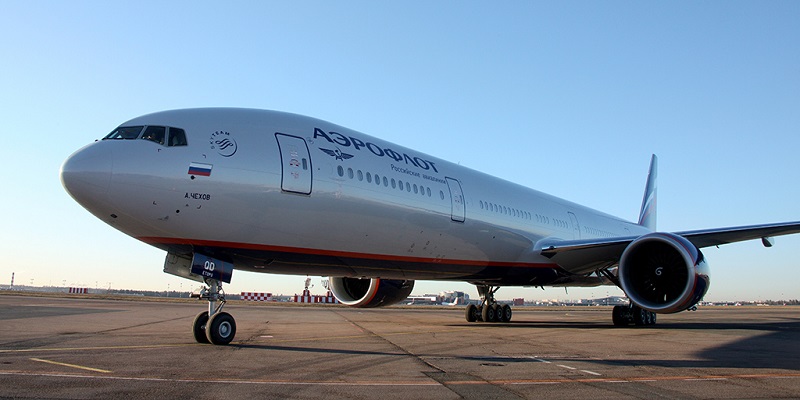
Russian carrier Aeroflot says none of the passengers injured when a Boeing 777 travelling from Moscow to Bangkok hit clear air turbulence suffered serious or life-threatening injuries but some suffered broken bones.
Emergency services took 27 passengers to hospitals after the unexpected event left the aircraft cabin in a shambles on May 1. The aircraft landed safely at Bangkok.
“None of the passengers suffered spinal compression fractures,’’ Aeroflot said in a statement issued later that day. “Fifteen Russian Federation citizens and two citizens of Thailand currently remain hospitalised. The remaining passengers were discharged after a medical examination. The patients that are still under doctors’ care have contusions, and several have fractured or broken bones.”
The airline said its representatives and Russian Embassy officials were looking after the passengers, assisting with hotel cancellations, changing check-in dates and re-ticketing of transfer flights.
All costs related to re-ticketing, as well as expenses for passengers’ medical treatment, would be fully covered, it said.
Flight SU270 was about 40 minutes out of Bangkok when the Boeing 777 hit strong turbulence.
“An experienced crew piloted the flight,’’ Aeroflot said. “ The pilot has more than 23,000 flight hours, and the co-pilot has over 10, 500 flight hours.
“However, the turbulence that hit the Boeing 777 was impossible to foresee. ‘’
Clear air turbulence occurs without warning in clear skies and is difficult to detect using onboard weather radar.
A recent British study found the chances of being tossed around an aircraft cabin by severe turbulence could triple in coming years due to climate change.
The study, published in the journal Advances in Atmospheric Sciences, used super computer simulations to look at how a doubling of carbon dioxide in the atmosphere would affect wintertime turbulence levels on trans-Atlantic routes at about 39,000ft. it said that level of CO2 was widely expected to occur later this century.
The results showed the average amount of light turbulence in the atmosphere will increase by 59 per cent with light-to-moderate turbulence rising by 75 per cent, moderate by 94 per cent, moderate-to-severe by 127 per cent and severe by 149 per cent.
The reason for this, according to the study, is that climate change is generating stronger wind shears within the jet stream and that these are a major cause of turbulence.
Have questions or want to share your thoughts?