NASA and Air New Zealand join forces in climate science first

By Steve Creedy Mon Feb 24, 2020
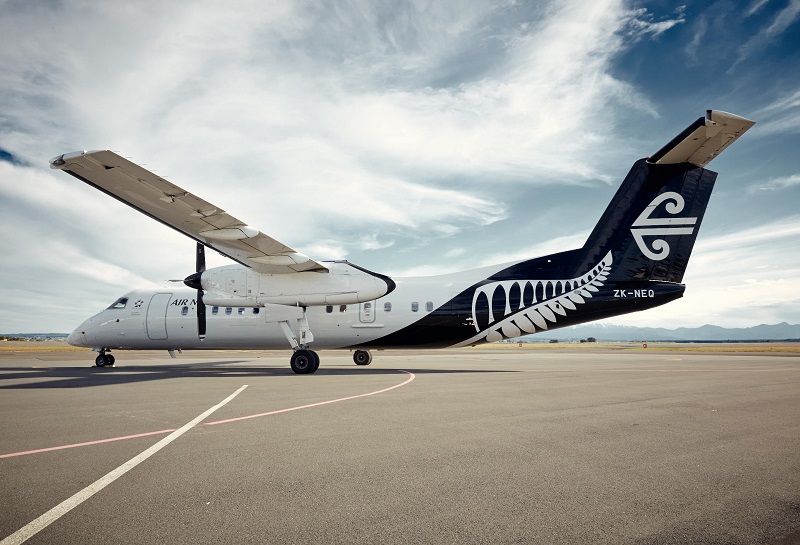
In a world first, an Air New Zealand regional turboprop is poised to become the latest tool in the mission by US space agency NASA to monitor climate change impacts.
The Q300 aircraft will be fitted with next-generation satellite receivers developed by the University of Michigan as the Kiwi carrier becomes the first passenger airline to join a NASA earth science mission.
The aircraft will use GPS signals reflected from the Earth’s surface to gather data that can be used to better predict storms and enable new climate change science in New Zealand.
READ: Air New Zealand slashes Asia capacity as COVID-19 cuts earnings
Data collected inflight will feed into NASA’s Cyclone Navigation Satellite System (CYGNSS), which uses GPS signals bounced off the ocean to measure wind speeds and help scientists better predict cyclones and hurricanes.
The same signals bounced off land can determine soil moisture levels and monitor climate change indicators such as drought, flooding and erosion.
“This is a new approach to climate science and exciting terrain,’’ said NASA CYNGSS program scientist Dr. Gail Skofronick-Jackson.
“The next-generation receivers Air New Zealand will fly have advanced features, new to CYGNSS, so we’re excited to test their capabilities and explore their potential for future spaceborne missions.”
The Q300 cruises at about 16,000ft and Air New Zealand chief operational integrity and standards officer Captain David Morgan said the 50-seat turboprop was the perfect aircraft for the mission.
“Placing receivers on aircraft will enhance the resolution and quality of information, giving scientists an unprecedented view over our entire network, from Kerikeri to Invercargill,’’ he said.
“As an airline, we’re already seeing the impact of climate change, with flights impacted by volatile weather and storms. Climate change is our biggest sustainability challenge so it’s incredible we can use our daily operations to enable this world-leading science.”
Air New Zealand engineers will fit the equipment in late 2020 and the airline says it could be introduced more widely across its Q300 fleet if the experiment is a success.
It has 23 of the planes operating to 19 domestic ports and each aircraft operates about 50 services a week.
The New Zealand government has also been involved in the project and the University of Auckland will establish a science payload operations center.
The center will receive and process the inflight data in what project lead Professor Delwyn Moller says could ultimately be the nation’s biggest source of environmental data.
“Local scientists will work with the NASA CYGNSS team to process these unique measurements into environmental data, opening up a range of research opportunities and potential uses, from flood risk-management to agriculture and resource planning,’’ he said.
“Though this collaboration, Kiwi scientists will be at the forefront of this emerging field.”
Have questions or want to share your thoughts?