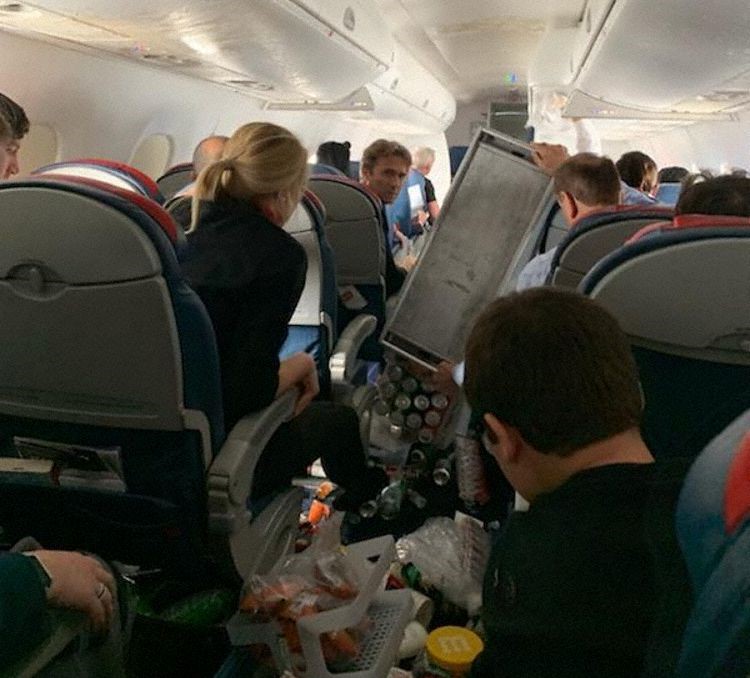
Graphic video shows US jet mayhem after turbulence

By Steve Creedy Sat Feb 16, 2019
The importance of keeping seatbelts fastened during a flight has again been dramatically underscored by a graphic video showing mayhem on a regional jet that hit severe turbulence.
[embed]https://twitter.com/i/status/1095792526609371136[/embed]
The dramatic upset occurred on a Compass Airlines Embraer ERJ-175 flying from Santa Ana, California, to Seattle on February 13.
Further emphasizing the seatbelt point that same day, 13 people were injured on a Transavia Boeing 737 flying between Lyon and Tel Aviv.
Watch BA 787 captured on video in dramatic go-around
The ERJ was operating a Delta Air Lines flight on February 13 and was at about 34,000ft over the Sierra Nevada mountains when severe turbulence caused it to drop about 200 feet.
Passenger Joe Justice posted a video of an upended drinks trolley and stains on the ceiling noting: “Crazy turbulence and injuries but @delta crew handled it perfectly”. The drinks trolley hit the ceiling, according to passengers.
The plane with 59 passengers and four crew on board made an emergency landing in Reno, where three passengers and a flight attendant were taken to hospital.
The Transavia 737-800 was about 260 nautical miles west-northwest of Tel Aviv at 37,000 ft when it encountered turbulence, according to The Aviation Herald.
The website said two doctors on board helped the injured while the plane landed safely in Tel Aviv and the injured were transferred to hospital.
While unexpected severe air turbulence is relatively rare compared to the number of flights operated daily, it does happen and experts say they expect the frequency to increase with climate change.
Airlines emphasize in their safety briefings that people should keep their seatbelts fastened even when seated, but the message is sometimes ignored.
Carriers are also working together to achieve smoother flights and offset the predicted climate-driven increase in dangerous severe turbulence by using big data.
The International Air Transport Association has launched a global database aimed at helping airlines avoid turbulent conditions when route planning.
IATA says the availability of accurate turbulence data will enable pilots will be able to make more informed decisions about higher flight levels with smoother air. It also expects to produce more optimal fuel burn and lower C02 emissions.
READ: Airlines will use big data to avoid turbulence.
Although technology allowing aircraft to detect the phenomenon has improved, clear air turbulence remains difficult to distinguish and already costs US carriers an estimated $US200 million annually.
The US Federal Aviation Administration has identified it as the leading cause of injuries to passengers and crew in non-fatal accidents.
Have questions or want to share your thoughts?