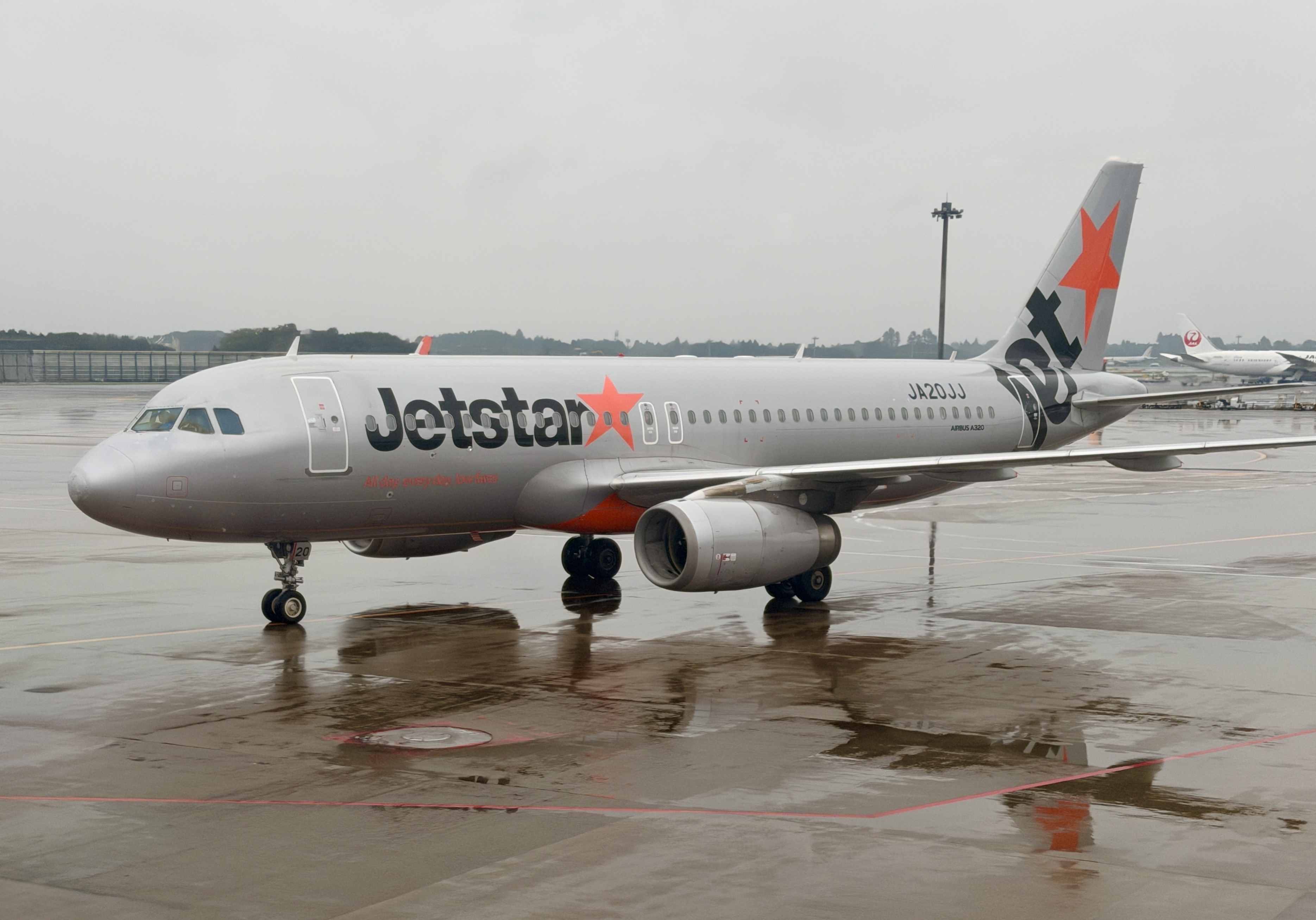
Jetstar Japan Review: What to Expect from Japan’s Low-Cost Airline
By Josh Wood Sat Oct 3, 2026
4 / 10
Cabin
Economy class
Route Flown
Tokyo Narita
Sapporo Chitose Airport
Flight Number
GK127
Seat Number
7F
Date Flown
October 2, 2026
The Jetstar name is on borrowed time in Japan, with Qantas selling its 33.32 per cent stake and the airline set to come under full Japanese ownership. A new brand is expected to be revealed in October 2026, with the transition to be completed by summer 2027.
Jetstar is a familiar name across the Asia-Pacific region, and its Japanese arm flies domestic and short-haul international routes from bases at Tokyo Narita, Nagoya and Osaka Kansai. The low-cost airline keeps its operation simple with a single fleet type being the Airbus A320 family.
The airline operates in a fiercely competitive market, with over 20 carriers flying domestic routes. Japan Airlines alone serves more than 140 domestic routes—roughly twice the size of its international network. The rebrand raises the question of whether the airline will stay a no-frills operator or add onboard services that bring it closer to some of its rivals. With Peach Aviation and Spring Japan as its only direct low-cost competitors, we expect it to stay in the budget market and keep competing on fares.
We took a return flight between Tokyo Narita and Sapporo New Chitose Airport to see how the airline stacks up in a competitive domestic market.
Seating
2 / 5
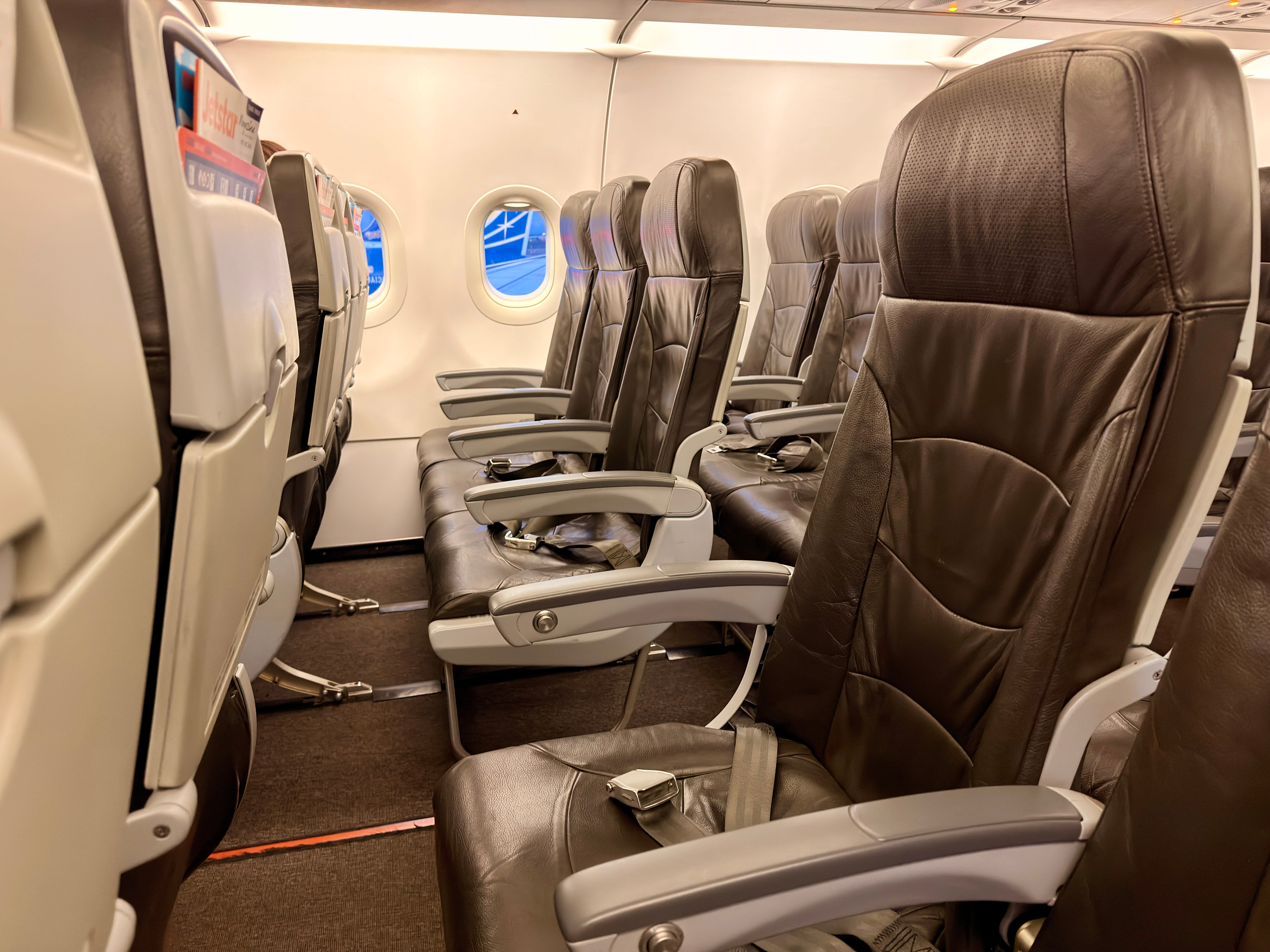
Our 11-year-old A320 (JA20JJ) had 180 economy seats in the standard 3-3 layout, and we sat in window seat 7F. Like Jetstar in Australia, the seats offer a pitch of 28 inch and a width of 18. Our 6ft 2in reviewer found the legroom fine for a short sector but would struggle on a longer flight. The seats also recline by three inches, which is generous for a low-cost airline when so many rivals fix their seats upright.
The seats are basic, with no adjustable headrest and very little storage because a rigid literature pouch for the menu and safety card takes the place of a seat-back pocket. The tray table is a large one-piece design that does not fold in half, so it takes up a lot of room when lowered. The aircraft was in good condition for its age, although the seats look dated next to the newer designs entering service elsewhere. Even so, we found them comfortable and of a better quality than the slimline seats budget carriers are fitting today. We expect the airline to move to those slimmer seats as it evolves into its new brand.
.jpg)
Customer Service
5 / 5
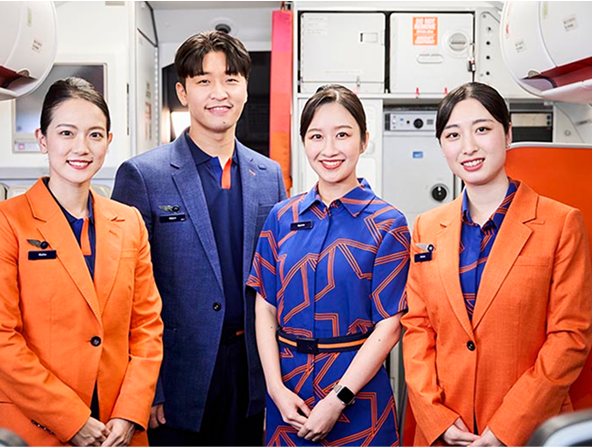
As expected for a Japanese carrier, the crew are excellent. From the boarding gate through to the cabin, all Jetstar staff show care and give friendly service.
When the crew conducts the buy-on-board service, they are efficient and quick. The crew hands back payment cards to passengers on a tray and hands items with care. For pre-order meals, they proactively check with passengers before departure and inform them that it will be delivered after departure.
Boarding is very efficient at Jetstar Japan as it adopts boarding from the window seats first, then the middle seats, and ending with the aisle. A full A320 can be boarded in less than 15 minutes with crew actively assisting passengers with baggage stowage. It would be great if other carriers adopted this.
Catering
1 / 5
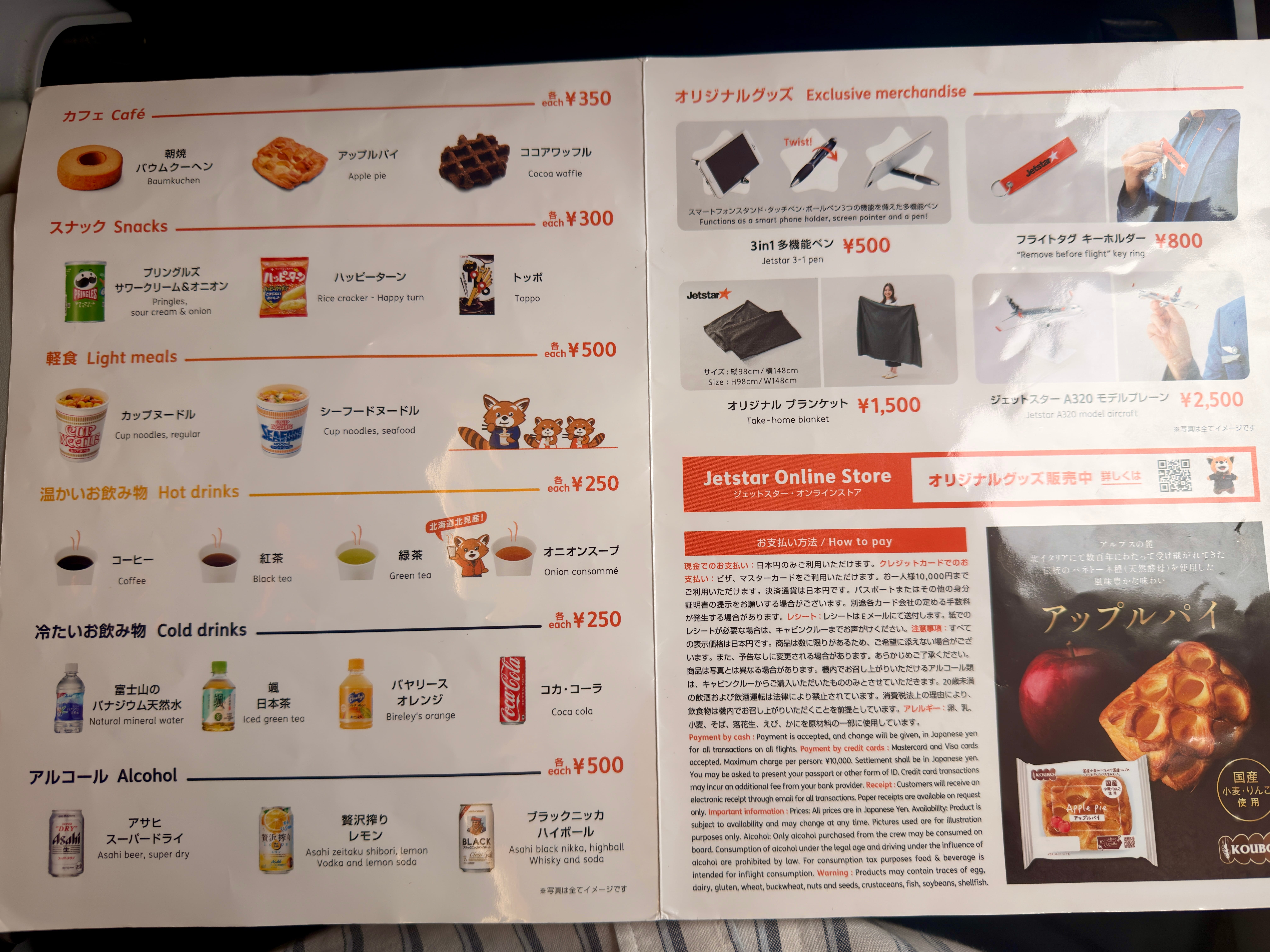
Jetstar Japan is a low-cost airline, so no food or drink is included in the fare. Passengers can pre-book a hot meal before the trip, and the selection is decent for a short domestic flight, with a hot dish and a drink costing JPY1,000 (US$6.33).
The onboard menu is limited to drinks and a small range of snacks. Soft drinks, coffee, tea, and an onion consommé cost JPY250 (US$1.58) each, while a beer or a canned highball costs JPY500 (US$3.17). Snacks such as Pringles and rice crackers are JPY300 (US$1.90), and the three café items, which are a baumkuchen, an apple pie and a cocoa waffle, are JPY350 (US$2.22). Unlike other budget carriers, Jetstar Japan sells no sandwiches or hot meals onboard, and the closest it gets is cup noodles at JPY500, so anyone wanting a proper meal needs to pre-book.
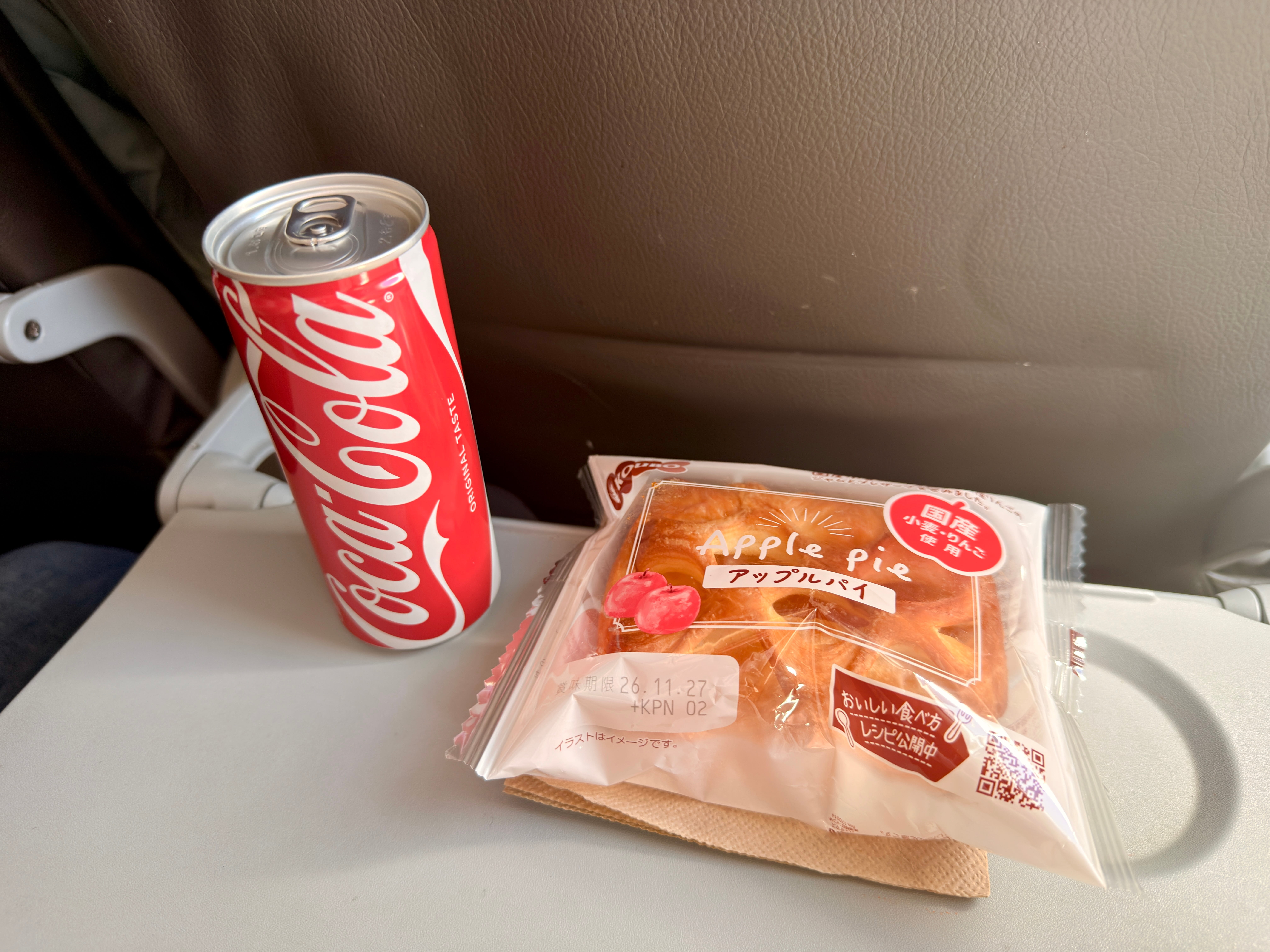
We tried the apple pie with a Coca-Cola for JPY600 (US$3.80) and it was OK. The crew didn't offer a cup or ice with the drink though, which most budget airlines provide as standard. On the return sector, we pre-booked the grilled chicken curry with a hot drink for JPY1,000. Japanese airline catering is generally very good, and this meal was no exception, with a small but tasty portion that suited a one-hour flight.
.jpg)
Inflight Entertainment and amenities
0 / 5
Jetstar Japan offers next to nothing in the way of onboard amenities. The airline has no WiFi or streaming entertainment, which leaves the inflight magazine as the only distraction it provides. Bring a fully charged phone or tablet loaded with downloaded content because the seats have no charging points and you can't use a power bank onboard. The only amenity items for sale are a take-home blanket and a pen that converts into a phone holder.
The app, pricing and our verdict
The Jetstar app is very good and lets passengers manage every part of a booking, from choosing seats and adding baggage or meals to changing flights. It is well designed, easy to use, and consistently branded.
We paid for this trip ourselves and chose the Mini fare, at a total return cost of JPY26,506 (US$167.91). We got caught out at the gate with an overweight bag and paid a JPY5,500 (US$34.85) charge. For the return leg, we added a checked bag in advance for JPY3,670 (US$23.25), which worked out a third cheaper than paying at the gate. We picked the Mini because it offers the highest carry-on allowance, but in hindsight we should have chosen the More fare, which includes a checked bag. The table below shows the fare types the airline offers.
Starter | Mini | More | Flex Plus |
|
|
|
|
Overall, Jetstar Japan sells cheap fares and delivers a friendly, efficient, no-frills service. The seats are comfortable, and the buy-on-board menu is well priced, although the selection is small. The airline's longest flight is the five-hour sector to Manila, but most of its routes take less than two hours, and the product suits these short domestic hops well. On longer sectors, passengers will notice the lack of entertainment and power.
Have questions or want to share your thoughts?