Qantas questions fuel efficiency report

By Steve Creedy Wed Jan 17, 2018
Australian carrier Qantas says a report labeling it the least fuel-efficient major airline on trans-Pacific routes does not accurately reflect its operations.
An analysis of 20 airlines by the International Council on Clean Transportation placed Qantas last in terms of fuel efficiency as measured by passenger kilometres per litre of fuel and said it was 41 per cent below the industry average.
The recently-released report said Qantas burned an average of 64 per cent more fuel per passenger kilometre in 2016 than market leaders Hainan Airlines and All Nippon Airways.
Qantas achieved a fuel efficiency of 22 passenger-kilometres per litre and was joined by China Southern, Cathay Pacific, China Eastern, Philippine Airlines, Singapore Airlines, Asiana and Korean Air to make up the group that fell below the industry average.
Virgin Australia, by comparison, came in at sixth with 33 passenger kilometres per litre, and Air New Zealand was third at 35 passenger-kilometres per litre.
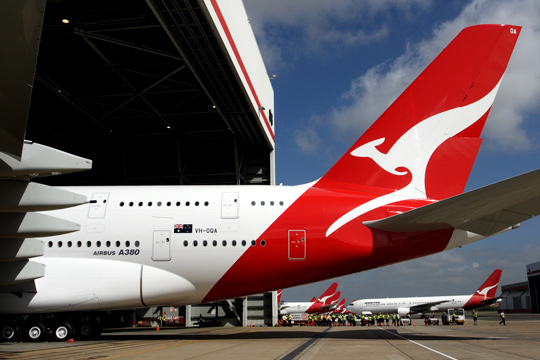
The analysis attributed the poor Qantas result of 22 passenger-kilometres per litre to a combination of factors including the use of four-engine planes such as Airbus A380 and Boeing 747-400ER on long flights.
It also noted Qantas had the lowest average passenger load factor of any airline on Trans-pacific flights — 74 percent— as well as one of the lowest freight shares at 12 per cent of total payload.
“Adding 1,000 kg of freight or 10 passengers to each flight would have a negligible effect on the total fuel efficiency of the Flying Kangaroo,’’ it said.
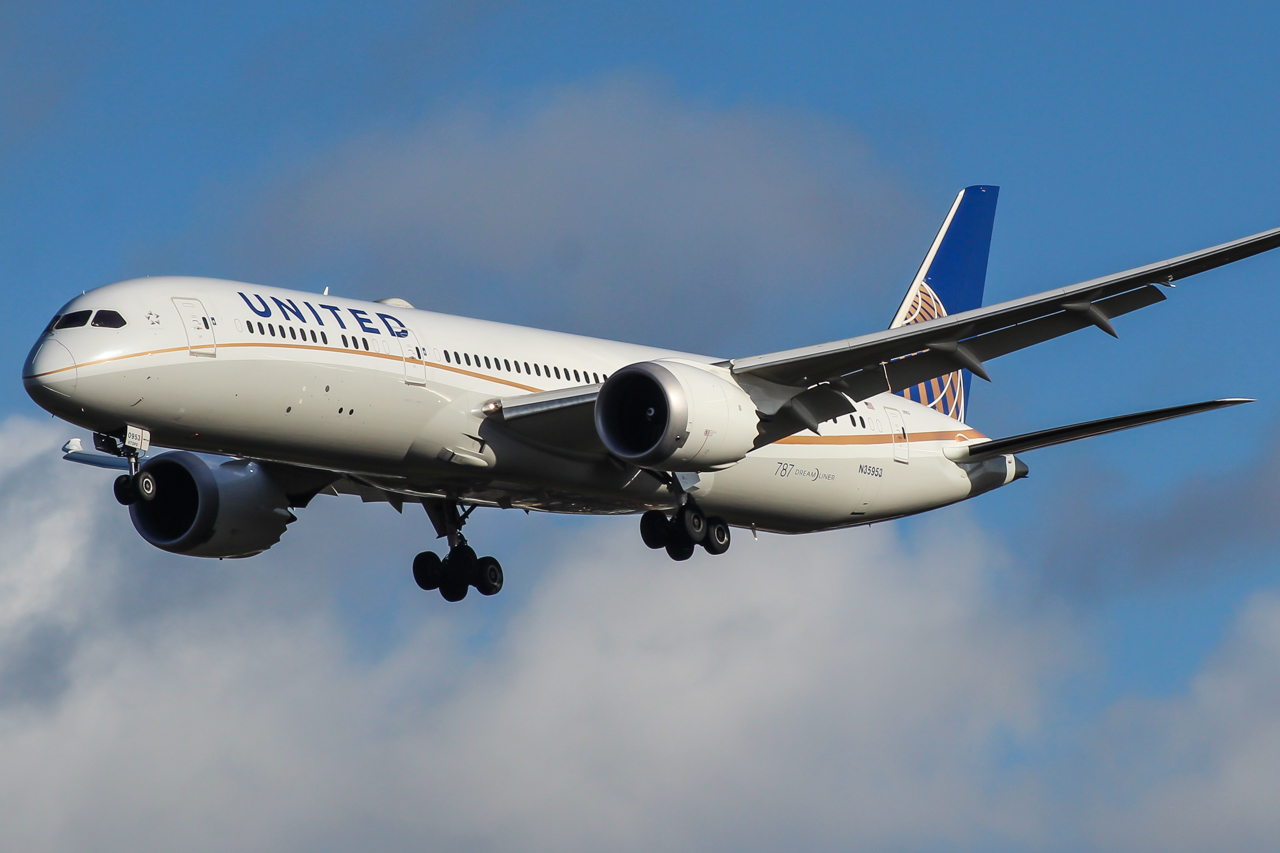
The report acknowledged the arrival of the airline’s Boeing 787 Dreamliners as a B747 replacement. The Dreamliners are already flying between Melbourne and Los Angeles the number of trans-Pacific 787 routes is set to expand as more planes arrive.
“If the same passenger load factor and freight share are maintained on the new Dreamliners, then the carrier’s overall fuel efficiency would increase to 28 pax-km/L,’’ it said.
However, the airline said it did not view the report’s modelling as an accurate representation of its fuel efficiency across the Pacific.
“The reason Qantas ranks low in this study is chiefly because we use larger aircraft, fly very long distances and have premium cabins that naturally have fewer people on board,’’ Qantas head of fuel and environment Alan Milne said.
“Our Sydney to Dallas route is one of the longest in the world, and ultra-long haul flights have a magnifying effect on fuel burn because you’re carrying a lot of weight [in the form of fuel] at the start of the journey in order to make the distance.’’
Milne also noted the result would be affected by the fact Qantas was unusual in that it offered first class and two premium cabins on most trans-Pacific .
“We’re committed to reducing carbon emissions and continually look at ways to lower them across our operations,'' he said.
"We are switching our 747s for more fuel efficient Dreamliners and we have several data-driven programs in place to reduce fuel burn.”
An important areas not taken into account in the study, according to Qantas, is the use of flexible "user preferred routes" across the Pacific. These allow airlines to take advantage of tailwinds and avoid headwinds to save fuel.
The Australian carrier also uses a process called Dynamic Airborne Reroute Procedures that allows it to tweak flight paths en-route and take advantage of the latest meteorological reports.
A world-first application called Flightpulse then helps pilots understand the impact of efficiency improvements by taking advantage of the A380’s ability to record 2 million data points per flight hour.
Other programs highlighted by the carrier include the world’s biggest airline carbon offset scheme for passengers, responsible for offsetting more than 3 million tonnes of CO2 since 2007, and a 10-year deal to use biofuels on flights from Los Angeles.
Qantas has also inked a deal aimed at encouraging Australian farmers to grow a commercial aviation biofuel seed crop.
Have questions or want to share your thoughts?