Boeing's Cascade Will Assist CO2 Reduction
By Geoffrey Thomas Thu May 18, 2023
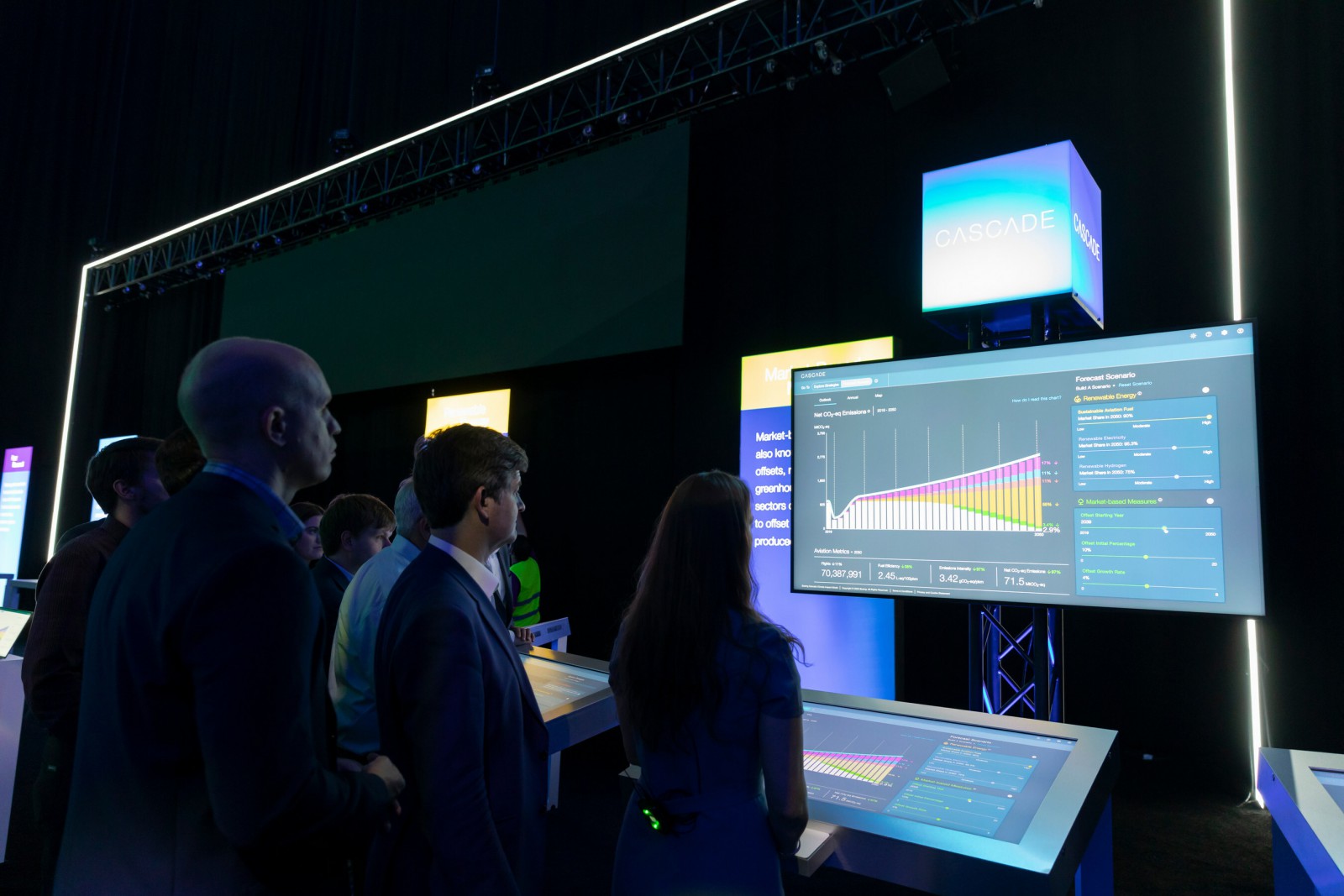
Boeing's Cascade forecasting tool for CO2 reduction has been released to the industry and public to support commercial aviation's path toward net zero carbon emissions.
Boeing's Cascade Climate Impact Model is a data modelling tool that identifies the effects of a range of sustainability solutions to reduce aviation's carbon emissions, is accessible on Boeing's new Sustainable Aerospace Together hub, www.sustainabilitytogether.aero.
Cascade examines the entire life cycle of alternate energy sources for aviation – from production through distribution and use – and quantifies the ability to cut aviation's carbon emissions. Data modelling also measures aircraft renewal, operational efficiency, renewable energy sources, future aircraft and market-based measures as pathways to decarbonization.
For instance, if the global fleet only consisted of the latest aircraft there would be a 17% reduction in CO2.
"We created Cascade to serve as an industry tool that creates a common framework among aviation, energy, finance and policy," said Boeing Chief Sustainability Officer Chris Raymond. "By putting data first and sharing this model with the public, we are enabling collaboration, feedback and alignment across industry, government and others who work together to achieve a more sustainable aerospace future."
Key findings from Cascade's assessments include:
- The journey to net zero is dependent on the overall energy transition. Whether using sustainable aviation fuel (SAF), hydrogen or electricity, the energy and emissions associated with the production, distribution and storage of fuels must be minimized to achieve the most sustainable outcome.
- SAF will be the biggest contributor to reducing carbon emissions because it can be used in commercial airplanes flying today – both new and old. Since many jets flying today will be in service into and even beyond the 2040s, it is imperative to abate their emissions with SAF.
- While electric- and potentially hydrogen-powered aircraft will emerge in future decades, their contribution to emissions reduction will likely be limited through 2050 due to long timeframes for development and deployment and the magnitude of related infrastructure changes for airports and pipelines.
- Renewing fleets with best-in-class, fuel-efficient airplanes will significantly reduce emissions in coming years.
"Cascade helps airline operators, industry partners and policymakers see when, where and how different fuel sources affect their sustainability goals," said Neil Titchener, Cascade Program Leader. "Our industry has really hard questions ahead of us, we're going to have to make difficult choices. Cascade can be the conversation starter for how each decarbonization pathway can help us reach a more sustainable future."
Boeing announced the public release of Cascade at its first Sustainable Aerospace Together Forum, a conference convening leaders from commercial aviation, government and the energy and finance sectors. The event was streamed by FT Live and recorded sessions will be made available following the event.
Boeing also introduced the Cascade User Community, a working group that will provide feedback on new features, functionalities and application programming interfaces. The founding members of the Community are IATA, NASA, University of Cambridge's Aviation Impact Accelerator and the MIT Laboratory for Aviation and the Environment.
"The Cascade User Community will ensure the tool and data sources continue to get feedback and evolve for informed and effective discussions towards achieving net zero emissions by 2050," said Raymond.
In addition to hosting Cascade, the Sustainable Aerospace Together website provides resources and industry insights on aviation pathways to decarbonization. Try Cascade at www.sustainabilitytogether.aero.
Have questions or want to share your thoughts?