How did 6000 Airbus aircraft end up grounded?

By Sharon Petersen Thu Dec 4, 2025
On November 29, 6,000 of the world’s Airbus A320 family aircraft were grounded because of radiation from space.
But how did this actually come about? To answer this, we need to take a step back to October 30, 2025, when a JetBlue A320 suddenly and unexpectedly dropped altitude mid-flight. On November 7, 2025, the National Transportation Safety Board (NTSB) reported: "During cruise, the aircraft experienced an uncontrolled descent for approximately 4–5 seconds before the autopilot corrected the trajectory. This likely occurred during an Elevator Aileron Computer (ELAC) switch change."
Further investigation concluded that the malfunction appears to have been triggered by cosmic radiation bombarding the Earth on the day of the flight. The subsequent investigation identified a vulnerability with the ELAC B hardware fitted with software L104 when exposed to solar flares.
The result? One of the largest mass groundings of aircraft in history.
According to emergency airworthiness directives issued by both the European Union Aviation Safety Agency (EASA) and the US Federal Aviation Administration (FAA), such radiation-triggered computer errors could, in the worst-case scenario, lead to an "uncommanded" change in altitude severe enough to exceed "the aircraft's structural capability." They stated that urgent updates to the on-board computers were required in over 6,000 aircraft before they could carry passengers again.
Airlines were issued an immediate maintenance directive to reverse a software upgrade on-board the aircraft before it could be released for service, specifically the replacement of ELAC B L104 with ELAC B L103+. Each update took between two and three hours, and engineering teams had to physically board each plane to implement the software changes. For the remaining roughly 5,000 Airbus A320 family aircraft not affected, the directive was unsurprisingly not to change to the ELAC B hardware fitted with software L104.
However, this is not the first time such an incident has occurred. Many will remember the harrowing flight of Qantas flight QF72 over Western Australia, involving an Airbus A330, which fell hundreds of feet twice within ten minutes, injuring dozens of passengers. A report by the Australian Transport Safety Bureau that followed could not conclusively determine that a cosmic bit flip was the cause, but it was left as the most likely scenario after other possibilities were largely ruled out. This incident, in the hands of a less experienced crew, could have ended in disaster.

According to the BBC, these computer errors occur when high-speed subatomic particles from outer space, such as protons, smash into atoms in our planet's atmosphere. This can create a cascade of particles that rain down through the atmosphere, like throwing marbles across a table. In rare cases, these fast-moving neutrons can strike computer electronics and disrupt tiny bits of data stored in memory, switching a bit—often represented as a 0 or 1—from one state to another.
"That can cause your electronics to behave in ways you weren't expecting," says Matthew Owens, professor of space physics at the University of Reading in the UK. Satellites are particularly affected by this phenomenon, he adds. "For space hardware, we see this quite frequently."
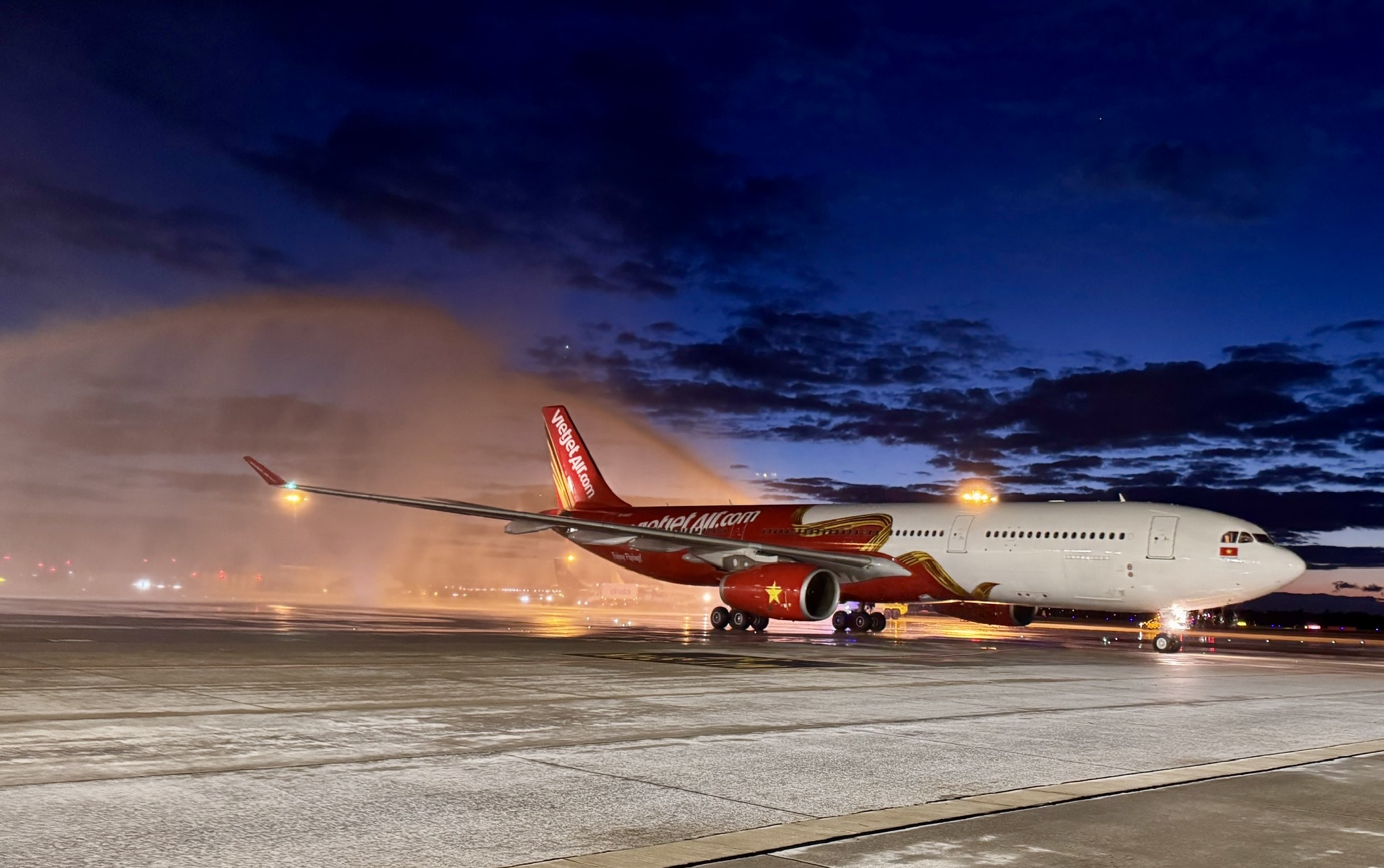
While the grounding caused mass chaos in the USA during the middle of the Thanksgiving holiday, other airlines, like HK Express based in Hong Kong, were able to carry out the necessary work without cancellations. For Jetstar in Australia, however, 90 flights were cancelled on Saturday.
I’m a nervous flyer—how do I know my airline has completed this?
In our view, Airbus responded swiftly to the finding, sending the directive to all impacted airlines. For a passenger, however, knowing that this has been addressed can still be a concern. We wanted to share the directive directly from Airbus to reassure the travelling community that all checks are in place:
"[Airlines must] address your acknowledgment and accomplishment results to Airbus Customer Services through the InService Alerts and Information Cockpit tile on Airbus World by using the referenced AOT page. Refer to the latest reporting policy (Ref to the OIT 999.0018/16). Fill in the Accomplishment Reporting sheet in Appendix 1 below and return it to Airbus within one week after the accomplishment."
Have questions or want to share your thoughts?