Dropping in: watch NASA and the FAA "crash" a Fokker.

By Steve Creedy Mon Jun 24, 2019
Air crashes are rare occurrences but even rarer is getting two aerospace agencies together to do it on purpose.
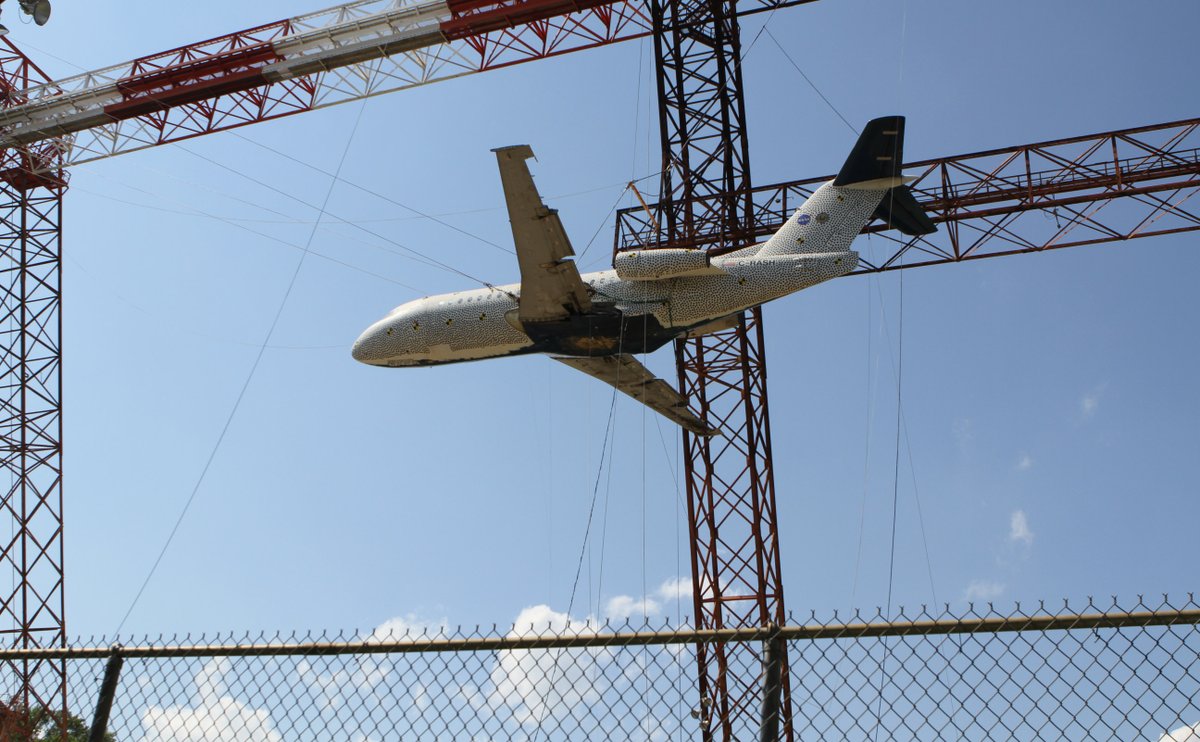
That's what happened when the Federal Aviation Administration and NASA got together to drop a Fokker F28 from a giant gantry at NASA's Langley Research Center in Hampton, Virginia, on June 20.
A small crowd gathered to watch the 33,000-pound jet thud to earth after hours of final preparations in the name of science.
[embed]https://www.youtube.com/watch?v=Xrc889vD1BY[/embed]
This was the first time NASA had dropped a plane this big and it was looking to simulate an impact that was severe but survivable.
READ: NTSB confirms skydiving crash the worst US civilian accident since 2011.
The Fokker F28 is a regional jet used on short- to medium-haul flights and the crashworthiness test was conducted to advance safety research on the structural performance of the style, design and materials for this size of aircraft.
Twenty-four crash test dummies -- also a record for this kind of simulation -- ranging from small children to adults were strapped into seats inside the plane.
They included one that weighed about 273 pounds as well as a US Army Warrior Assessment Manikin designed to understand the forces exerted on a human body from an explosion under a vehicle.
"It’s a common misconception that plane crashes are not survivable, when in fact many are,” said FAA chief of crash dynamics Joseph Pellettiere.
“Looking at the response of the plane, how it crushes in the dirt, as well as the kinematics of the crash test dummies inside helps us know as much as possible to make them as safe as possible.”
Inside the former Canadian Regional Airline Fokker were high-definition and high-speed cameras and the plane was painted with hundreds of dots to allow specialized cameras to track the deformation of the aircraft.
The swing test simulated an aircraft crash onto a dirt surface and the FAA said the data would help it develop guidance on how to determine crashworthiness of various aircraft.
The test results would support the development of a new performance-based rule that will simplify the certification process by eliminating or minimizing the use of special conditions to certify aircraft, it said.
Also involved in the "crash" were the FAA Civil Aeromedical Institute, U.S. Army Test and Evaluation Command, and the National Transportation Safety Board.
The FAA said reports from the test would be available to the public.
Have questions or want to share your thoughts?